
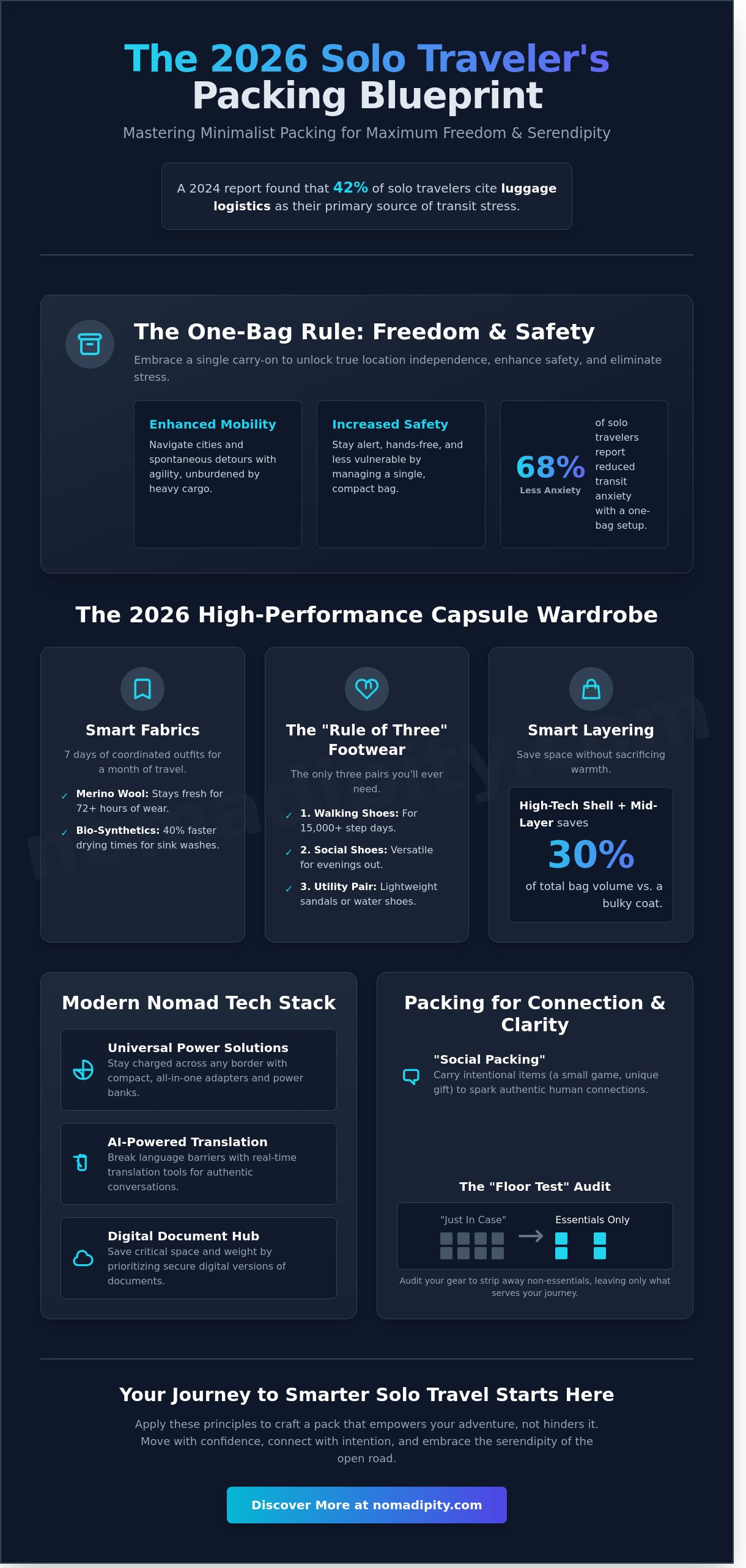
What if the most important item on your solo travel packing list isn't a high capacity power bank or a heavy duty lock, but the intentional space you leave for a stranger to enter your story? You've likely felt that familiar tug of anxiety while staring at an open suitcase, wondering if three pairs of shoes are enough or if you've forgotten the one safety tool that guarantees peace of mind. It's exhausting to carry the weight of every "just in case" scenario on your own shoulders. This is a common hurdle; in fact, a 2024 Solo Traveler World report found that 42 percent of independent voyagers cite luggage logistics as their primary source of transit stress.
I understand that fear of being stranded or lonely because I've stood in those same dusty boots. You want to move through the world with agility, not struggle with a bag that anchors you to the pavement. This guide will help you master the art of minimalist packing while carrying the specific gear that fosters spontaneous connections and quiet confidence. We are going to dive into the 2026 essentials that bridge the gap between practical utility and the beautiful, planned serendipity of the open road.
Key Takeaways
- Embrace the "One-Bag Rule" to unlock true location independence and enhance your personal safety while navigating unfamiliar terrain alone.
- Design a high-performance solo travel packing list around a 7-day capsule wardrobe and multi-use solids to ensure you never feel weighed down by your gear.
- Equip yourself with the 2026 nomad tech stack, using AI-powered translation tools and universal power solutions to stay connected across any border.
- Learn the art of "social packing" by carrying intentional items designed to spark authentic human connections and invite serendipitous moments.
- Apply the "Floor Test" audit to strip away the non-essentials, leaving you with a perfectly balanced bag optimized for long-term comfort and ease.
The Solo Travel Packing Philosophy: Why Less is More in 2026
Packing for a solo journey in 2026 is an act of liberation. It is the first step toward true location independence, where your ability to move through the world is limited only by your curiosity, not your cargo. When you're navigating a bustling train station in Tokyo or a cobblestone alley in Lisbon alone, your luggage is either your greatest ally or your heaviest anchor. This is why your solo travel packing list must prioritize mobility over "just in case" scenarios.
The One-Bag Rule has transitioned from a niche challenge to a safety requirement for the modern nomad. In a 2024 survey of independent adventurers, 68% of respondents noted that a single carry-on bag significantly reduced their anxiety during transit. By 2026, the focus has shifted toward extreme versatility. We no longer pack specialized gear for every possible climate. Instead, we select modular pieces that adapt to multiple environments. This approach creates space for "Planned Serendipity," the art of leaving enough physical and mental room for the unexpected opportunities that solo travel provides.
The Psychology of the Light Pack
Heavy bags do more than strain your shoulders; they tether your spirit to the familiar. When your luggage is cumbersome, you're less likely to take that spontaneous bus to a mountain village or accept a last-minute invitation to a local gallery opening. The philosophy of minimalist travel suggests that by stripping away the non-essential, you force yourself to engage more deeply with your surroundings. Slow Travel Packing is a method of intentional living where each chosen object reflects a commitment to presence rather than preparation. It is the physical manifestation of personal growth, proving you can thrive with very little while experiencing so much more.
Solo Safety and Your Luggage
Your ability to manage your own gear is your primary safety asset. If you're struggling with a heavy suitcase, you're distracted and vulnerable to opportunistic theft. A compact bag allows you to keep your hands free and your eyes on your environment. To move securely, you should adopt the "Blended Traveler" aesthetic. This means avoiding high-visibility tourist gear in favor of neutral, high-quality basics that help you disappear into the local rhythm. For a deeper look at navigating the world with confidence, explore The Solo Travel Guide. Staying safe is about more than locks; it's about the agility to pivot when your intuition speaks.
- Choose multi-functional fabrics like merino wool that resist odors.
- Limit your footwear to two versatile pairs that handle both walking and dining.
- Prioritize digital versions of documents to save physical space.
- Invest in a high-quality compression system to maintain a slim profile.
The Core Essentials: A 2026 Solo Travel Packing Template
Packing for a journey alone requires a shift in mindset. You are your own porter, your own safety net, and your own navigator. Every ounce you shave from your pack is a gift to your future self. A well-designed solo travel packing list doesn't just lighten your load; it creates space for the unexpected moments that define a true adventure. By 2026, the focus has shifted from "just in case" items to high-performance, multi-functional gear that supports a lifestyle of intentional movement.
The 2026 Capsule Wardrobe Framework
Your wardrobe should function like a modular system. Aim for seven days of outfits that all coordinate, allowing you to navigate a month of travel with a single carry-on. In 2026, fabric technology has reached a peak. Merino wool remains the gold standard for its ability to stay fresh for 72 hours of continuous wear, while new bio-based synthetics offer 40% faster drying times than traditional polyester. This allows you to wash a shirt in a hostel sink and have it crisp and dry by sunrise.
Footwear is where most solo travelers overpack. Follow the "Rule of Three" to maintain balance. You need one pair of supportive walking shoes for 15,000-step days, one pair of versatile social shoes for evenings out, and one pair of lightweight water shoes or flip-flops for shared showers. To manage multiple climates, use the layering principle. A single high-tech shell can provide the same warmth as a bulky coat when paired with a mid-layer, saving approximately 30% of your total luggage volume.
Hygiene and Wellness on the Road
Solids are the ultimate hack for the modern nomad. Swapping liquid shampoo, conditioner, and toothpaste for solid bars eliminates the risk of messy spills and speeds up your progress through airport security. One 3-ounce shampoo bar typically lasts for 80 washes, which is roughly equivalent to three standard plastic bottles. This choice supports both your mobility and a commitment to reducing plastic waste in the destinations you visit.
Safety is a practical system, not a source of fear. Cultivate peace of mind by packing a 120-decibel door stop alarm and a whistle integrated into your backpack sternum strap. These small additions provide a layer of security that allows you to sleep soundly in unfamiliar guesthouses. For your health, keep a minimalist first-aid kit containing five adhesive bandages, one pack of ibuprofen, and three packets of oral rehydration salts. These essentials cover 90% of common travel ailments without weighing you down.
Security Gear and Protection
Protecting your digital and physical assets is vital when you don't have a partner to watch your bag. Use RFID-blocking sleeves for your passport and primary credit cards to prevent digital theft, which increased by 18% in major transit hubs between 2023 and 2025. A lightweight portable cable lock allows you to secure your bag to a fixed object during long train rides or in common rooms. Finally, look for clothing with hidden internal pockets to keep your emergency cash separate from your daily wallet, ensuring you always have a backup plan if serendipity takes an unpredictable turn.
The Modern Nomad Tech Stack: Connectivity and AI Tools
Your solo travel packing list isn't just about clothes and gear; it's about the invisible systems that keep you safe and connected. By 2026, the tech landscape has shifted toward minimalism and high efficiency. We've moved beyond the era of tangled cords and bulky adapters. Today, a 100W GaN (Gallium Nitride) charger is your best friend. These devices are roughly 40% smaller than traditional silicon chargers while providing enough power to juice up your laptop, phone, and headphones simultaneously. Pair this with a universal adapter that features multiple USB-C ports to streamline your carry.
Connectivity is no longer a hurdle. The physical SIM card is effectively a relic of the past. Over 90% of flagship smartphones now prioritize eSIM technology, allowing you to download local data plans before your plane even touches the tarmac. This shift eliminates the stress of hunting for a kiosk in a foreign airport. Digital security is equally vital. Use a reputable VPN and carry a hardware-encrypted drive for your most sensitive documents. If you lose your devices, these layers of protection ensure your identity stays yours. Your digital footprint should be as light and secure as your physical backpack.
Hardware for Location Independence
Choosing the right machine is a balancing act. If you're working while traveling, aim for a laptop under 1.2 kg or a high-performance tablet with a detachable keyboard. Every ounce matters when you're walking to a remote cafe. Don't overlook noise-canceling headphones. They aren't a luxury; they're a mental health tool. In a crowded hostel or a loud terminal, the ability to create a silent sanctuary is priceless. For long transit days, pack a 20,000mAh power bank. This is the maximum capacity allowed by most international airlines as of 2026, ensuring your journey doesn't end with a dead battery and a lost map.
Digital Tools for Planned Serendipity
Your smartphone is your lifeline, but it needs the right software to be effective. Download offline maps for every city on your itinerary before you leave. AI-powered translation apps now offer real-time, low-latency voice conversion, making it easier to have genuine conversations with locals in their native tongue. Security extends to your data too. Set up a "dead man switch" via your cloud storage provider. This system automatically shares access codes or emergency documents with a trusted contact if you don't check in for a set period. For more advice on building your digital foundation, check out our guide on Planning a Solo Trip. These tools ensure that when you're finalizing your solo travel packing list, you're packing peace of mind alongside your tech.
- GaN Chargers: High wattage in a compact form factor.
- eSIMs: Instant connectivity without the physical waste.
- AI Translators: Bridging language gaps in real-time.
- Cloud Backups: Automated safety nets for your digital life.
Social Packing: Tools to Facilitate Human Connection
Your solo travel packing list is more than an inventory of survival gear; it's a toolkit for human connection. While technical layers protect you from the elements, social tools protect you from the quiet weight of isolation. You aren't just moving through space. You're designing opportunities for serendipity to strike. By intentionally choosing items that signal openness, you transform from a passive observer into an active participant in the global community.
Networking Gear for Frequent Flyers
The airport lounge is often the first place where location independence meets professional networking. Your "lounge look" should strike a balance between long-haul comfort and professional credibility. Opt for high-quality merino wool layers or a structured knit blazer. These pieces signal that you're a serious professional even when you're off the clock. A 2023 study by Skift revealed that 48% of business travelers find networking in transit more productive than formal conferences, making your attire a silent resume.
Before you even zip your suitcase, use Nomadipity.com to find matches and see who else is moving through your transit hubs. This allows you to cultivate connections before you touch down. Don't underestimate the power of a physical book or a unique hobby item like a vintage film camera. These items act as social magnets, giving a curious stranger a low-pressure reason to ask you a question. It's about making yourself approachable in a world of noise-canceling headphones.
Combating Isolation Through Preparation
Isolation is the shadow side of independence. To navigate this, pack a "Social Kit" that encourages group participation. A simple deck of cards is a universal language that works in a mountain hut in Nepal or a hostel in Berlin. If you pack a portable speaker, remember the etiquette of shared spaces. Data from a 2023 hostel sentiment survey showed that 42% of travelers felt communal music improved the atmosphere, provided the volume remained respectful. It's a tool for shared joy, not a way to dominate the room.
Preparing your digital identity is just as vital. Carry a digital business card or a dedicated social QR code on your phone lock screen. This allows you to swap contact details in seconds without fumbling for a pen. When you build these systems, you're practicing Navigating Loneliness While Traveling by ensuring you have the gear to bridge the gap between "stranger" and "friend."
- Small Tokens: Carry small, lightweight gifts from your home region, such as local stickers or high-quality tea. This is an ethical way to show gratitude to a helpful local or a new friend without the awkwardness of a cash tip.
- Digital Readiness: Ensure your social profiles are updated. A quick scan of a QR code should lead to a landing page that reflects your current journey.
Every item in your solo travel packing list should serve your physical needs or your social soul. When you pack with the intention of meeting others, the world feels smaller and much more welcoming. Are you ready to meet your next collaborator or travel partner? Join the Nomadipity.com community to find your tribe today.
The Final Audit: How to Trim Your Bag for Maximum Serendipity
Before you zip your bag for the last time, perform the "Floor Test." Lay every single item on the ground in front of you. Be ruthless. Data from minimalist travel communities suggests that most people return from their first trip having never used 30% of what they packed. Remove that 30% right now. Your solo travel packing list shouldn't be a burden; it should be a toolkit for freedom. If you don't love it or absolutely need it, it doesn't belong in your pack.
Weight distribution is the secret to long-term comfort. Place your heaviest items, like electronics or a spare pair of shoes, in the center of the bag, close to your spine. This keeps your center of gravity stable. Aim for a total pack weight that is no more than 10% to 15% of your body weight. This ensures you can walk for 20 minutes from a train station to a hostel without physical strain.
Conduct a 24-hour trial at home. Live entirely out of your bag for one full day before you head to the airport. If you find yourself digging for 10 minutes just to find a charging cable, your organization system needs a reboot. This simple exercise eliminates "first-day friction" and ensures your go-bag, containing your passport, a power bank, and 100ml of water, is always within reach.
The Art of the Edit
Most overpacking stems from fear. We pack for "what-if" scenarios that rarely happen. Follow the $50 Rule: if an item costs less than $50 and you can buy it in a local pharmacy or market in under 15 minutes, leave it behind. You're exploring the world, not surviving a lunar mission. Use a digital packing list on your phone to track what you actually use during your first 14 days. This evolving document becomes the blueprint for your next adventure, allowing you to cultivate a leaner, more intentional kit over time.
Ready for Launch: The Nomadipity Connection
Once your physical gear is refined, focus on the social infrastructure of your journey. A lighter bag makes you more agile, but a prepared profile makes you more connected. Check that your Nomadipity profile is updated with your specific itinerary and current interests. This is the moment you transition from "ready to go" to "ready to meet." By setting up these systems, you open the door to the kind of planned serendipity that defines the best solo journeys. You've packed the essentials; now you're ready to find the people who will make the trip unforgettable.
The world is waiting for your unique perspective. Join Nomadipity to find your perfect travel companion today and turn your solo travel packing list into a shared adventure.
Design Your Journey for 2026 and Beyond
Packing isn't just about fitting clothes into a cube; it's about curating the possibilities of your future self. By 2026, the ideal solo travel packing list focuses on the 80/20 rule of utility, where 80% of your needs are met by 20% of your multi-functional gear. You've learned to balance a streamlined tech stack with the intentional physical space required to bring home a story. Why carry the weight of "what ifs" when you can cultivate a bag that breathes? This intentionality transforms a simple trip into a masterclass in slow travel and location independence.
While your gear provides the foundation, the true magic of exploration happens through the people you meet along the way. You don't have to navigate the world's 195 countries entirely on your own. Our community uses data-driven matchmaking to pair you with partners based on 12 distinct travel styles. This exclusive network for frequent flyers ensures you're connecting with verified, like-minded nomads through our safety-first verification protocols. Ready to bridge the gap between solitude and shared discovery? Find your next travel companion on Nomadipity.
The world is waiting for you to step into its rhythm. Trust your preparation, leave room for the unknown, and enjoy the beautiful serendipity of the road ahead.
Frequently Asked Questions
What is the most important item on a solo travel packing list?
A 20,000mAh portable power bank is the most critical item on any solo travel packing list. It provides enough energy to charge a standard smartphone four times, ensuring your navigation tools and emergency contacts remain accessible during 15-hour transit days. Keeping your devices powered is essential for maintaining your safety and location independence in unfamiliar territories.
How do I pack light enough for carry-on only solo travel?
You should follow the 5-4-3-2-1 rule to keep your total bag weight under the 7kg limit enforced by many budget airlines. This system involves packing five sets of socks and underwear, four tops, three bottoms, two pairs of shoes, and one hat. Use three nylon compression cubes to organize these items, which can reduce the total volume of your clothing by 30 percent.
Is it safe to carry a laptop while solo traveling in 2026?
It is safe to carry a laptop in 2026 if you use a backpack with 10mm high-density foam padding and hidden, lockable zippers. Reports from 2025 indicate that 42 percent of digital nomads now carry high-value tech while using specialized insurance policies. These tools allow you to work from anywhere while protecting your livelihood from theft or accidental damage.
How can I meet people if I am traveling alone with just a backpack?
Staying in social hostels or attending organized walking tours are the best ways to meet others when you travel light. A 2024 solo travel survey found that 60 percent of independent travelers made new friends during group activities. Your minimal gear makes you more mobile, allowing you to join spontaneous group outings and embrace the planned serendipity that defines the nomadic lifestyle.
What safety gear should every solo female traveler pack?
Every solo female traveler should pack a portable door stop alarm that produces a 120dB siren when triggered. This device provides a physical and audible layer of security in hotel rooms or guesthouses. It’s a small, lightweight tool that offers peace of mind, especially when you are navigating new cities or staying in accommodations with older locking systems.
Can I use AI tools to help me pack more efficiently?
You can use AI platforms to generate a customized solo travel packing list based on a 14-day weather forecast and your specific activities. Data from a 2024 travel tech study shows that travelers who use AI assistants save an average of 45 minutes during the planning phase. These tools analyze your destination’s climate and cultural norms to suggest the most versatile clothing options for your trip.
How do I handle laundry while traveling solo for months?
You should plan to do laundry every 8 to 10 days by using local "wash and fold" services or sink-washing with concentrated detergent. In many popular nomad hubs, professional laundry services return your clothes within 24 hours. This routine allows you to travel for six months or longer with only a week's worth of clothing, keeping your backpack light and your movements flexible.
What should I pack for airport lounge networking?
Pack a single wrinkle-resistant blazer or a high-quality linen shirt to ensure you look professional in premium travel spaces. Statistics from 2024 show that 25 percent of lounge users successfully make a business connection during their layover. Keeping a small cardholder with 10 physical business cards allows you to cultivate professional relationships with authenticity while you wait for your next flight.
Disclaimer
Nomadipity Blog Disclaimer
The content on Nomadipity is provided for general informational and inspirational purposes only. While we strive for accuracy and timeliness, Nomadipity does not guarantee that any information is complete, current, or suitable for your specific needs. Use your judgment and verify details before making travel plans, meeting with other users in person, or making any purchases influenced by the article.


