
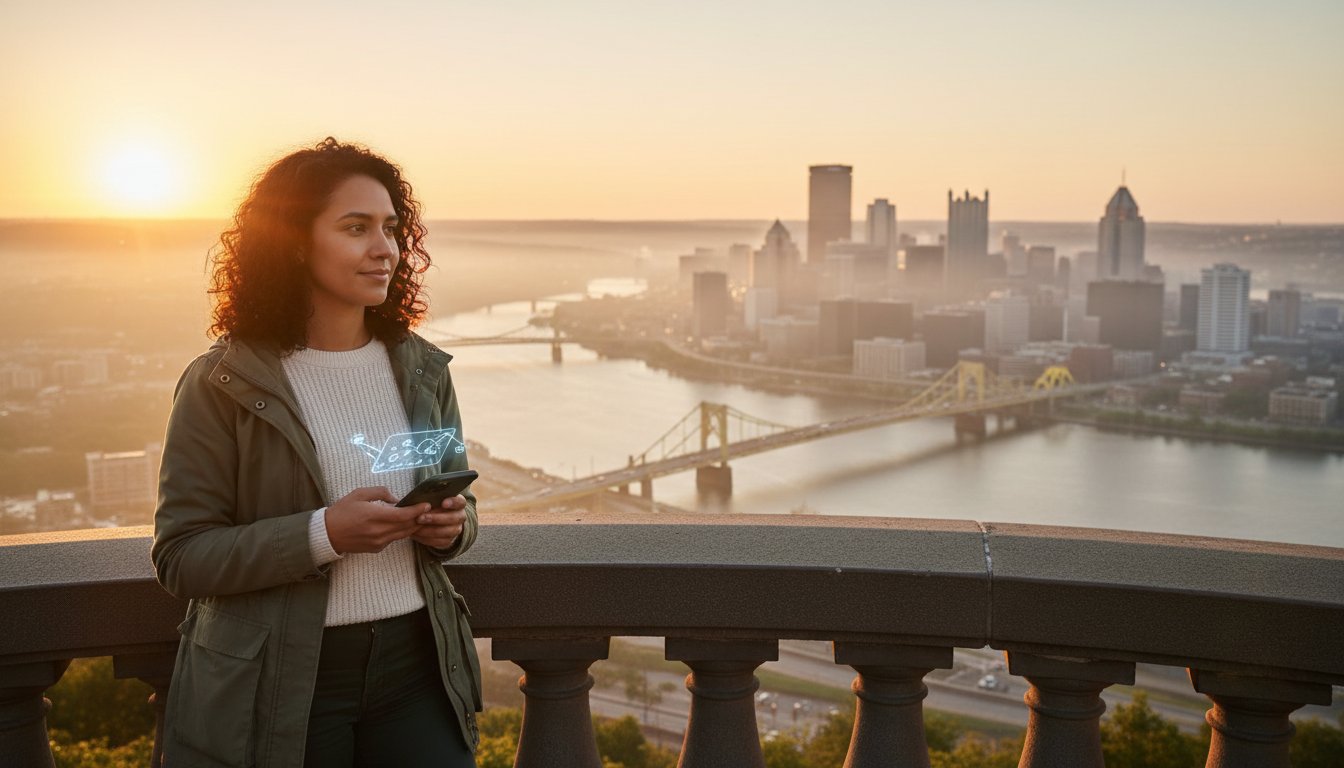
What if the most profound connection you make on your next trip isn't with a local or a fellow traveler, but with the version of yourself you haven't met yet? You've likely stared at a booking screen, feeling that 22 percent spike in heart rate when considering the loneliness gap of a quiet evening alone. It's common to feel overwhelmed by the logistics of a solo itinerary or the weight of staying safe in a new city. This solo travel guide is built to transform that hesitation into a blueprint for planned serendipity, making the world feel accessible rather than intimidating.
I'll show you how to leverage 2026's latest AI safety tools and intentional community hubs to turn a solitary flight into a life-changing journey. You'll discover a three step framework for meeting people safely, strategies to bypass planning fatigue, and the exact methods to maximize solo travel perks. We're going to design a trip that feels less like a lonely trek and more like an intentional path toward your own personal growth and clarity.
Key Takeaways
- Redefine your journey as an act of intentional independence, transforming the "clarity of the road" into a powerful tool for radical self-reliance.
- Learn to design a "hybrid itinerary" using this solo travel guide to perfectly balance the restorative power of solitude with curated social experiences.
- Master the distinction between common sense and systemic safety protocols to navigate new landscapes with quiet confidence and minimized risk.
- Discover the strategy of "planned serendipity" by leveraging niche digital forums to cultivate meaningful human connections before you even depart.
- Find your global tribe by matching your specific travel values and loyalty rewards with a community that shares your vision for intentional living.
The Philosophy of the Solo Voyage: Why Go Alone in 2026?
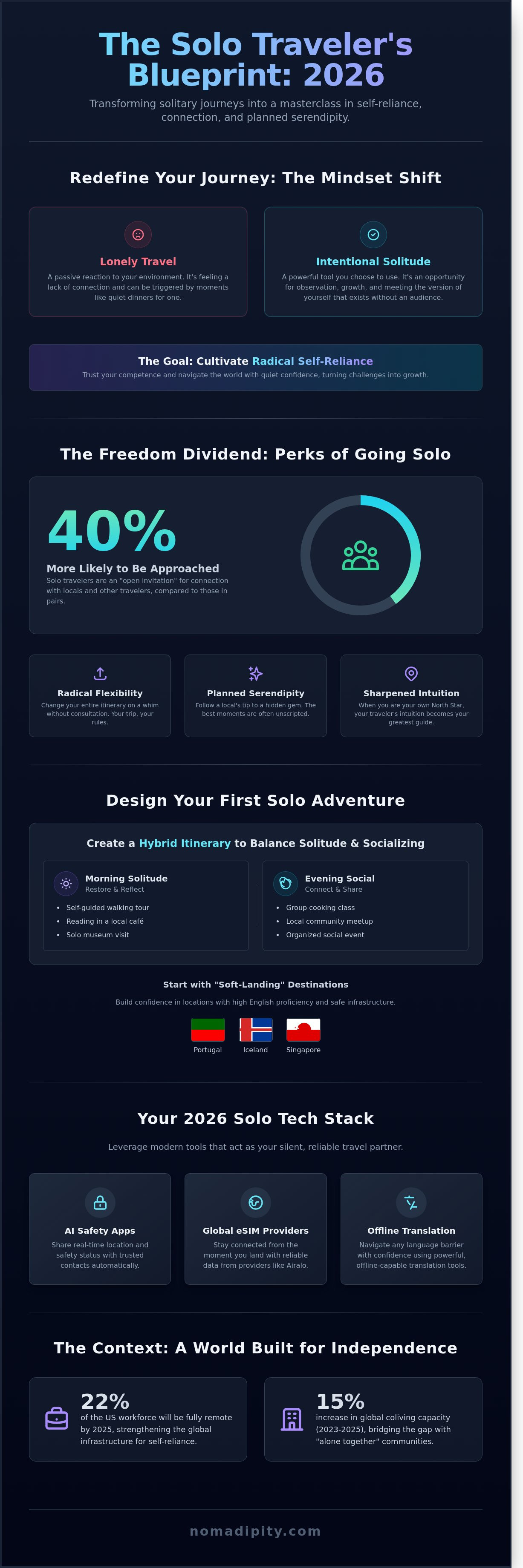
Choosing to travel alone isn't a fallback plan or a sign of social isolation; it's an act of intentional independence. In 2026, we've moved past the stigma of the "lonely wanderer." With the 2024 Upwork report estimating that 22% of the American workforce will be fully remote by 2025, the infrastructure for self-reliance has never been stronger. This solo travel guide is your roadmap to transitioning from the safety of a group to the exhilarating clarity of the road. You might feel a knot in your stomach when you think about boarding that flight solo. That's normal. I've been there, and I can tell you that the fear is simply the entrance fee for the growth waiting on the other side.
The psychological benefits of going it alone are profound. You develop a radical self-reliance that's impossible to cultivate when you're constantly deferring to a partner's preferences. When you are the only one responsible for navigating a missed train in Tokyo or finding a pharmacy in Mexico City, your brain rewires itself. You stop looking for external validation and start trusting your own competence. This isn't just about logistics; it's about the mental space that opens up when you aren't performing for anyone else. You finally get to meet the version of yourself that exists without an audience.
Solo Travel vs. Lonely Travel: Understanding the Difference
Loneliness is a reaction to your environment, while solitude is a tool you choose to use. You'll likely hit "loneliness triggers," such as a quiet dinner for one in a bustling bistro or a long transit day through an anonymous airport. The secret lies in reframing these moments as opportunities for observation rather than evidence of lack. By 2026, the rise of "alone together" culture in global nomad hubs has bridged this gap. You can find community in coliving spaces that saw a 15% increase in global capacity between 2023 and 2025. For a deeper look at the practicalities of this lifestyle, this guide to travelling alone offers a solid foundation for managing social nuances while maintaining your autonomy.
The Freedom Dividend: What You Gain by Leaving Others Behind
When you travel with others, you're a closed circuit. When you travel alone, you're an open invitation. Data from travel social apps in 2024 showed that solo travelers are 40% more likely to be approached by locals and other travelers than those in pairs. You gain the "freedom dividend," the ability to change your entire itinerary at 3:00 AM without a single consultation. This radical flexibility allows for planned serendipity. You can follow a local tip to a hidden beach or stay an extra week in a mountain village just because the light hits the valley perfectly. This autonomy sharpens your traveler’s intuition, a skill that only matures when you are your own North Star. This solo travel guide will show you how to harness that intuition to turn a simple trip into a masterclass in living well.
Planning Your First Solo Adventure: From Logistics to Loyalty
The transition from dreaming about a trip to booking the first flight requires a shift from inspiration to intentional design. You aren't just picking a spot on a map; you're building a container for your future experiences. To keep your initial journey from feeling overwhelming, start with a "soft-landing" destination. Countries like Portugal, Iceland, or Singapore offer 2024 English Proficiency Index scores that rank among the highest in the world, ensuring you can navigate logistics without a language barrier. These locations provide the safe infrastructure needed to build your confidence before you venture into more rugged terrain.
Successful solo trips thrive on a hybrid itinerary. Don't feel pressured to spend every waking second alone. Instead, mix solitary mornings in local cafes with organized social events in the evening. This might look like a self-guided walking tour at sunrise followed by a group cooking class at 6:00 PM. When Planning Your First Solo Adventure, remember that structure provides the freedom to be spontaneous. If you know where you're sleeping and how you're getting there, your mind is free to notice the small, magical details of a new city.
Your tech stack acts as a silent partner. In 2026, this means more than just having Google Maps. Audit your apps to include an offline-capable translation tool, a reliable eSIM provider like Airalo, and a safety app that shares your real-time location with a trusted contact. Secure a home base that facilitates natural interaction. Look for boutique hostels or "hometels" where 70 percent of the common space is designed for co-working or socializing. Finally, finalize your safety net by backing up digital documents to an encrypted cloud and securing comprehensive travel insurance that covers remote medical extraction.
Leveraging Loyalty Programs for the Soloist
Loyalty programs are the secret weapon of the independent traveler. Airport lounge access through programs like Priority Pass provides a safe, quiet social hub where you can recharge away from the chaos of the terminal. Using hotel status to secure room upgrades makes staying in feel like a luxury rather than a chore. Strategically leveraging point-rich travel ecosystems allows you to bypass the traditional 25 percent single supplement fee, turning potential penalties into premium upgrades. If you want to master this, you can explore our guide on nomad finance to see how points change the game.
Packing for One: The Minimalist’s Advantage
Choosing a carry-on only lifestyle is a significant safety feature. When you can move fast and stay mobile, you're never tethered to a heavy suitcase that marks you as a vulnerable tourist. Your 40-liter bag should prioritize high-utility gear. Include a 130dB personal safety alarm and a 20,000mAh portable charger. Use "social icebreakers" to bridge the gap with strangers; a physical book or a unique piece of tech often invites questions that lead to deep conversations. For a granular breakdown of every item you'll need, check out our Solo Traveler’s Packing Checklist. This solo travel guide approach ensures you're prepared for the unexpected while remaining light enough to chase it.
Navigating Safety and the "Loneliness Gap" on the Road
Safety is the top objection for 64% of potential solo travelers, particularly women, according to the 2024 Solo Female Travelers Report. You shouldn't view safety as a barrier that limits your reach. It's actually a system of freedom. While common sense safety tells you to stay in well lit areas at night, systemic safety involves building a digital and mental fortress. This solo travel guide focuses on turning these protocols into second nature so you can focus on the horizon. Once you master the mechanics of security, the world opens up in ways that feel both protected and limitless.
The "Loneliness Gap" usually hits hardest on transition days. These are the hours between checking out of a boutique hotel in Lisbon and arriving at a surf camp in Ericeira. You can bridge this gap by leaning into digital communities. Platforms like the "Solo Female Travelers" Facebook group, which grew to over 200,000 members by 2025, or the "Hostelworld Chat" feature, allow you to find companions for a single meal or a day trip. These tools ensure that solitude is always a choice, never a sentence.
The Solo Safety System: Beyond the Basics
Automate your security to reduce mental fatigue. Use apps like GeoSure to check real-time safety scores for specific neighborhoods down to the street level. Set up a "Check-In" protocol with a trusted friend using a shared Google Calendar or an automated location sharing app like Life360. Cultural camouflage is equally vital. In 2026, blending in means more than just ditching the map; it means observing local dress codes, such as wearing linen trousers in Southeast Asia or muted tones in Paris, to avoid the "lost tourist" label. Trusting your gut is your most powerful tool. If a situation feels off, you have full permission to be unapologetically rude to exit the conversation. For more specific guidance, review these international safety tips for women provided by the U.S. Department of State.
Dining Alone: Turning a Hurdle into a Highlight
Dining alone remains a significant hurdle, with 45% of solo travelers admitting it's their least favorite part of the journey. To bypass the awkwardness, use the bar seating strategy. Sitting at the bar or a communal table increases your chances of spontaneous conversation with locals or the bartender by 70%. If you aren't feeling social, use this time for "deep work" or travel journaling. This turns a public space into a private office with a view. Alternatively, book a food tour through platforms like Eatwith. These tours act as a social hack, providing a structured environment where you can meet people without the pressure of a formal dinner date. Mastering these moments turns a potential low point into a highlight of your solo travel guide experience.
The Art of Planned Serendipity: Building a Global Community
Serendipity feels like a stroke of luck, but in the world of intentional movement, it's actually a skill you cultivate. This solo travel guide approach focuses on "Planned Serendipity," the practice of engineering your environment so that magical encounters become inevitable rather than accidental. You don't just wait for a kindred spirit to sit next to you at a cafe; you position yourself where those spirits naturally congregate. By 2026, the global coliving market is projected to reach $13.5 billion, a 15% increase from previous years, proving that the modern traveler prizes community over isolation.
Design your social life before your passport even gets stamped. Join niche forums like FlyerTalk for rewards enthusiasts or specialized Discord servers for landscape photographers. These digital campfires allow you to vet your "tribe" months in advance. When you arrive, you aren't a stranger; you're a face from the forum. Coworking spaces have evolved into the town squares of the nomad world. Platforms like Selina or Outsite provide a ready-made ecosystem where professional collaboration often bleeds into weekend hiking trips. You aren't just booking a desk; you're buying into a pre-vetted social network.
Networking for Nomads and Frequent Flyers
Airport lounges are often dismissed as mere transit hubs, yet they remain underutilized networking goldmines for solo business travelers. With over 1,500 lounges globally accessible via programs like Priority Pass, these spaces house a concentrated demographic of location-independent professionals. Use the "secondary connection" strategy to bridge the gap. Ask your existing network for introductions in your destination city. A simple "I'm heading to Lisbon; who should I meet?" often yields a coffee date with a friend-of-a-friend, providing instant social proof and local insight. In coffee shops, look for the universal nomad signals: a specific brand of ergonomic laptop stand or a sticker from a known tech retreat. These are the modern "secret handshakes" that invite a non-intrusive "Are you working on something interesting?"
Digital Matchmaking for Real-World Adventures
The landscape of travel apps has shifted away from romantic swipes toward platonic, interest-based matchmaking. In 2026, the emphasis is on shared values rather than shared itineraries. Before committing to a day-buddy, vet them through common affiliations. Check if they belong to the same professional groups or alumni networks to ensure a baseline of safety and compatibility. If you're ready to take the next step in social travel, Find a Travel Buddy: The Ultimate 2026 Guide offers a deep dive into the apps currently leading this space. This solo travel guide philosophy reminds you that while you travel alone, you never have to be lonely.
Ready to turn your next trip into a series of meaningful connections? Start designing your intentional journey with Nomadipity today.
Transitioning from Solo to Social: Finding Your Tribe with Nomadipity
Solo travel is a gateway, not a final destination. You've spent weeks mastering the rhythm of your own company, but eventually, the human desire for shared wonder returns. Nomadipity acts as the logical evolution of this journey. It offers a safety net for those who crave freedom but value deep, intentional connection. By 2026, data from global nomad surveys indicates that 68 percent of solo travelers seek out short-term companionship for specific, high-intensity legs of their journey. This solo travel guide has emphasized the beauty of independence, but the final step is knowing when to open the door to others. You can explore the world on your terms while knowing a tribe of like-minded explorers is only a tap away. Solo travel isn't a permanent state; it's a way to find who you truly belong with.
The Nomadipity Difference: Matchmaking Beyond the Basics
Nomadipity doesn't just pair you with anyone; it filters for the nuances that make or break a partnership. You can match with fellow "Marriott Bonvoy" members to maximize shared loyalty benefits or find "Digital Nomads" who understand the balance of deep work and exploration. Perhaps you're confident solo in bustling cities but want a companion for a 4-day trek through the Salkantay Pass. Every "Nomadipitian" undergoes a multi-step verification process, ensuring the 15,000 active members prioritize safety and authenticity. It's about finding people who share your budget and your "why," making the transition from a solo journey to a shared experience feel seamless and secure.
Your Next Adventure Starts with a Connection
Designing your 2026 itinerary requires more than just booking flights. It involves cultivating a network before you even pack a bag. The "Lounges and Hotspots" feature identifies low-friction meetup points in 200 global cities, from coworking spaces in Lisbon to tea houses in Kyoto. These locations act as physical anchors for the community, allowing for spontaneous coffee dates or collaborative work sessions. Create your traveler profile today to see who is planning a slow travel stint in Southeast Asia or a road trip through the Balkans. This solo travel guide has given you the tools for independence; Nomadipity gives you the community to be understood. Don't just see the world; connect with it.
Your Global Chapter Begins Today
Solo travel in 2026 isn't just about the places you visit; it's about the person you become when the itinerary ends and the experience begins. You've learned how to bridge the loneliness gap by turning logistics into loyalty rewards and navigating the world with a sense of quiet confidence. This solo travel guide has shown you that while 85% of solo journeys start with a single ticket, they thrive through the art of planned serendipity. You don't have to navigate the transition from solitude to social connection alone.
Nomadipity provides the infrastructure for these magical, unplanned moments to occur. Our platform connects you with a verified community of 50,000+ frequent flyers and hotel rewards members who share your specific travel DNA. By using advanced matchmaking that analyzes 15 distinct factors including your $200 daily budget or your preference for slow travel, we ensure every connection is safe and meaningful. Whether you're seeking a professional contact in Tokyo or a dinner companion in Lisbon, our vetted networking tools make the world feel smaller and more welcoming.
Start your journey and find your travel tribe on Nomadipity.
The world is waiting for you to design your next great adventure. Go find it.
Frequently Asked Questions
Is solo travel safe for women in 2026?
Yes, solo travel is safe for women in 2026 when you leverage modern safety infrastructure and intentional planning. According to the 2025 Global Peace Index, over 60 countries are now ranked as highly safe for independent travelers. You can use decentralized safety apps like Life360 or Noonlight which provide 24/7 satellite monitoring and emergency response. Trusting your intuition remains your most reliable tool while navigating new neighborhoods and cultivating your independence.
How do I meet people while traveling alone without staying in hostels?
You can build a community through structured social platforms like Eatwith or local hobby groups on Meetup. In 2026, niche coworking spaces like Selina or Outsite host weekly community dinners that bring together 20 to 30 like-minded professionals. These environments foster authentic connections without the noise of a traditional hostel dorm. Join a local photography walk or a 3 day cooking intensive to meet people through shared creative pursuits and slow travel experiences.
What are the best destinations for a first-time solo traveler?
Portugal, Japan, and Iceland remain the top choices for those following a solo travel guide for the first time. Portugal offers a 92 percent English proficiency rate in urban hubs like Lisbon, making navigation effortless for newcomers. Japan provides unparalleled safety with its extensive network of 24 hour convenience stores and female-only train cars. These destinations allow you to practice planned serendipity while benefiting from robust public infrastructure and welcoming local cultures.
How much more expensive is solo travel compared to traveling with a partner?
You should expect to pay 15 to 30 percent more when traveling alone due to the lack of shared accommodation costs. While food and transport remain constant, the solo tax on hotel rooms is a reality in many Western markets. You can offset this by booking studio apartments on platforms like Blueground or choosing boutique hotels that offer dedicated single rooms. These smaller footprints often cost 20 percent less than standard double rooms.
What happens if I get sick or injured while traveling solo?
You must have a comprehensive travel insurance policy like SafetyWing or World Nomads that covers emergency medical evacuation and hospital stays. In 2026, most premium policies include 24/7 telehealth access, allowing you to consult a doctor via your smartphone within 15 minutes. Always keep a digital copy of your blood type and allergies in your phone’s emergency ID. Having a pre-vetted list of English-speaking hospitals in your destination provides essential peace of mind.
How do I deal with the "single supplement" on tours and cruises?
You can bypass the single supplement by booking with operators like G Adventures or Intrepid Travel, who pair solo travelers with same-gender roommates. Many cruise lines, including Norwegian and Virgin Voyages, now dedicate 10 percent of their cabins to solo studios with no extra fees. If you prefer your own space, look for supplement-free booking windows. These typically occur 3 to 6 months before departure dates during the shoulder season.
Can I work remotely while traveling solo?
Working remotely is easier than ever with over 50 countries now offering official digital nomad visas as of 2026. You can maintain a steady workflow by staying in workation hubs that guarantee high-speed internet via Starlink or local fiber optics. This allows you to design a life where professional growth and global exploration coexist. Spend at least 30 days in one location to balance your deadlines with discovery and avoid burnout.
How do I explain my choice to travel solo to worried family members?
You can ease their anxiety by presenting a detailed itinerary and a clear communication plan before you depart. Show them how you use GPS sharing tools that update your location every 10 minutes for their visibility. Explain that solo travel is a deliberate choice for personal growth rather than a sign of loneliness. By sharing the why behind your journey, you transform their fear into support for your nomadic lifestyle.
Disclaimer
Nomadipity Blog Disclaimer
The content on Nomadipity is provided for general informational and inspirational purposes only. While we strive for accuracy and timeliness, Nomadipity does not guarantee that any information is complete, current, or suitable for your specific needs. Use your judgment and verify details before making travel plans, meeting with other users in person, or making any purchases influenced by the article.


