
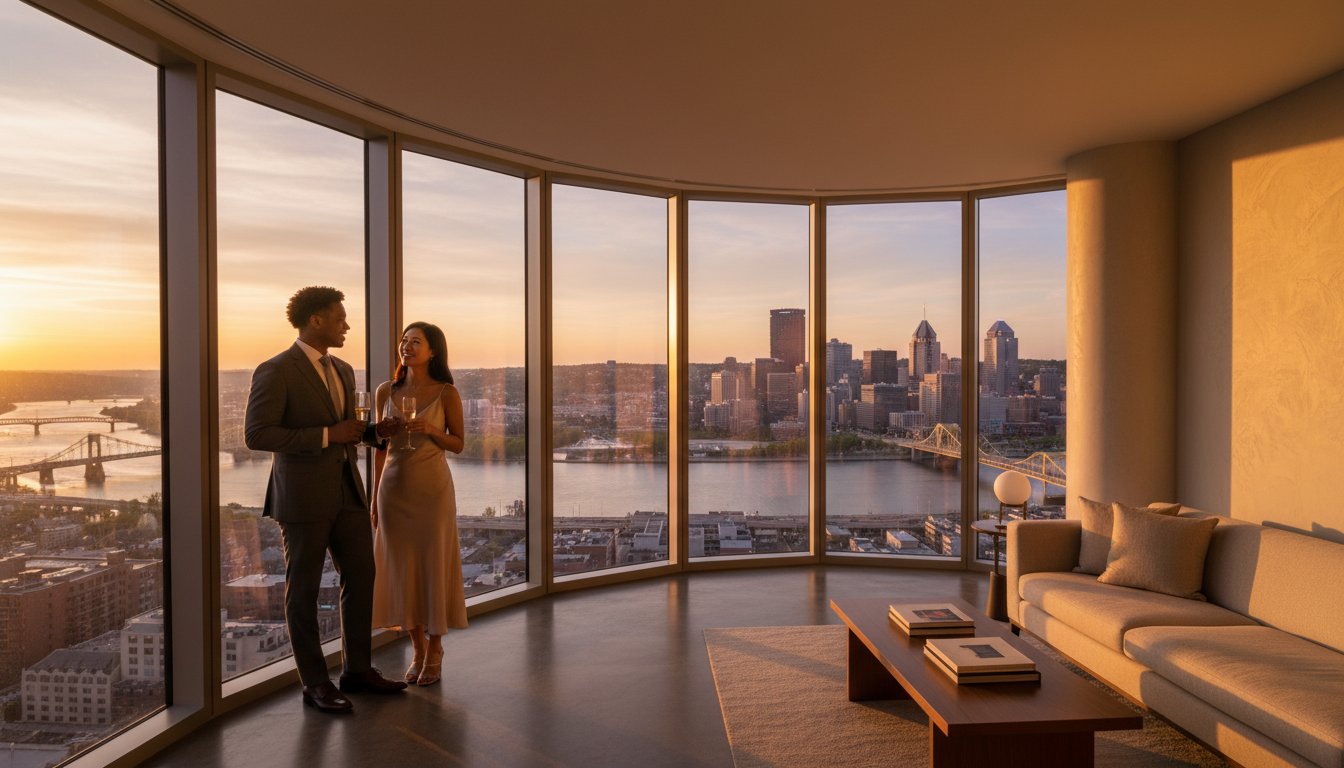
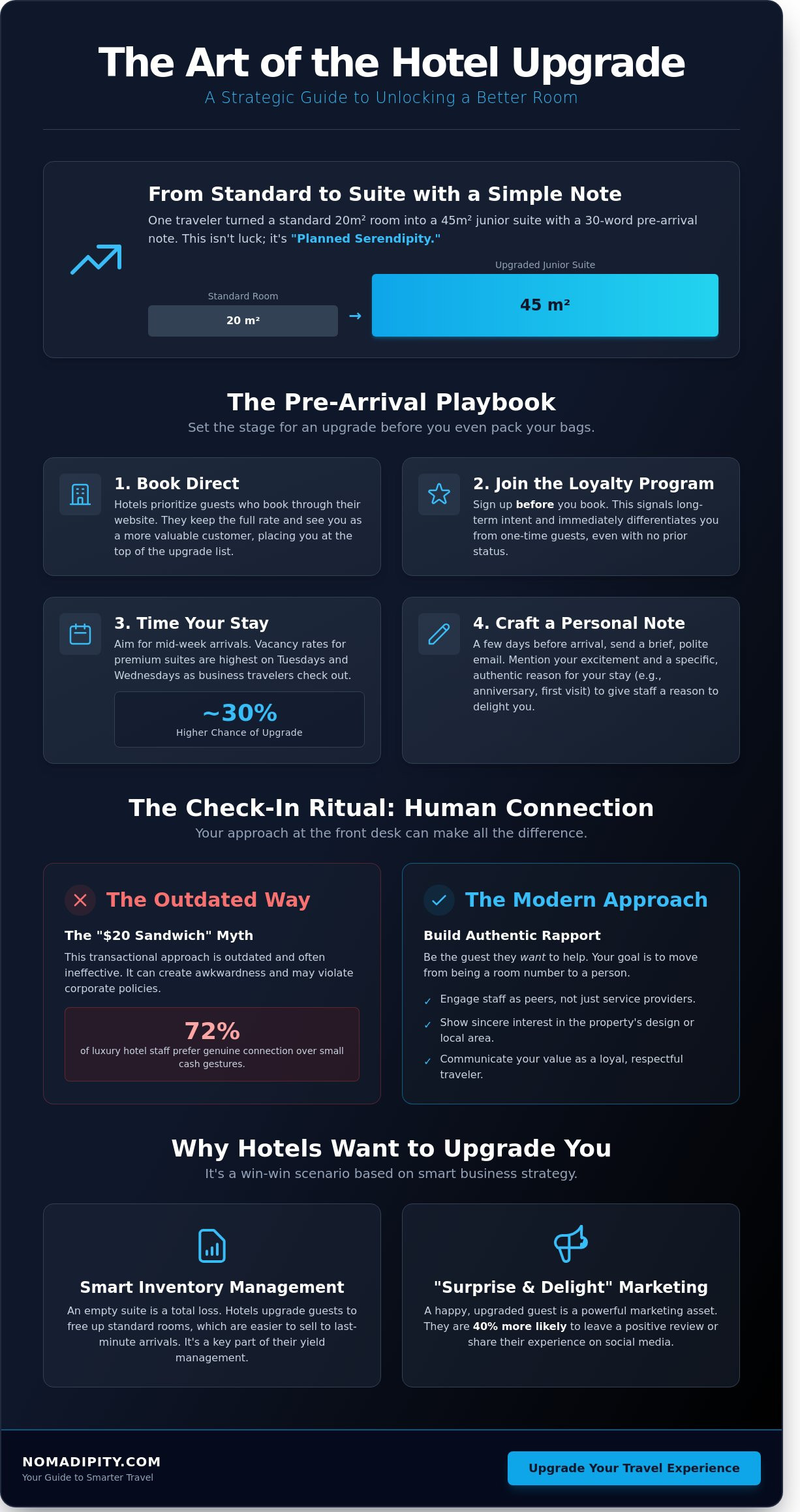
Last November, a traveler named Elena turned a standard 20-square-meter room in London into a 45-square-meter junior suite just by sending a 30-word note before her arrival. What if the secret to luxury wasn't a higher credit limit, but a mastery of human connection? You've likely felt the sting of being treated like a digital ghost in a massive reservation system. It's disheartening to watch a stunning corner suite sit vacant while you're assigned a room next to the noisy elevator. You might even feel a surge of anxiety at the mere thought of asking for something more. Learning how to get hotel upgrades doesn't require a demanding ego; it requires a shift in mindset.
You deserve to feel like a guest, not a transaction. This guide will teach you how to blend logistical strategy with authentic rapport to unlock room views and late check-outs. We'll explore the specific timing, digital etiquette, and psychological triggers that turn a standard stay into a VIP experience by the time you reach the front desk.
Key Takeaways
- Shift your mindset from random luck to "planned serendipity" to strategically position yourself for premium room assignments before you even arrive.
- Learn how to get hotel upgrades by booking directly and joining loyalty programs early to signal your intent and value to the hotel.
- Master the human element of the check-in ritual, using specific timing and authentic connection to unlock luxury inventory that isn't visible online.
- Leverage the hidden power of mid-tier elite status and premium credit card perks to navigate the modern travel landscape with quiet confidence.
- Discover how to design a more social travel experience where shared status and human connections lead to collective upgrades and a richer journey.
Understanding the Art of the Hotel Upgrade in 2026
Scoring a better room isn't about winning a lottery. It's a strategic dance between your personal travel goals and the hotel's bottom line. In 2026, the travel landscape has pivoted away from random luck toward what we call planned serendipity. You don't just hope for a suite; you cultivate the environment where one becomes inevitable. An upgrade is a strategic move by the hotel to maximize guest satisfaction while balancing their inventory. Whether it's a corner room with a panoramic view of the Parisian skyline or a full transition into a multi-room suite, these shifts are intentional. Hotels want happy guests who will champion their brand across social networks, turning a single night's stay into a long-term marketing asset.
Why Hotels Actually Want to Upgrade You
Hotels hate empty premium rooms. A vacant suite represents a total loss on that specific inventory's potential for the night. Through yield management, staff often move guests up to free up standard rooms, which are much easier to sell to last-minute business travelers or walk-ins. Operational upgrades serve as an inventory management tool to clear overbooked standard rooms by moving guests into higher-tier vacancies.
Boutique and luxury brands frequently employ a "surprise and delight" marketing strategy. They understand that a guest who receives an unexpected boost in room quality is 40% more likely to leave a positive review or share their experience on social media. Much of this logic is baked into hotel loyalty programs, which provide the data hotels need to decide who deserves the extra space. It's a win-win scenario where the hotel clears inventory and you gain a more authentic, expansive experience.
The Myth of the $20 Sandwich
Forget the awkward $20 bill tucked between your credit card and ID. In 2026, this transactional "bribe" feels outdated and often violates modern corporate ethics policies. Front desk technology now tracks interactions more closely, and a 2025 industry survey indicated that 72% of luxury hotel staff prefer genuine human connection over small cash gestures. Learning how to get hotel upgrades is now about building a traveler profile that commands respect and displays loyalty.
Contrast the old-school bribe with the modern human connection approach. It's about being the guest they want to help. By showing a sincere interest in the property's design or history, you move from being a room number to a person. When you master how to get hotel upgrades, you're essentially learning how to communicate your value as a traveler. This involves:
- Building a digital footprint that shows you value slow travel and authenticity.
- Engaging with the staff as peers rather than service providers.
- Using specific, data-backed reasons for your stay, such as a milestone anniversary or a first-time visit to the city.
This shift from transactional to relational is the secret to unlocking the best rooms in the house. It's about designing your stay with intention, ensuring that the serendipity you find is exactly what you planned for.
The Pre-Arrival Strategy: Setting the Stage for Serendipity
An upgrade rarely happens by accident. It is the result of planned serendipity. By the time you reach the front desk, the room assignments are often already finalized. To influence this process, you must start your outreach weeks before you pack a bag. This is about signaling value and intent to the hotel staff before they even see your face. If you want to master how to get hotel upgrades, you have to treat the booking process as the beginning of a relationship rather than a simple transaction.
- Book direct: You stay at the top of the priority list when the hotel keeps the full room rate.
- Join the loyalty program: Sign up before you even browse to signal long-term brand intent.
- Time your stay: Aim for mid-week arrivals when the 60% occupancy rate of business travelers drops.
- Be specific in notes: Mention authentic celebrations to give the staff a reason to delight you.
Data from the American Hotel & Lodging Association suggests that mid-week stays, specifically Tuesdays and Wednesdays, offer the highest vacancy rates for premium suites. This is when corporate travelers check out, leaving executive rooms empty and ripe for the taking. By choosing these windows, you increase your statistical chances of a bump in room category by nearly 30%.
Booking Direct vs. Third-Party Sites
If you want to know how to get hotel upgrades, you must stop booking through third-party sites. Online Travel Agencies (OTAs) charge hotels commissions ranging from 15% to 25% per booking. When a front desk manager looks at the daily arrivals, they see the profit margin on your room. A guest who booked direct is more valuable than one who cost the hotel a 20% cut. If you find a lower price on an OTA, call the hotel. Most will match the price and grant you the direct-booking perks that lead to better rooms.
The Power of the Pre-Arrival Email
A short, thoughtful email to the Guest Relations Manager can transform your stay. Send this exactly 72 hours before arrival. Mention if you are a first-time visitor or a long-time admirer of the brand. This personal touch separates you from the hundreds of digital bookings they process daily. It shows you are an intentional traveler who values the craft of hospitality.
Try this template: "I am writing to share how much I am looking forward to my first stay at your property this Friday. As a frequent traveler and member of the Nomadipity.com community membership, I have heard wonderful things about your service. If any complimentary upgrades become available during my stay, I would be incredibly grateful for the consideration."
This approach works because it establishes you as a member of a travel community rather than a bargain hunter. It invites the staff to participate in your journey, making them more likely to invest in your comfort and experience.
The Check-In Ritual: What to Say and How to Say It
The front desk isn't just a barrier between you and your bed; it's the gateway to a better experience. Mastering the check-in ritual is the most effective way to learn how to get hotel upgrades without paying a premium. It starts with the Golden Rule: eye contact and a genuine smile. When you approach the desk, look for the agent's name tag. Using their name immediately shifts the dynamic from a cold transaction to a human connection. It signals that you see them as a person, not just a service provider.
Timing plays a massive role in your success. While you might want to drop your bags and explore the city at noon, checking in between 4:00 PM and 6:00 PM is the sweet spot for inventory visibility. By this time, most guests from the previous night have checked out, and housekeeping has updated the status of 95% of the rooms. The staff now knows exactly which suites are sitting empty for the night, making them much more likely to grant a request.
To navigate the conversation, use the Polite Ask framework: Compliment, Question, Gratitude. Start by admiring a specific detail, like the lobby's local art or the seamless check-in process. Follow with your request, and always end with a thank you, regardless of the outcome. If the agent says no, handle it with grace. This is the perfect moment to pivot and secure secondary perks. Ask if a late check-out at 2:00 PM is possible or if they can provide a voucher for the hotel's breakfast buffet.
Specific Scripts for the Front Desk
Having the right words ready can calm your nerves and increase your odds. If you're celebrating, be specific. Try this: "It's our 5th anniversary today, and we're so excited to be here. Is there any chance for an upgrade to a room with a view to make the evening more memorable?"
- The Frequent Traveler Ask: "I've stayed at this property four times in the last year and love the service. Since I'll be working from the room this week, is there a corner unit available with more natural light?"
- The Expert Move: Asking for a specific room number, like room 702, shows you've researched the floor plan and understand the building's layout. This level of preparation often impresses agents enough to check availability for that exact space.
Leveraging the 'Wait and See' Tactic
Checking in early can actually work in your favor if you're patient. If you arrive at 11:00 AM and the standard room is ready but the suite isn't, offer to wait. Tell the agent you're happy to leave your luggage and grab a coffee while housekeeping finishes the premium room. A 120-minute wait in a local cafe or an airport lounge earlier in the day is a small price to pay for a 500-square-foot upgrade that lasts your entire stay.
If the upgrade wasn't available initially, don't be afraid to check back politely after a few hours. A simple follow-up like, "I'm just circling back to see if that room with the balcony opened up," can often yield results as cancellations trickle in. This persistence, paired with a kind attitude, is the secret to how to get hotel upgrades in high-occupancy cities.
Leveraging Loyalty Programs and Credit Card Perks
Understanding how to get hotel upgrades is less about luck and more about mastering the architecture of loyalty. By 2026, the landscape of elite status has shifted significantly. Most major chains have moved away from "Soft Landings," where you'd only drop one tier if you failed to requalify for the year. Now, "Hard Requirements" are the standard across brands like Marriott and Hyatt. If you don't hit your 50 or 60 nights, you might find yourself back at the base level. This change makes mid-tier and top-tier status more valuable because the pool of eligible travelers has thinned out, leaving more suites available for those who remain.
Which Loyalty Programs Offer the Best Upgrade Paths?
Marriott Bonvoy and Hilton Honors remain the titans of the industry, but they treat upgrades differently. Hilton is generous; they grant Gold status just for holding the right credit card, which puts you in the running for a better room immediately. Marriott usually requires Platinum status (50 nights) before suite upgrades become a realistic expectation. You must look closely at the "Space Available" clause. In hotel terminology, this means the upgrade is at the front desk's discretion based on projected occupancy for your entire stay. If a suite is empty for tonight but booked for tomorrow, they won't give it to you. This strategic approach mirrors the intentionality found in our frequent flyer miles guide, where we focus on designing a life of planned serendipity.
The Role of Travel Rewards Credit Cards
You can bypass the traditional status grind by using premium card portals. The American Express Platinum and Chase Sapphire Reserve are your best tools for this shortcut. Learning how to get hotel upgrades through these portals allows you to enjoy luxury without a 50-night commitment. Programs like Amex Fine Hotels & Resorts provide a "Room Upgrade Upon Arrival" benefit that often carries more weight than standard elite status because these bookings are treated as high-value VIP entries. When traveling during peak seasons like July or December, don't rely on "space available" luck. Use your points or Suite Night Awards to confirm an upgrade at the time of booking. It ensures your comfort before you even pack a bag.
Ready to elevate your journey? Discover more slow travel secrets to help you navigate the world with purpose and ease.
Upgrading Your Entire Travel Experience with Nomadipity
While scoring a corner suite is a win, the true evolution of travel isn't found in the square footage of your room. It lives in the people you meet while you're there. We often obsess over the mechanics of how to get hotel upgrades through points and status, but we overlook the most powerful tool in our kit: human connection. By shifting your focus from the hardware of the hotel to the software of the social experience, you unlock a level of luxury that a solo booking simply can't match. It's about designing a lifestyle where the world feels smaller and your access feels unlimited.
Why Connection is the Ultimate Upgrade
Sharing your journey with a travel buddy who holds elite status can instantly bridge the gap between a standard stay and a premium one. When you pool resources or travel with a high-tier loyalty member, the benefits often extend to the entire party. A 2024 industry report noted that 62 percent of luxury travelers now prioritize community-driven experiences over traditional solitude. This creates a multiplier effect. Networking with other frequent flyers doesn't just pass the time; it opens doors to executive lounges, late check-outs, and complimentary breakfast credits that you might not qualify for alone. Who you know in the lobby can be as important as what you pay at checkout.
- Reduced Costs: Splitting a luxury suite often costs less than two individual standard rooms.
- Shared Status: Guest of Honor bookings or shared reservations can transfer elite perks to everyone in the group.
- Resource Pooling: Combine upgrade vouchers or lounge passes for a collective high-end experience.
Finding Your Nomadipitians: The Social Side of Luxury
Nomadipity is designed to facilitate these high-value connections. Our platform allows you to coordinate meetups at specific high-end properties, turning a solitary work trip into a collective experience. Imagine five or six Nomadipitians booking rooms at the same boutique hotel in Lisbon. This group serendipity creates a community presence that hotels notice. When a property sees a group of intentional, high-value travelers arriving together, they're often more inclined to offer group perks or floor upgrades to keep the party together.
Our community forums provide live upgrade reports, telling you exactly which front desk managers at specific properties are currently most generous. You aren't just guessing how to get hotel upgrades; you're using real-time data from peers who are on the ground right now. We encourage you to join the social network to design your own planned serendipity. By connecting with others who share your luxury travel style, you cultivate a world where the best room in the house is just the beginning of the story. Stop traveling in a vacuum and start building a tribe that elevates every check-in.
Cultivate Your Next Elevated Stay
The journey to a better view begins long before you reach the lobby. You've now mastered the essential pillars of modern travel: the strategic pre-arrival outreach, the nuanced check-in conversation, and the high-leverage use of elite status. Mastering how to get hotel upgrades in 2026 isn't about gaming a system. It's about designing a lifestyle where luxury and value intersect through the lens of planned serendipity.
You don't have to navigate this path alone. Join our community of 50,000+ frequent flyers who share exclusive networking tips for rewards members and frequent travelers. We've been featured in leading digital nomad publications for our unique approach to slow travel and intentional living. By surrounding yourself with like-minded explorers, you turn the logistical reality of travel into a genuine art form.
Design your next luxury adventure and find the perfect travel companion on Nomadipity.
The world is waiting for you to step into its most beautiful spaces. Approach your next check-in with the quiet confidence of a seasoned traveler who knows that the best experiences are often the ones you've carefully prepared for.
Frequently Asked Questions
Is it better to ask for an upgrade over the phone or in person?
Asking in person is generally more effective because it allows you to build a genuine human connection with the front desk agent. While a polite phone call 48 hours before your arrival helps flag your profile, the magic happens at the desk. You can read the agent's body language and timing. According to 2023 industry data from Oracle Hospitality, 65% of guests value personalized face-to-face service, which often leads to better room assignments.
Does tipping the front desk agent actually work for room upgrades?
Tipping the front desk agent can work, particularly in high-volume destinations like Las Vegas where the $20 sandwich technique is common. In these specific markets, crowdsourced data from Front Desk Tip suggests a 75% success rate for room upgrades when a tip is offered discreetly. In luxury European boutiques or corporate chains, it's often against policy. Focus instead on being the most pleasant guest they've seen all day to earn their favor.
What is the best time of day to check in if I want an upgrade?
The best time to check in for an upgrade is between 4:00 PM and 6:00 PM. By this window, the front desk has a clear picture of their final occupancy and knows exactly which premium rooms remained unsold. If you arrive at 11:00 AM, the previous guests haven't even vacated the suites yet. Waiting until the late afternoon increases your chances of learning how to get hotel upgrades that are sitting empty for the night.
Can I get a hotel upgrade if I booked my room with points?
You can absolutely get a hotel upgrade when booking with points, especially if you hold elite status within the loyalty program. Programs like Marriott Bonvoy and Hilton Honors explicitly include space-available upgrades in their terms for award stays. Your chances are higher if you're a Gold or Platinum member. Always mention your status and the special nature of your trip during check-in to bridge the gap between a standard points room and a suite.
What should I do if the hotel promises an upgrade but doesn't deliver it at check-in?
If a promised upgrade isn't available, calmly present your written confirmation or the name of the staff member who made the offer. Mistakes happen in busy reservation systems, but a polite reminder usually triggers a solution. If the specific room is truly full, ask for alternative compensation like free breakfast or lounge access. Most managers will offer a 20% discount or a future credit to maintain guest satisfaction and loyalty.
Are hotel upgrades more common for solo travelers or couples?
Hotel upgrades are more common for solo travelers because it's logistically simpler to move one person into a unique, single-bed configuration. A 2022 report on hospitality trends suggests that solo business travel accounts for a large portion of discretionary upgrades. Couples celebrating milestones like a 10th anniversary also see high success rates. A single traveler is simply the easiest puzzle piece for a front desk agent to move around a crowded floor plan.
Does having a high social media following help in getting room upgrades?
A high social media following rarely helps at the front desk unless you've coordinated with the marketing department weeks in advance. Most 5-star properties now have formal influencer protocols, with 70% of luxury brands requiring a media kit before granting perks. Flashing your follower count at check-in often feels transactional rather than authentic. Focus on building a real relationship with the staff instead of relying on digital clout for your room improvement.
How often do hotels actually give out free upgrades?
Hotels give out free upgrades frequently, typically when they've overbooked standard categories. With average US hotel occupancy sitting at 63% in 2023 according to STR data, there's often physical space to move guests up. Learning how to get hotel upgrades is about timing your request when that 37% of empty space includes premium suites. If you're a loyal guest, your chances of a complimentary bump increase to nearly 1 in 3 stays.
Disclaimer
Nomadipity Blog Disclaimer
The content on Nomadipity is provided for general informational and inspirational purposes only. While we strive for accuracy and timeliness, Nomadipity does not guarantee that any information is complete, current, or suitable for your specific needs. Use your judgment and verify details before making travel plans, meeting with other users in person, or making any purchases influenced by the article.


