

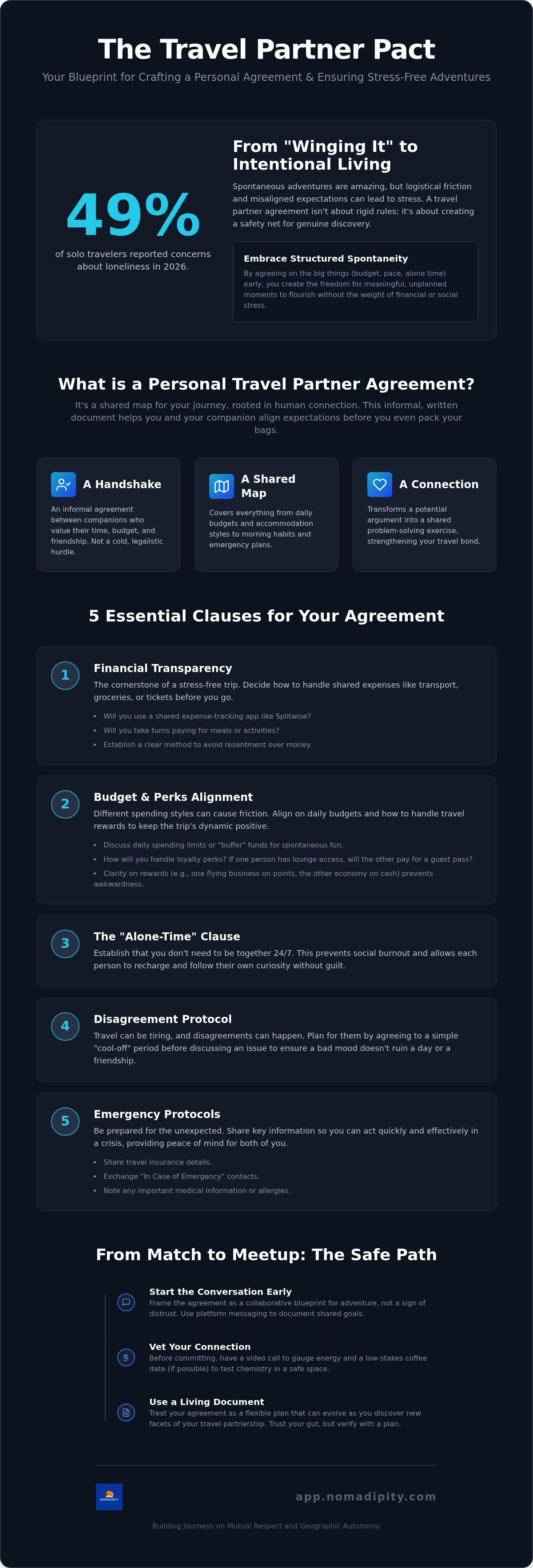
What if the secret to a perfectly unplanned sunset in Kyoto wasn't luck, but a document signed weeks before you ever left home? Most of us crave the freedom of the road, yet we often worry about shared trips turning into financial disasters. With 49 percent of solo travelers reporting concerns about loneliness in 2026, a thoughtful travel partner agreement is the framework of structured spontaneity that allows real adventure to flourish.
You deserve a journey where the only surprises are the pleasant ones. This guide teaches you to craft a personal agreement that protects your budget and aligns your itinerary. We will walk through a clear framework for sharing costs and handling disagreements, giving you the confidence to explore the world with a new connection through Nomadipity.com.
Key Takeaways
- Moving beyond "winging it" allows you to embrace intentional living and ensures your shared journey is defined by discovery rather than logistical friction.
- Financial transparency is the cornerstone of a stress-free trip; learn how to clearly define who pays for what before you even pack your bags.
- Crafting a travel partner agreement helps you set healthy boundaries, such as the "alone-time" clause, so you can recharge without any social guilt.
- Start the conversation early with your Nomadipity.com match to transform a potential stranger into a reliable partner through shared expectations and mutual respect.
What is a Personal Travel Partner Agreement?
A personal travel partner agreement is an informal but written set of expectations between companions. It isn't a cold, legalistic hurdle. Instead, it's a handshake between two people who value their time and their friendship. Unlike a professional travel agency partnership agreement that focuses on commissions and B2B revenue sharing, this document is rooted in human connection. It serves as a shared map for your expectations, covering everything from morning coffee habits to emergency budgets. By putting these details in writing, you eliminate the guesswork that often leads to resentment.
In 2026, we're seeing a collective shift toward intentional living. Modern explorers are moving away from the exhaustion of "winging it" in favor of geographic autonomy. We want depth over speed. When you define your boundaries before the first flight, you significantly reduce travel friction. This psychological preparation ensures that when a flight is delayed or a reservation is lost, you're already on the same page about how to react. It transforms a potential argument into a shared problem-solving exercise. This clarity is especially vital when you've connected through a matchmaking platform and are still learning each other's rhythms.
The Shift Toward Structured Spontaneity
Finding the middle ground between a rigid, minute-by-minute itinerary and total chaos is where the magic happens. Setting boundaries early doesn't kill the mood; it creates the safety net required for genuine cultural engagement. You can't truly get lost in a Parisian alleyway if you're too busy arguing about the price of lunch. Structured spontaneity is the intentional creation of a flexible framework that allows meaningful, unplanned moments to flourish without the weight of logistical stress. By agreeing on the big things early, you leave your heart open for the small, unexpected wonders that make travel worth the effort.
5 Essential Clauses for Your Travel Companion Contract
A successful journey relies on clear boundaries. Your travel partner agreement should first tackle financial transparency. Decide early how to split shared costs like ride-shares or grocery runs. Will you use a shared expense app, or take turns? Don't forget the "Alone-Time" clause. Establishing that you don't have to be together 24/7 prevents social burnout and allows each person to follow their own curiosity. Finally, include emergency protocols. Share your travel insurance details and "in case of" contacts so you're never scrambling during a crisis. If a disagreement arises, agree to a "cool-off" period before discussing it, ensuring a single bad mood doesn't end a friendship.
Budget Alignment and Frequent Flyer Perks
Resentment often grows in the gap between different spending styles. Discuss how you'll handle travel rewards programs and points early on. If one person uses miles for a business class seat while the other pays cash for economy, it changes the trip's dynamic. Set a daily "buffer" for those serendipitous moments, like a sudden boat tour or a local craft market. You should also decide how to handle shared loyalty perks. If you have airport lounge access, will your partner pay for a guest pass? Clarity here protects the joy of the experience. You can find someone with a matching budget and style by joining our travel matchmaking community at Nomadipity.com to start your next chapter with confidence.
How to Implement Your Agreement with a Nomadipity.com Match
Once you've explored the community and used the platform to find a travel buddy, the bridge between a digital profile and a real-world journey is built through intentional communication. Nomadipity.com profiles are designed to reveal the nuances of a person’s preferred pace and financial comfort zone long before you exchange your first greeting. When you're ready to introduce the concept of a travel partner agreement, frame it as a collaborative blueprint for adventure. It isn't a sign of suspicion; it's a commitment to protecting the very serendipity you both crave. Use the messaging tools on the platform to document these shared goals, ensuring every future itinerary is grounded in mutual respect and geographic autonomy.
From Matching to Meetup: The Safe Path
Moving from an online connection to a physical meetup requires a blend of intuition and protocol. Before you finalize any document or commit to a non-refundable booking, lean into the vetting strategies found in our solo travel guide. A video call is essential for gauging energy, while a low-stakes coffee date provides a safe space to test your chemistry. Treat your travel partner agreement as a living document that breathes with your trip. It should evolve as you discover new facets of your partnership. My advice as a seasoned traveler is simple: trust your gut, but verify your compatibility with a concrete plan. By establishing these frameworks through Nomadipity.com, you create the necessary space for those unplanned moments that make a journey truly unforgettable.
Your Path to Intentional Exploration
True freedom on the road isn't found in total chaos; it's found in the quiet confidence of shared understanding. By crafting a travel partner agreement, you transform potential friction into a foundation for discovery. You've learned how to align your budgets, protect your personal space, and move from digital matching to real-world connection with clarity. These simple frameworks aren't just logistics. They are the tools that allow your heart to stay open to the unexpected wonders of the journey.
Ready to meet someone who shares your vision? Our vibrant community of frequent flyers uses advanced filters for travel styles and budgets to ensure every match is grounded in compatibility. Join our safe, secure platform for nomadic networking today. Find your next travel match and start planning on Nomadipity. Your next great adventure is waiting, and it's even better when shared with the right partner.
Frequently Asked Questions
Is a travel partner agreement legally binding?
No, these documents are generally informal and are not governed by specific laws or regulations. Their primary purpose is to set clear expectations between companions regarding finances and responsibilities to prevent disputes. While they aren't legal contracts, they serve as a powerful tool for social accountability and help ensure both travelers are starting their journey with the same mindset.
What should I do if my travel buddy refuses to sign an agreement?
View a refusal as a vital piece of information about your compatibility. If a potential partner is unwilling to discuss basic expectations or put them in writing, it often signals a mismatched travel style. Take this as a cue to slow down. You might need to revisit the conversation or consider finding a match who values the same level of intentional planning.
How do we handle shared expenses if one person has a higher budget?
Focus on equity rather than equality to keep the peace. If one person wants a luxury upgrade, you might agree to split the cost of a standard room while the other person pays the difference for the suite. Using a travel partner agreement to document these compromises ensures that neither person feels pressured to overspend or resentful about their choices.
Can we change the agreement once the trip has already started?
Absolutely, your document should be a living reflection of your shared experience. Travel is unpredictable, and your needs might shift as you move through different destinations. Schedule a quick check-in every few days to see if the current arrangement is working. Adjusting the travel partner agreement mid-trip shows a healthy level of communication and a commitment to mutual respect.

Disclaimer
Nomadipity Blog Disclaimer
The content on Nomadipity is provided for general informational and inspirational purposes only. While we strive for accuracy and timeliness, Nomadipity does not guarantee that any information is complete, current, or suitable for your specific needs. Use your judgment and verify details before making travel plans, meeting with other users in person, or making any purchases influenced by the article.


