

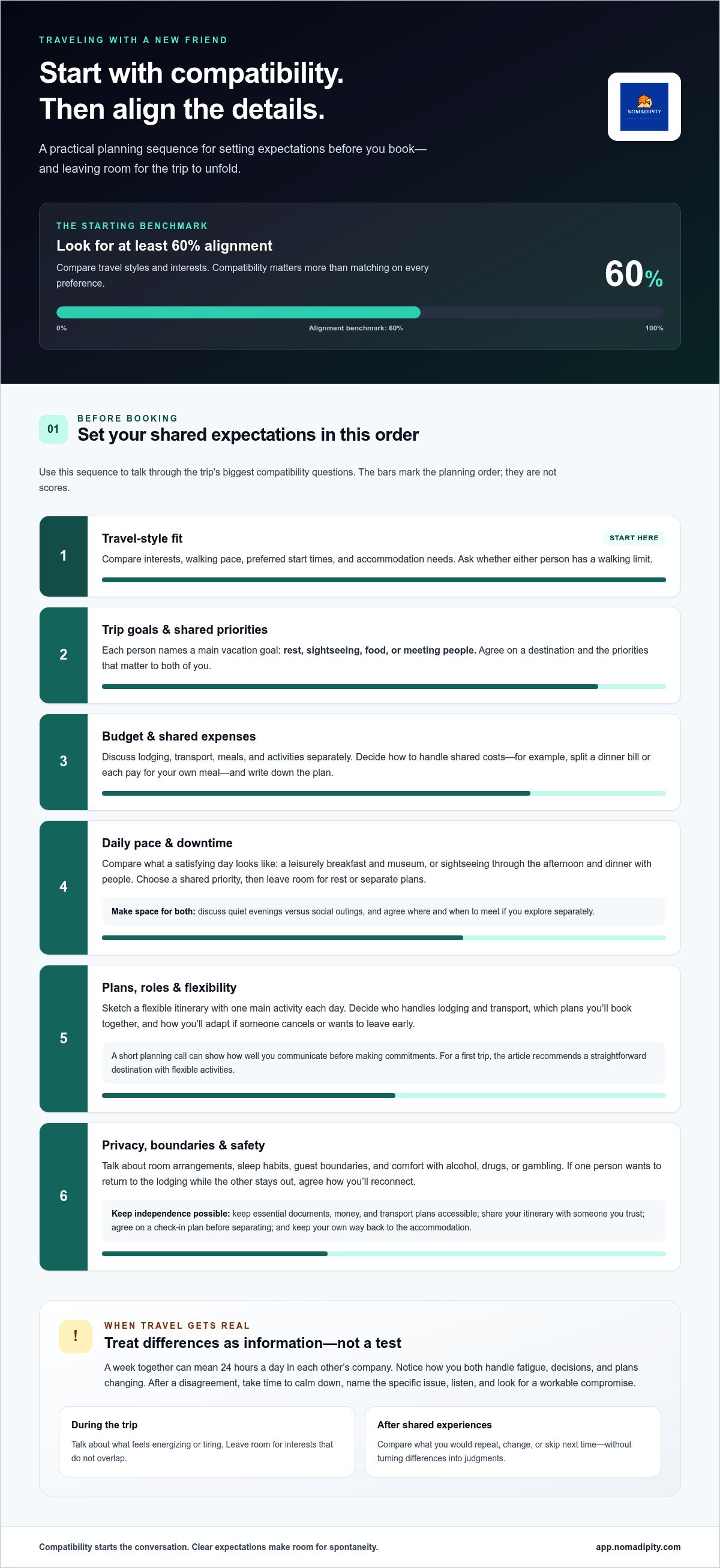
The best tips for traveling with a new friend begin before you book: look for at least 60% alignment in your travel styles and interests, then talk through what you each want from the trip. Agree on the main plans, budget expectations, and room for separate downtime. Shared travel can reveal sides of a person you haven't seen yet, so compatibility matters more than matching on every preference.
It makes sense to want a smooth itinerary and an easy connection, especially when you’re still learning how your new friend travels. Honest planning won’t make the trip feel rigid; it gives spontaneity room to flourish. You’ll learn how to align your goals, balance sightseeing with rest and social time, and navigate differences without treating them as problems. These tips for traveling with a new friend show how to set expectations before departure, leave flexibility in each day, and let shared experiences deepen the friendship naturally.
Key Takeaways
- Talk openly about budgets, downtime, and social plans so differences feel manageable rather than surprising.
- Choose which activities you’ll share and where either of you can explore separately.
- Divide planning tasks according to each person’s strengths, and agree on the trip’s priorities before booking.
- Notice how you both respond to everyday travel moments; shared experiences can reveal new sides of a friendship.
1. Discussing relaxation, sightseeing, and meeting people
Before booking, compare what a satisfying day looks like for each of you. One person might prefer a leisurely breakfast and a museum, while the other wants to sightsee all afternoon and meet people over dinner. Choose a shared priority, then leave time for rest or separate plans. Exploring apart can work well when you agree on where and when to meet. Discuss whether you prefer quiet evenings or social outings, too. Spending several days together can feel intense, so build breathing room into the schedule from the start.
Talk about budgets early, without judgment or embarrassment, and agree how you’ll handle shared expenses. For example, decide whether to split a dinner bill or each pay for your own meal. Settle the approach before ordering, and clarify who will book lodging, plan activities, or track shared costs. Clear roles reduce planning friction and the stress of sorting out money later.
Discuss alcohol, drugs, and gambling before your first night out. Share your comfort levels and spending boundaries, and say if you’d rather avoid those settings altogether. For example, agree that either person can return to the lodging while the other stays out, and decide how you’ll reconnect. Talk about personal boundaries, too, including whether guests may come back to your accommodation. Direct conversations help everyone feel comfortable and leave more room for good memories.
If an argument becomes upsetting, take time apart to calm down before discussing it. Then name the specific issue, listen to each other’s perspective, and look for a workable compromise rather than trying to win. A disagreement about skipping a landmark, for instance, may be easier to resolve after a quiet break and a fresh look at the day’s plans.
2. Aligning expectations and trip goals
Before booking flights, each person should name their main vacation goal: rest, sightseeing, food, or meeting people. The tips for traveling with a new friend work best when your interests and travel styles align by at least 60%. Compare walking pace, preferred start times, accommodation needs, and whether someone has a three-hour walking limit. Ask what would make the trip feel worthwhile to each of you.
When planning with someone you’ve just met, choose a destination, agree on shared priorities, and divide the planning tasks. Sketch a flexible itinerary with one main activity each day, then leave space for individual choices. Decide who will handle lodging and transport, and which plans you’ll book together. A short planning call can show how well you communicate before you make commitments.
Agree on a daily budget by discussing lodging, transport, meals, and activities separately. Decide how you’ll handle shared costs, such as a jointly booked transfer, and which expenses each person will cover. Write down the plan so you can both refer to it if preferences or plans change.
Choose separate rooms if privacy, sleep habits, or personal boundaries matter more than sharing accommodation. If you share, discuss room arrangements and guest boundaries first. To accommodate different travel styles, identify must-do activities and agree that either person can skip optional plans or explore separately.
These tips for traveling with a new friend also include discussing what happens if someone cancels or wants to leave early. Talk through shared bookings and how you’ll adapt the itinerary. For a first trip, choose a straightforward destination with flexible activities, so changing plans won’t derail the experience. If you’re looking for a companion with compatible interests, budgets, and travel styles, compare travel styles with potential companions.
3. Getting to know a friend through shared travel
A trip reveals how someone responds when plans shift unexpectedly. You may learn more from a missed connection, a tiring walk, or deciding where to eat than from small talk. Notice how your friend handles decisions, fatigue, and changes of plan. Those moments can deepen a friendship and show where your rhythms differ. Remember what you enjoy together, while making room for interests that don’t overlap.
Traveling together for a week can mean spending 24 hours a day in each other’s company. That closeness makes small habits more visible, from how someone handles a quiet morning to how they make decisions when plans change. Talk during a walk or over dinner about what feels energizing and what feels tiring. Treat the experience as a chance to learn about one another, not a test your friend must pass.
To stay safe with a new travel companion, keep your essential documents, money, and transportation plans accessible. Share your itinerary with someone you trust, and agree on a check-in plan before separating for an activity. Keep your own way to return to your accommodation so you can make independent choices if plans shift.
After a shared experience, compare impressions without turning differences into judgments. Ask what your friend would repeat, change, or skip next time; their answers can reveal what travel means to them. A thoughtful conversation can help you decide whether you’d enjoy another trip together. If you’re looking for a companion with compatible interests, budgets, and travel styles, explore travel matchmaking for compatible companions.
Nomadipity.com: Subscriptions to our travel matchmaking for similar travelers that would make great travel companions based on mutual interests, affiliations, budgets, and travel styles.
Nomadipity.com offers subscriptions to travel matchmaking for people seeking companions with similar interests, affiliations, budgets, and travel styles. It can be a useful next step when you’re ready to meet a potential travel friend whose approach to exploring may suit your own.
Shared preferences offer a place to start, not a substitute for conversation. Before making plans together, talk through the trip you each want, including its pace, activities, and spending priorities. Those early exchanges can help you see whether a promising connection feels comfortable in practice.
If you’re looking for a travel companion, visit Nomadipity.com’s travel matchmaking.
Carry Your Curiosity Into the Next Journey
Traveling with someone new can open the door to an unexpected connection, but the friendship doesn’t need to develop on a schedule. After you return, think about which moments you keep remembering and what you learned about traveling together. A thoughtful message, a shared photo, or a conversation about another destination can help the connection grow at its own pace.
Use these tips for traveling with a new friend as a starting point, not a script. Each journey offers a chance to learn what feels meaningful, where you work well as companions, and what you might explore next. If you’re still looking for a travel companion, Nomadipity.com offers subscriptions to travel matchmaking based on shared traveler preferences.
Explore travel matchmaking with Nomadipity.com, and take your next step toward a journey shaped by genuine connection.
Frequently Asked Questions
What’s the best strategy?
Treat the trip as a shared experiment, not a test of instant compatibility. Before booking, talk briefly about how you’ll respond if plans change, such as rain disrupting an outdoor activity. After your first day together, compare notes and adjust the pace. That small reset helps you learn from the experience while there’s still time to improve the trip.
Who’s Responsible for What?
Give each person ownership of tasks that suit their strengths, while keeping important information visible to both. For example, one traveler can track reservations while the other handles directions, then you can review the details together before setting out. Keep confirmation messages and key addresses somewhere you can both access. This keeps responsibilities balanced and lets either person step in if plans shift.
How to handle cancellations or one person wanting to leave early
Before the trip, discuss what you’ll do if someone cancels or wants to leave early, including how you’ll handle shared bookings and adjust the itinerary. Choose flexible activities so a change of plans won’t derail the experience.

Disclaimer
Nomadipity Blog Disclaimer
The content on Nomadipity is provided for general informational and inspirational purposes only. While we strive for accuracy and timeliness, Nomadipity does not guarantee that any information is complete, current, or suitable for your specific needs. Use your judgment and verify details before making travel plans, meeting with other users in person, or making any purchases influenced by the article.


