

What if the safest way to travel with someone new isn’t to trust them immediately, but to let trust grow in stages? Sharing a route, a room, and long days with someone you barely know can feel exciting and unnerving at once. Overcoming fear of traveling with a stranger doesn’t mean pushing past your instincts. It starts with taking your concerns seriously.
You’re right to wonder whether you’ll be compatible, how much to share, and what to do if something feels off. This guide turns that uncertainty into a practical process. You’ll learn what to discuss, how to set boundaries, and how to choose a low-pressure next step, or decide the match isn’t right for you.
Key Takeaways
- Separate compatibility concerns from practical safety questions so you can address each directly.
- For overcoming fear of traveling with a stranger, build familiarity gradually through conversation, clear expectations, and a public meeting.
- Discuss budgets, daily pace, accommodation preferences, social energy, and flexibility before making travel plans.
- Try a brief, low-pressure activity first. Give yourself permission to pause, change course, or decline.
Why Traveling With a Stranger Feels Scary, and What You Can Control
Travel brings everyday decisions into close quarters: where to stay, how to spend money, and what to do when plans diverge. With someone new, you may wonder both whether you’ll get along and whether you can rely on them. Those are different questions, and neither makes you weak or proves there’s danger. The psychological basis of trust helps explain why confidence takes time: it develops through what someone says and does, not through sharing a destination alone.
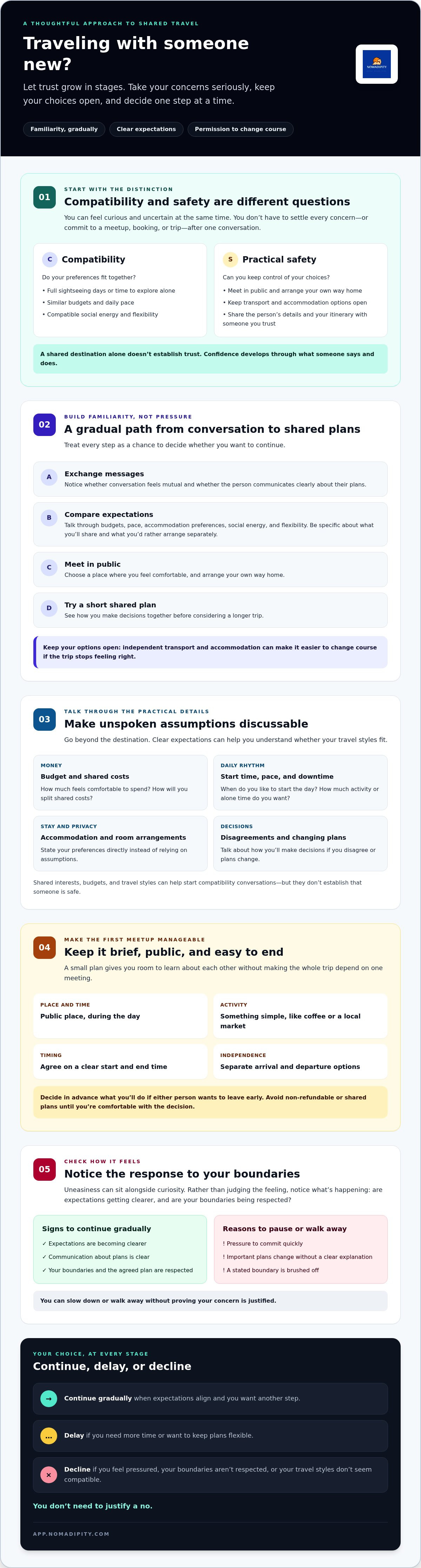
For overcoming fear of traveling with a stranger, give each concern its own response. Compatibility is about preferences, such as whether you want full days of sightseeing or time to explore alone. Safety is about practical choices, such as meeting in public and keeping control of your plans. You don’t need to settle either question all at once.
A first conversation is just a first conversation. It doesn’t commit you to a meetup, a booking, or a trip. You can learn a little, reflect, and decide whether you want to take another step.
Is uneasiness a warning sign or a normal part of meeting someone new?
Uncertainty can sit alongside curiosity. You might look forward to sharing a journey and still want more time before making plans. Rather than judging the feeling, notice what’s happening: are expectations becoming clearer, and are your boundaries being respected?
Pause if the person pressures you to commit quickly, changes important plans without a clear explanation, or brushes off a boundary you’ve stated. You can slow down or walk away without proving your concern is justified. If independent travel feels like a better fit, explore this solo travel guide as another way to shape a trip around your own pace.
How to Build Trust Before Traveling With a Stranger
Trust doesn’t need to arrive all at once. Let familiarity build in stages, treating each step as a chance to decide whether you want to continue:
- Exchange messages. Notice whether the conversation feels mutual and the person communicates clearly about their plans.
- Compare expectations. Discuss your budget, daily pace, accommodation preferences, social energy, and flexibility. Be specific about what you’re comfortable sharing and what you’d prefer to arrange separately.
- Meet in public. Choose a place where you feel comfortable, and arrange your own way home.
- Try a short shared plan. A brief activity lets you see how you make decisions together before considering a longer trip.
Keep your options open as plans take shape. Consider arranging your own transport and accommodation, especially at first, and share the person’s details and your itinerary with someone you trust. Independent arrangements can make it easier to change course if the trip stops feeling right.
What should you discuss before saying yes to a shared trip?
Go beyond the destination. Compare when you like to start the day, how much you’re comfortable spending, which activities matter most, and how much downtime you need. Talk through how you’ll split shared costs, make decisions if you disagree, and respond if plans change. Be explicit about privacy and room arrangements rather than relying on assumptions.
These conversations turn vague hopes into useful expectations. For more ideas on choosing a compatible companion, read this guide to finding a travel buddy. Shared interests, budgets, and travel styles can help you start compatibility conversations, but they don’t establish that someone is safe. Nomadipity.com’s traveler profiles and matching can help you find people with overlapping preferences; you still decide how to screen a potential companion and what boundaries to set. Steady steps make overcoming fear of traveling with a stranger feel more manageable without asking you to ignore your judgment.
Choose a Low-Pressure First Step, or Decide Not to Travel Together
You don’t have to leap from a promising conversation to a shared itinerary. A short, daytime meetup in a public place can help you see how conversation feels in person. Arrange your own way there and home, and choose an activity that’s easy to end, such as coffee or a visit to a local market.
Afterward, consider how you felt and whether the other person respected the plan and your boundaries. If you’d like to meet again, try another brief local activity before discussing a longer journey. Keep arrangements flexible, and avoid booking non-refundable or shared plans until you’re comfortable with the decision.
How can a traveler make the first shared plan feel manageable?
Agree on a clear start and end time, meet somewhere public during the day, and keep separate arrival and departure options. Decide in advance what you’ll do if either of you wants to leave early. A small plan gives you room to learn about each other without making the whole trip depend on one meeting.
Then choose the next step that fits what you’ve learned. Continue gradually if expectations align. Delay if you need more time. Decline if you feel pressured, your boundaries aren’t respected, or your travel styles don’t seem compatible. You don’t need to justify a no. Overcoming fear of traveling with a stranger is about making a considered choice, not convincing yourself to go.
Nomadipity.com's platform lets travelers explore profiles and connect around shared interests and travel styles. Common ground can be a useful starting point for a conversation, but it can’t guarantee someone’s safety or replace your own screening and judgment.
Take the Next Step at Your Own Pace
Traveling with someone new doesn’t require instant trust. Let familiarity build through conversation, compare expectations before committing, and use a brief public meetup to decide whether you want to continue. You can pause or decline if your comfort or compatibility isn’t there.
Overcoming fear of traveling with a stranger is less about eliminating uncertainty than making choices you can stand behind. Shared interests may spark a connection, while clear conversations help you assess whether your plans and preferences align. Nomadipity.com matches travelers based on interests, affiliations, budgets, and travel styles. Profiles and shared itineraries can give you practical topics to discuss, but they can’t guarantee safety.
If you’re ready to explore potential travel connections, explore Nomadipity.com and connect around shared travel interests. Take it one thoughtful step at a time. The right journey begins with a choice that feels right to you.
Frequently Asked Questions
Is it safe to travel with someone you just met?
No one can guarantee safety based on familiarity or an online match. Build contact gradually, meet publicly first, set clear boundaries, and keep independent transport and accommodation options. Share the person’s details and your itinerary with someone you trust. If they pressure you to commit, disregard your boundaries, or give inconsistent information, pause and reconsider before making plans.
How do I know if a potential travel companion is trustworthy?
Trust develops over time through consistent communication and respect for your boundaries. Compare practical expectations, meet before traveling, and notice how the person responds when you disagree or need to change a plan. Shared interests or a compatible profile can open a useful conversation, but they can’t establish someone’s character. Look for respectful actions over time, not just reassuring words.
What should I do if I feel uncomfortable after agreeing to travel together?
You can change your mind as circumstances or your comfort level change. State your boundary clearly, then adjust or cancel plans where possible. You don’t owe someone continued access, a shared itinerary, or an explanation that feels unsafe to give. If you feel unsafe, contact someone you trust and move to a place where you feel secure. Your wellbeing comes first.
Can traveling with a stranger work if we have different travel styles?
Yes, different travel styles don’t automatically rule out a trip, but talk through expectations before committing. Compare budgets, daily pace, preferred activities, downtime, and which plans you’d keep independent. Try a short outing together before considering a longer journey. If compromises feel one-sided or important needs keep clashing, reconsider the plan rather than hoping the differences will disappear on the road.

Disclaimer
Nomadipity Blog Disclaimer
The content on Nomadipity is provided for general informational and inspirational purposes only. While we strive for accuracy and timeliness, Nomadipity does not guarantee that any information is complete, current, or suitable for your specific needs. Use your judgment and verify details before making travel plans, meeting with other users in person, or making any purchases influenced by the article.


