

The most experienced traveler isn’t always the easiest person to travel with. When you’re finding an experienced travel companion, passport stamps matter less than the judgment behind them: how someone handles a missed connection, adjusts plans, and communicates when the day goes sideways. Look for experience that can make a trip smoother, not a résumé that simply sounds impressive.
Shared enthusiasm only gets you so far. Different budgets, daily rhythms, or ideas of a good day can turn even a dream destination into a negotiation. This guide explains how to recognize practical travel experience, discuss compatibility without making conversation feel like an interview, and find places to begin your search. You’ll find questions to ask, expectations to settle before booking, and ways to use profiles and shared itineraries on Nomadipity to discover travelers whose plans and preferences may align. A good fit leaves room for thoughtful planning and the unexpected.
Key Takeaways
- Look for practical judgment, clear communication, and flexibility. A long list of destinations alone doesn’t show how someone travels.
- When finding an experienced travel companion, ask about a past trip, compare planning habits, and try a small shared plan before committing.
- Discuss how you each approach delays, downtime, independent activities, and spending to spot potential friction early.
- Explore existing networks and travel-matching communities. Profiles and itineraries can reveal promising overlap, while a direct conversation helps confirm the fit.
What Makes an Experienced Travel Companion, and Why Compatibility Matters
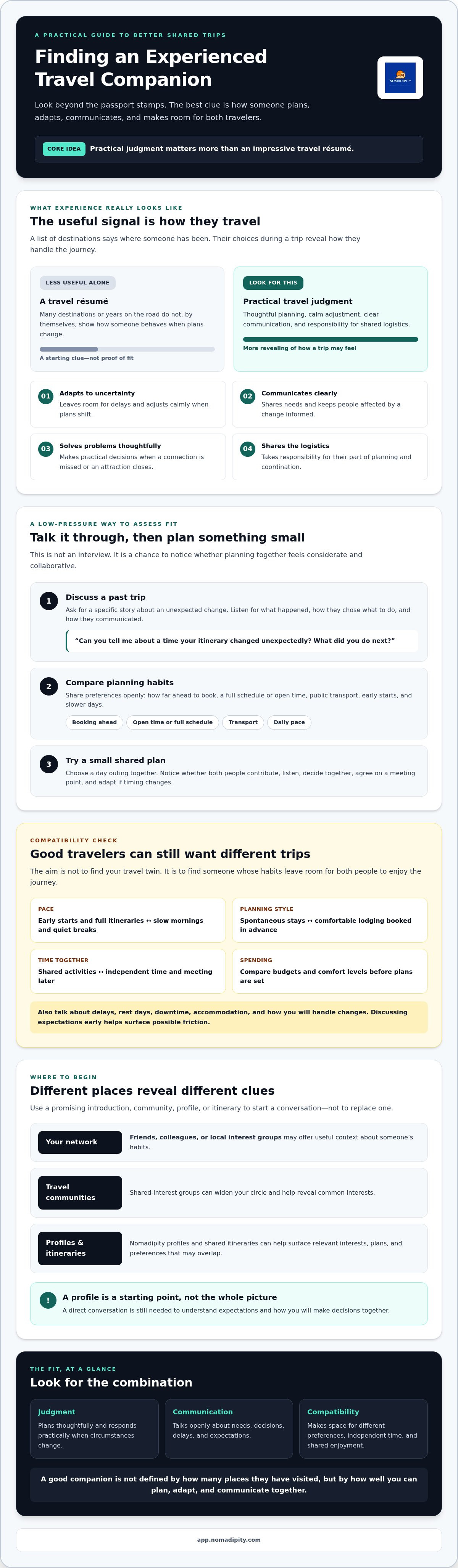
Travel experience isn’t a tally of countries or years on the road. It shows in the choices someone makes: whether they leave room for transit delays, adjust calmly when plans change, communicate needs clearly, and take responsibility for their share of the logistics. Ask how they handled a specific disruption, such as a missed connection or a closed attraction. The details of their response can tell you more than a long passport stamp collection.
Travel experience is the practical judgment to plan thoughtfully, adapt to uncertainty, and communicate well, not simply the number of places visited. That judgment can help a trip run smoothly, but it doesn’t guarantee you’ll enjoy traveling together. Interpersonal compatibility also depends on how people’s expectations, habits, and preferences fit. Two capable travelers can still want very different days.
Does a seasoned traveler automatically make the right companion?
Not necessarily. One traveler may prefer early starts and full itineraries, while another needs slow mornings and quiet breaks. Comfort levels and budgets matter, too. Imagine a seasoned backpacker who prefers spontaneous hostel stays paired with someone who plans comfortable lodging in advance. Both may be skilled, but they’ll need to discuss accommodation, pace, and spending to see whether their preferences can work together.
As you begin finding an experienced travel companion, look for practical judgment and a willingness to talk openly, not an impressive travel résumé alone. For broader ideas on meeting potential companions and shaping a shared trip, explore this travel buddy guide. The aim isn’t to find your travel twin. It’s to find someone whose habits leave room for each of you to enjoy the journey.
How to Assess a Potential Travel Companion's Experience Before You Plan
A relaxed conversation can reveal more than a list of destinations. Try a simple progression: talk through a past trip, compare how you each plan, then make a small plan together, such as choosing a day outing. Notice whether both people contribute ideas, listen to preferences, and make decisions together. You’re not conducting an interview; you’re learning how it feels to plan as a pair.
Which questions reveal real-world travel habits?
Ask for a specific story: “Can you tell me about a time your itinerary changed unexpectedly? What did you do next?” Listen for practical details: what changed, how they chose what to do, and whether they communicated with anyone affected. Then compare everyday preferences. How far ahead do you like to book? Do you prefer open time or a full schedule? How do you feel about public transport, early starts, and slower days?
Talk about delays, rest days, and independent time, too. Would you be comfortable splitting up for an afternoon and meeting later? Discussing this before a trip helps clarify whether shared activities are an expectation or simply an option. A useful solo travel guide can help you think about balancing shared plans with the freedom to explore on your own.
Practical travel judgment shows in clear communication, flexible problem-solving, and decisions that account for both people. Pay attention to how the small shared plan unfolds. Can you agree on a meeting point, adjust if timing changes, and make space for each other’s preferences? That’s a low-pressure glimpse of how planning together might feel.
If you’re finding an experienced travel companion, Nomadipity.com profiles and shared itineraries can help you discover travelers with relevant interests and plans. Use a promising match as a starting point for the conversations above, then compare preferences directly. Explore potential travel connections.
Where to Find an Experienced Travel Companion Who Fits Your Trip
Your existing network can be a comfortable place to start. Friends, colleagues, or local interest groups may connect you with someone whose habits you already understand. Travel communities can widen the circle, especially around shared interests, while matchmaking platforms can help surface people whose itineraries and preferences overlap with yours.
Consider what each option helps you learn. A personal introduction may give you useful context about the person; a community can reveal shared interests; a traveler profile can show upcoming plans and preferences. None tells the whole story. A profile can help you spot a promising connection, but a direct conversation is still needed to understand expectations and how you’ll make decisions together.
How can a travel-matching platform help you start well?
Nomadipity.com’s matchmaking considers mutual interests, affiliations, budgets, and travel styles, helping you discover travelers whose preferences may fit the trip. Profiles and shared itineraries offer starting points for conversation. Treat a match as an introduction, not proof that you’ll travel well together.
Before committing, compare the shape of the trip. Which places and activities matter to each of you? What spending expectations feel comfortable? How much flexibility do you want if plans change? Clarify whether you’re picturing a tightly arranged itinerary or leaving open space for spontaneous discoveries. These questions can reveal whether your practical expectations align, even when your interests initially seem like a perfect match.
To meet travelers with relevant plans and preferences, explore Nomadipity.com’s traveler matchmaking. Use a promising connection as the beginning of a thoughtful conversation about the journey you both want.
Choose a Companion Who Makes the Journey Better
Finding an experienced travel companion is about more than comparing passport stamps. Look for practical judgment, open communication, and habits that suit the trip you have in mind. A conversation about past experiences, planning preferences, budget, and flexibility can reveal whether your expectations are likely to work well together.
A good connection can begin with shared interests and overlapping itineraries, but honest conversation helps shape a trip that feels comfortable for both of you. Nomadipity.com helps travelers discover potential connections through matchmaking based on interests, affiliations, budgets, and travel styles. Members can also create traveler profiles and share upcoming itineraries, giving you useful context for starting a conversation.
Explore Nomadipity.com’s traveler matchmaking to see who may share your plans and preferences. Start with a conversation about how you each like to travel, then decide whether your expectations fit.
Frequently Asked Questions
How do I find an experienced travel companion?
Start with people you know, travel communities, or a matching platform, then assess how each person’s plans and preferences fit yours. Finding an experienced travel companion is easier when you look beyond destination lists: ask about travel habits, compare budgets and pace, and discuss expectations before booking. Nomadipity.com profiles and upcoming itineraries can help you discover travelers with potentially relevant plans.
What makes someone a good travel companion?
A good travel companion communicates clearly, respects boundaries, and contributes to decisions rather than expecting one person to manage everything. They can share plans while allowing room for independent time, and they’re willing to discuss practical needs such as spending limits, accommodation preferences, and daily pace. You don’t need identical interests, but compatible expectations and consideration for each other matter.
Is a frequent traveler always an experienced travel companion?
No. Frequent travel may build familiarity with planning and adapting, but it doesn’t automatically show how someone handles shared decisions or unexpected changes. Ask for a specific example: how did they respond to a delayed connection or a changed itinerary? Their communication and judgment in those moments may tell you more about traveling together than how often they take trips.
What should I ask a potential travel companion before a trip?
Ask how they like to plan, what daily pace suits them, and how they handle delays or changed plans. Compare preferences for advance bookings, transport, rest days, independent time, accommodation, and activity spending. You might ask, “What’s a trip that didn’t go to plan, and how did you adapt?” Discussing these details early can surface mismatched expectations before either of you commits.

Disclaimer
Nomadipity Blog Disclaimer
The content on Nomadipity is provided for general informational and inspirational purposes only. While we strive for accuracy and timeliness, Nomadipity does not guarantee that any information is complete, current, or suitable for your specific needs. Use your judgment and verify details before making travel plans, meeting with other users in person, or making any purchases influenced by the article.


