

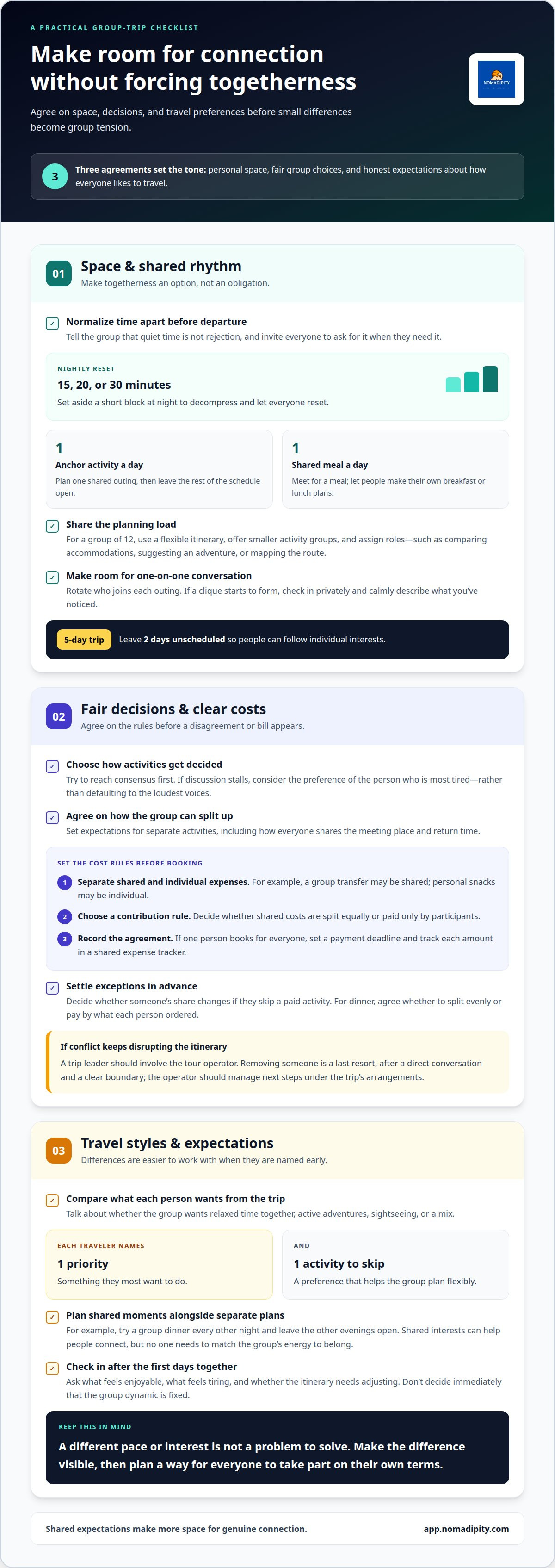
A clique doesn't have to set the rhythm for everyone else. To handle cliques in a travel group, agree on boundaries and a shared way to make decisions before departure, then make room for different travel styles and solo time. Even 15, 20, or 30 minutes of personal downtime at night can give everyone space to reset without making that need feel like rejection.
It’s natural to hope a trip will bring the whole group closer, and it can sting when familiar pairs or inside jokes leave someone on the edges. The solution isn’t to force constant togetherness, but to add enough structure for people to connect while keeping their independence. Set considerate boundaries, make group decisions more fairly, and talk about travel preferences before they cause friction. That leaves more room for unexpected moments and genuine connection.
Key Takeaways
- Make space for one-on-one conversations and raise social tension early, before it settles into lasting awkwardness.
- Agree on how the group will choose activities so decisions don’t default to the loudest voices.
- Talk about trip intentions, pace, and interests before departure to spot mismatches and plan flexible options.
- Look for travel companions whose interests, budgets, and travel styles align with yours when forming a group.
1. Setting boundaries and planning alone time
Before departure, agree that time apart isn’t a rejection of the group. Tell friends you may want quiet time, then invite them to do the same. A simple plan can prevent stress: set aside 15, 20, or 30 minutes at night to decompress. On a five-day trip, leaving two days unscheduled also gives people room to follow individual interests. You can reconnect later without treating every separate choice as a threat to the group dynamic.
Share the planning load instead of letting one person manage every detail. For a group of 12, use a flexible itinerary, offer smaller activity groups, and assign roles. One person might compare accommodations, while another suggests an adventure or maps the route. Match tasks to each planner’s travel style: a detail-oriented friend can organize logistics, while someone who prefers spontaneity can suggest open-ended options. Clear roles make it easier to decide together and reduce resentment when plans change.
Meals can bring people together without requiring everyone to spend every hour together. Plan one shared meal a day, or cook together when that suits the group. Let people make their own breakfast or lunch plans, then meet for dinner and share stories. A meal gives quieter travelers a natural way into the conversation, even if they arrived as strangers. Keep the plan flexible to accommodate different energy levels and interests.
Choose one anchor activity a day, then leave the rest of the schedule open. Conversations can feel easier in pairs or small groups than in a crowd, so rotate who joins each outing. If a clique begins to form, check in privately and describe what you’ve noticed. A calm conversation can address the behavior without asking anyone to give up close friendships.
2. Agreeing on how group decisions will be made
Before the trip, choose a decision-making rule that doesn’t reward the loudest voices. For a sightseeing stop, try to reach consensus first. If discussion stalls, consider the preference of the person who’s most tired. Agree, too, on whether the group can split up for an activity, and how everyone will share the meeting place and return time. Clear logistics let people make different choices without turning each one into a loyalty test.
Set the cost structure before booking accommodations or shared transport. Decide which expenses are shared, such as a group transfer, and which are individual, such as personal snacks. For shared costs, agree whether everyone contributes equally or only participants pay. If one person books for everyone, set a payment deadline and record each amount in a shared expense tracker. That gives the group a common reference if memories differ.
Use the same conversation to agree on exceptions. If someone skips a paid activity, decide in advance whether their share changes. For dinner, settle whether the bill is split evenly or each person pays for what they ordered. A clear rule can matter more than the method itself. Ask whether the approach feels fair, then write it in the trip chat before costs arise.
A trip leader should involve the tour operator if repeated conflict disrupts the itinerary or the group’s ability to continue together. Removing someone should be a last resort, after a direct conversation and a clear boundary. The operator should manage any next steps under the trip’s arrangements.
If you’re building a future group, travel matchmaking for compatible companions can help you find people with similar interests, budgets, and travel styles.
3. Group travel styles and preferences
Cliques often form because familiar people share a pace, interests, or routines. On a group trip, connecting with familiar companions can feel easier than meeting someone new, especially when plans move quickly. In a small group, a mismatch between two travelers can shape the whole week. Name the difference early: one person may want museums, while another prefers unplanned walks through new destinations. Neither preference is wrong, but pretending they match can leave someone feeling excluded.
Before departure, talk about the purpose of the trip. Is the group looking for relaxed time together, active adventures, sightseeing, or a mix? Ask each traveler to name a priority and an activity they’re willing to skip. A couple joining friends, for example, might prefer quiet evenings while others want late dinners. Use those answers to plan shared moments alongside time for separate activities. This makes differences visible without asking anyone to defend their travel style.
Try a shared group dinner every other night and leave the other evenings open. This rhythm creates chances to make memories together without turning every hour into a test of belonging. On a group tour, travelers can enjoy scheduled activities and use free time for personal interests. Invite someone who’s trying to connect, but don’t make inclusion depend on matching the group’s energy.
Check in after the first days together, rather than deciding immediately that the group dynamic is fixed. Ask what feels enjoyable, what feels tiring, and whether the itinerary needs adjustment. To meet travel companions with compatible interests, budgets, and styles, explore travel matchmaking for compatible companions.
Nomadipity.com: Subscriptions to our travel matchmaking for similar travelers that would make great travel companions based on mutual interests, affiliations, budgets, and travel styles.
Nomadipity.com offers travel matchmaking subscriptions for people seeking companions with compatible interests, affiliations, budgets, and travel styles. If you’re planning a trip, it can help you start with shared expectations rather than discover major differences only after departure.
Consider the kind of travel you enjoy: a relaxed itinerary, active days, cultural exploration, or a mix. Those preferences can help you think about who might suit your plans and what to discuss before traveling together. Shared interests don’t mean you’ll agree on every choice, but they offer a thoughtful starting point for building a group.
If you’re ready to explore travel matchmaking, visit Nomadipity.com.
Carry a more open rhythm into your next trip
Knowing how to handle cliques in a travel group can help you protect your sense of belonging without expecting every traveler to become close friends. On your next trip, notice who hasn’t had a chance to speak, invite them into the conversation, and stay open to plans that differ from your usual pace. Small gestures can shift the atmosphere when people feel welcome to take part without pressure.
Before your next departure, decide what kind of company and experience you want to share. A little reflection now can make it easier to choose travel companions and set expectations that feel comfortable from the start. When you're ready to take that next step, Contact Nomadipity.com to plan your trip. Your next journey can leave space for both connection and the unexpected.
Frequently Asked Questions
How can a trip leader recognize exclusion or cliques?
A trip leader can identify exclusion by looking for repeated patterns, not one quiet moment. Notice who gets interrupted, whose suggestions go unanswered, or who hears about plans only after they’re settled. Look for practical signs, too, such as someone being left out of group messages or consistently sitting alone. Before drawing conclusions, ask the traveler privately how they feel about the group.
How should you address cliques without escalating conflict?
To handle cliques in a travel group without escalating conflict, speak privately about specific behavior instead of labeling people. For example, say, “I noticed Jordan’s suggestions were skipped during the museum discussion. Can we make space for them?” Explain the impact, ask for a clear change, and listen to the response. A calm, precise conversation is less likely to make someone defensive.
How can you help solo travelers feel included in a group trip?
Help solo travelers feel included with a natural introduction and a choice, rather than putting them on the spot. Connect two people through a shared interest, such as photography or local history, then suggest they compare notes during a walk. Use their name in conversation and ask what they’d enjoy doing. This makes joining feel like an invitation, not an assignment.
What group activities help travelers mix and get to know each other?
Choose activities with a shared focus, so conversation doesn’t depend on already knowing one another. A simple photo prompt can invite travelers to capture a detail that represents the destination and explain their choice. A collaborative map, where each person marks a place they’re curious about, can also reveal interests and spark connections without requiring anyone to perform for the group.
How can you set expectations for inclusive behavior before a group trip?
Set expectations in the trip’s planning chat before departure by naming behaviors everyone can follow. Ask travelers to share important updates in the main thread, avoid jokes that target someone, and make space for quieter voices during planning. Invite each person to suggest a group norm, then agree on how to raise concerns respectfully. Written expectations give everyone a shared reference if tension arises.

Disclaimer
Nomadipity Blog Disclaimer
The content on Nomadipity is provided for general informational and inspirational purposes only. While we strive for accuracy and timeliness, Nomadipity does not guarantee that any information is complete, current, or suitable for your specific needs. Use your judgment and verify details before making travel plans, meeting with other users in person, or making any purchases influenced by the article.


