

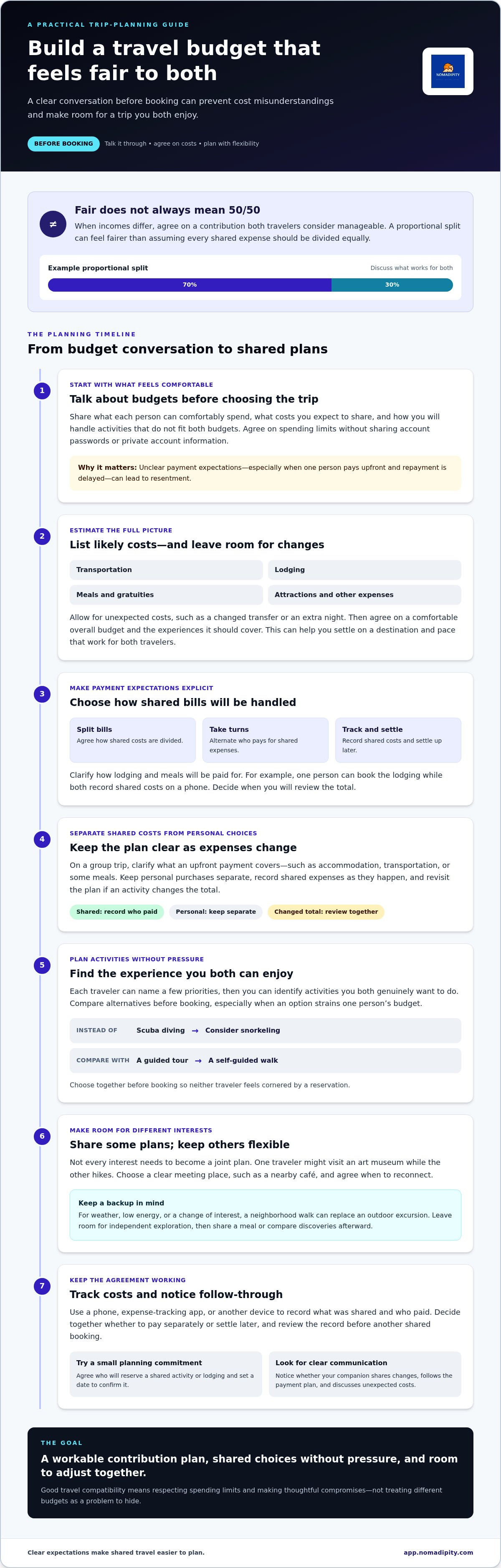
A fair travel budget isn’t always a 50/50 split. Finding a financially savvy travel partner starts with an honest conversation before you book: discuss what each of you can comfortably spend, the costs you’ll share, and how you’ll handle activities that don’t fit both budgets. Equal shares can feel unfair when your financial situations differ, so aim for an approach that works for both of you.
You may already know that money can shape a trip as much as the destination. The good news is that clear expectations can ease tension and leave more room to enjoy the journey. Read on to learn how to estimate trip expenses, agree on shared activities, and make thoughtful compromises while respecting your companion’s financial boundaries.
Key Takeaways
- Map out likely trip expenses, including lodging, transportation, meals, and activities, then agree how you’ll track and settle shared costs.
- Choose experiences you both enjoy, and make space for lower-cost alternatives or separate plans when your interests differ.
- Discuss what each person can comfortably afford; proportional contributions can be fairer than assuming every expense should be split equally.
- Look for a companion whose travel style and budget expectations align with yours, so planning feels collaborative rather than strained.
1. Talking honestly about travel budgets
Before booking, compare the trip’s essential costs together. Estimate transportation, lodging, meals, gratuities, attractions, and other expenses. Leave room for unexpected costs, such as a changed transfer or an extra night. Then agree on a comfortable overall budget and the experiences it should cover. This conversation can help you choose a destination and pace that work for both travelers.
Talk through the budget before choosing where to stay, eat, or explore. What are the risks of sharing travel costs or financial information with a travel partner? Unclear payment expectations can cause resentment, especially when one person pays upfront and repayment is delayed. Sharing more personal financial detail than needed may also leave you uncomfortable. Discuss spending limits without sharing account passwords or private account information.
Make the payment method clear for lodging and meals. You might split shared bills equally, take turns paying, or track expenses and settle up later. For example, agree that one person books the lodging while both record shared costs on a phone. Decide when to review the total so a small balance doesn’t become a trip-long misunderstanding.
Different incomes may call for a different split. Couples can divide travel costs in proportion to their bank accounts, such as 70/30, rather than assuming equal shares. On a group trip, clarify any upfront payment and whether it covers accommodation, transportation, or some meals. Keep personal purchases separate, record shared expenses as they happen, and revisit the plan if an activity changes the total. Clear terms leave more attention for the place you came to experience.
2. Agreeing on shared activities
Start by comparing the experiences each of you most wants from the trip. One person may picture quiet mornings at a market, while the other prefers active excursions. Each traveler can name a few priorities, then identify activities both genuinely want to do. That short list gives shared plans a purpose instead of turning every day into a negotiation.
Compare alternatives before deciding. If scuba diving strains one person’s budget, consider snorkeling instead. It still offers time on the water at a lower cost. If one traveler prefers a guided tour, compare it with a self-guided walk. Choose an option that preserves the appeal without pressuring either person. Agree together before booking so neither traveler feels cornered by a reservation.
Not every interest needs to become a joint plan. One traveler might spend the morning in an art museum while the other hikes. Choose a clear meeting place, such as a nearby café, and agree when to reconnect before heading in separate directions. This arrangement respects personal preferences while keeping part of the day shared.
Before departure, decide which experiences you’ll share and which can stay flexible. Pick a backup for weather, low energy, or a change of interest. A neighborhood walk, for example, can replace an outdoor excursion. Keep room for independent exploration, then share a meal or compare discoveries afterward. If you’re looking for someone whose interests align, connect with travelers with similar interests.
3. Respecting a travel partner’s financial situation
Look for a companion who communicates openly, respects spending limits, and follows agreed payment plans. A money-savvy traveler can discuss trade-offs without shame or pressure. Equal 50/50 shares aren’t automatically fair when incomes differ. Focus on a contribution plan both people consider manageable, then adjust shared choices to fit it.
Use a phone, expense-tracking app, or another device to record shared costs as they happen. Make each entry clear by noting what was shared and who paid. Decide together whether to pay separately or settle expenses later. For example, review the record over dinner and agree on the balance before the next shared booking. The best tool is one both travelers will actually use.
To assess reliability, start with a small planning commitment. Agree who will reserve a shared activity or lodging, and set a date to confirm it. Notice whether your companion communicates changes and keeps you informed about shared expenses. Ask how they prefer to handle unexpected costs. Their answers and follow-through offer practical signs of compatibility without requiring private account details.
If your incomes differ, discuss a proportionate split or reduce the shared plan until both can participate comfortably. Don’t let one person’s preferred restaurant or excursion become an obligation for the other. A good compromise preserves choice: one traveler can opt out, while you plan another shared experience together. Look for a companion whose budget and travel style fit yours through travel matchmaking for similar budgets and styles.
Nomadipity.com: Subscriptions to our travel matchmaking for similar travelers that would make great travel companions based on mutual interests, affiliations, budgets, and travel styles.
Nomadipity.com offers subscriptions to travel matchmaking for people seeking companions with compatible interests, budgets, and travel styles. If you’ve clarified what you can comfortably spend but haven’t found someone whose approach feels aligned, it can help you connect with similar travelers. Shared expectations can make it easier to plan activities, discuss trade-offs, and enjoy a trip without treating different budgets as a problem to hide. Mutual interests and affiliations also give you more to talk about as you consider whether your travel rhythms fit. A thoughtful match is a starting point for conversation, not a substitute for discussing plans openly. Visit app.nomadipity.com to explore travel matchmaking.
Let your next journey begin with the right connection
The best travel plans leave room for discovery without asking you to ignore your limits. When finding a financially savvy travel partner, consider financial compatibility as part of a broader fit: how you like to travel, what you hope to experience, and how you make decisions together. A shared destination is only the beginning. Respect, curiosity, and honest conversation can turn different perspectives into a richer journey.
If you’re ready to meet travelers whose budgets and styles may align with yours, explore Nomadipity.com’s travel matchmaking. Take your time getting to know a potential companion and let a thoughtful conversation shape what comes next. Explore travel matchmaking on Nomadipity.com, and move toward your next adventure with intention.
Frequently Asked Questions
Where can I find a financially savvy travel partner in the U.S.?
Look in travel communities built around your interests, such as hiking groups, cultural associations, or frequent-traveler forums. You can also ask friends to introduce you to someone with a compatible pace and approach to spending. Start with a conversation or a short local outing before planning a longer trip. This gives you a chance to see how you communicate and make decisions together.
How can I discuss travel budgets and spending habits before a trip?
Bring it up while comparing destinations, before anyone books. You could say, “I want us both to feel comfortable with the trip. What kinds of experiences do you want to prioritize?” Then discuss spending preferences, such as choosing a simple hotel to make room for a special meal. Share your own limits without asking for account details or personal financial documents.
What questions should travel partners ask each other about costs and finances?
Ask what each person considers essential, where they prefer to save, and how they handle optional upgrades. Clarify who will make reservations and how you’ll manage a cancellation or a change of plans. You might also ask, “Would you rather decide on each shared purchase together?” These questions reveal expectations and decision-making habits without turning a travel conversation into a request for private financial information.
How can I find compatible travel partners through travel groups, apps, or communities?
Choose spaces organized around the kind of trip you want, such as outdoor adventures, food-focused travel, or slow stays. In a profile or introduction, describe your preferred pace, interests, and general spending style. Read how others describe their plans, then start a direct conversation about compatibility. Treat online details as a starting point, and get to know someone before committing to travel together.
What should a written travel budget or expense agreement include?
Write down the trip dates, planned shared expenses, each person’s payment method, and how you’ll record purchases. Include a process for approving optional costs and handling changes, such as one traveler leaving an activity early. Keep personal purchases separate from group expenses. A simple shared document or note makes the agreement easy to revisit as plans evolve.

Disclaimer
Nomadipity Blog Disclaimer
The content on Nomadipity is provided for general informational and inspirational purposes only. While we strive for accuracy and timeliness, Nomadipity does not guarantee that any information is complete, current, or suitable for your specific needs. Use your judgment and verify details before making travel plans, meeting with other users in person, or making any purchases influenced by the article.


