

The kindest move isn’t to cover the cost without asking. Talk privately and make room for an honest answer. If you’re wondering what to do when someone isn’t paying their share on a group trip, ask what budget feels manageable rather than assuming why they’re behind. If the trip is still ahead, discuss a payment plan and keep a clear record of each installment.
Money can feel personal, especially among friends, but a calm conversation can protect both the friendship and the trip. Bring up affordability without blame, then decide together whether installments make sense. Sometimes adjusting the plans is fairer than asking one person to carry a cost they can’t manage.
Key Takeaways
- Bring up the shortfall privately and ask what trip budget feels manageable before drawing conclusions.
- If installments could help, agree on the amount and payment deadline together, then keep a visible tally of what’s paid.
- Reduce the risk of one person paying upfront by recording expenses, sharing each traveler’s portion, and settling balances regularly.
- For future trips, look for travel companions whose budgets and travel styles align with yours.
1. Option 3: What about a payment plan?
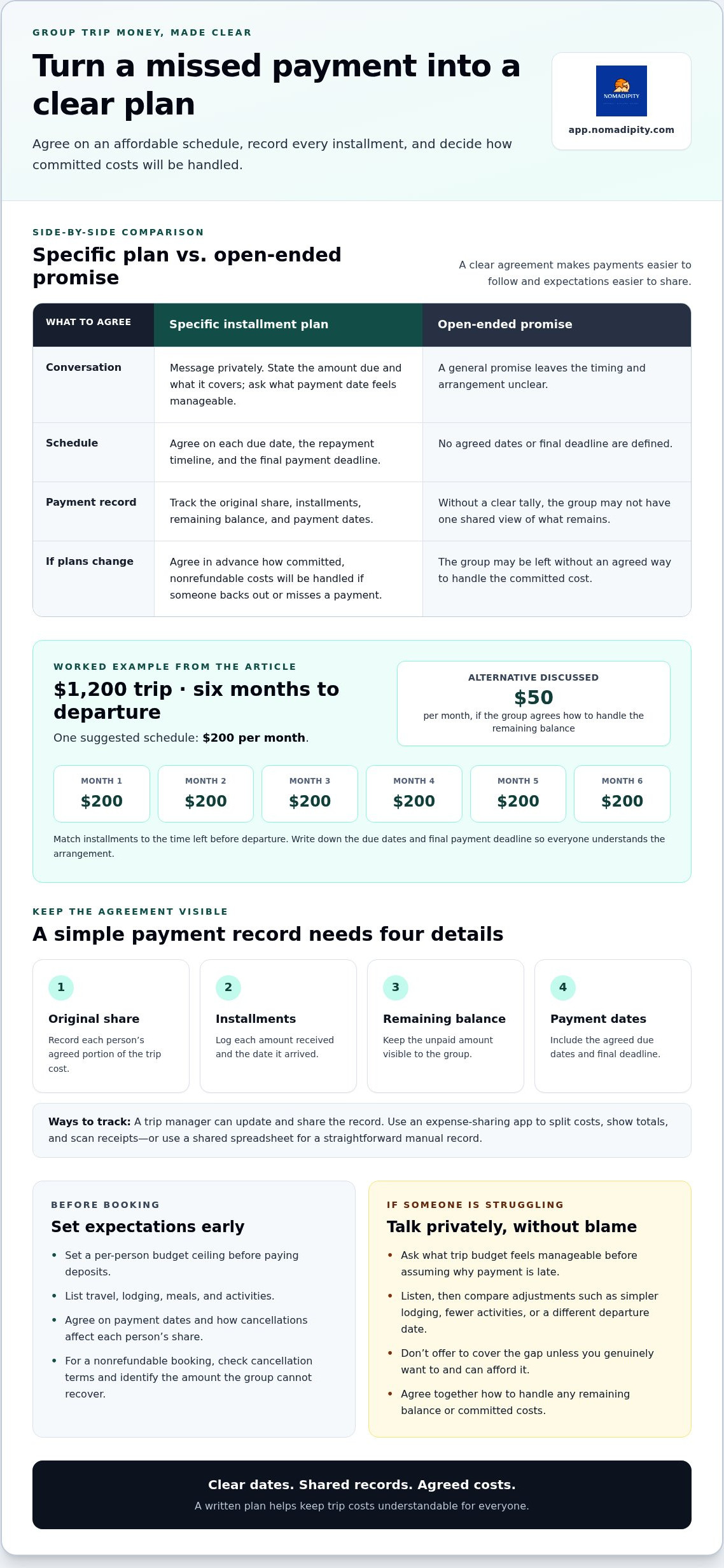
Start with a private message, not a group-chat reminder. State the amount due, explain what it covers, and ask what payment date feels manageable. Then agree on a clear deadline and repayment timeline. For example, ask, “Could you send an installment by the date we agreed and let me know what schedule works for the rest?” A specific plan is easier to follow than an open-ended promise.
Match installments to the time left before departure. For a $1,200 trip six months away, one suggested plan is $200 per month. If a friend is struggling, $50 per month may be acceptable, provided the group agrees on how the remaining balance will be handled. Write down each due date and the final payment deadline so everyone understands the arrangement.
Keep a clear tally as payments arrive, especially when amounts or dates vary. Record each person’s original share, installments, remaining balance, and payment dates. A trip manager can update the record and share it with the group. Track new expenses as they happen. Expense-sharing apps can split costs, show totals, and scan receipts, while a shared spreadsheet offers a straightforward manual option.
For nonrefundable bookings, review the cancellation terms and identify the actual amount the group cannot recover. Before anyone pays, agree how to handle that committed cost if a traveler backs out or misses a payment. Don’t assume the booking can be refunded.
Prevent disputes by setting a per-person budget ceiling early in the planning process, before paying deposits. List travel, lodging, meals, and activities, then agree on payment dates and how cancellations affect each person’s share. Written expectations make follow-ups clearer.
2. Approaching a friend who cannot afford their share
Choose a private moment, away from the group chat, to discuss the cost. If you’re deciding what to do when someone isn't paying their share on a group trip, start by asking, “What trip budget feels manageable for you?” This invites an honest answer without assumptions. Listen before suggesting changes. Your friend may prefer simpler lodging, fewer activities, or a different departure date.
Keep the conversation specific and collaborative. You could say, “The rental and flights are our biggest expenses. Which part feels difficult right now?” Compare options together, such as choosing a less expensive stay or skipping an excursion. Don’t offer to cover the gap unless you genuinely want to and can afford it. A shared plan should respect everyone’s financial comfort.
If your friend has backed out after costs were committed, gather the booking receipt, messages about the agreement, and cancellation terms. Discuss the amount the group cannot recover, then ask what contribution your friend considers fair. Focus on documented commitments, not blame. Knowing what to do when someone isn't paying their share on a group trip also means separating agreed costs from expenses your friend never approved.
In the United States, small claims court may be an option for recovering unpaid shared travel costs. State rules, claim limits, proof of agreement, and expense records matter. Save receipts and payment records, and weigh the possible effect on your friendship before pursuing a claim.
For future plans, find travel companions with similar budgets and travel styles before choosing a trip together.
3. Should one person pay upfront for a group trip, and how to reduce the risk
One person can book shared travel costs, but paying upfront creates risk if someone doesn’t pay. Agree on each person’s share before booking, and collect everyone’s contribution before making a nonrefundable reservation.
For a large shared expense, such as a hotel or rental, use a shared fund. Set the amount and purpose in writing, and keep the booking confirmation with the group’s records. A shared fund isn’t permission to spend freely. Set spending limits for meals, outings, and other activities so one traveler isn’t left covering unexpected costs.
Give the group one clear record of payments. A trip manager can share an expense summary showing each purchase, who paid, and everyone’s portion. Keep invoices, confirmations, and receipts together. Record costs as they happen and settle balances regularly instead of waiting until the trip is over. A shared spreadsheet or expense-splitting app can make updates visible to everyone.
For example, if one traveler books lodging, ask the others to send their agreed shares before booking. For later purchases, decide who pays and how the group will settle each expense. Credit cards with authorized users can streamline group purchases, but they don’t replace clear agreements or shared records. If someone can’t contribute upfront, pause before booking and choose a payment arrangement the group accepts. That boundary can prevent one friend’s generosity from becoming an unresolved debt.
Nomadipity.com: Subscriptions to our travel matchmaking for similar travelers that would make great travel companions based on mutual interests, affiliations, budgets, and travel styles.
Nomadipity.com offers subscriptions to travel matchmaking for people seeking companions with compatible budgets and travel styles. That can be a helpful next step when you’re planning future trips and want to discuss spending expectations before choosing a destination or booking shared costs. Matching around mutual interests and affiliations can also help you find people whose ideas of a rewarding journey feel familiar, whether you prefer slow cultural exploration or a more active itinerary. Shared expectations don’t remove the need to agree on costs, but they give you a useful starting point for those conversations. For a future trip, consider meeting companions whose approach to travel aligns with yours. Visit Nomadipity.com to explore the travel matchmaking subscriptions.
Make your next trip easier to plan
Knowing what to do when someone isn't paying their share on a group trip can help you protect a friendship without ignoring the practical reality of shared costs. For your next journey, look for travel companions who enjoy similar travel rhythms and can talk openly about budgets before plans take shape. A shared sense of adventure matters, and so does a compatible approach to spending.
Nomadipity.com offers travel matchmaking subscriptions for travelers seeking companions with similar interests, affiliations, budgets, and travel styles. It can be a useful next step as you plan future trips and look for people whose travel preferences align with yours.
Explore Nomadipity.com’s travel matchmaking and take a thoughtful first step toward your next shared adventure.
Frequently Asked Questions
How do I bring up money without making my friend feel bad?
Ask if they’re comfortable talking about the trip budget, then explain your concern without assigning blame. For example: “I want us both to enjoy the weekend, and I’m trying to keep my own spending within budget. Could we look at options that work for everyone?” Avoid discussing your friend’s finances in front of others. Focus on choices for the trip, not judgments about personal spending.
How do you handle someone who doesn't pay their share after the trip?
Send a calm, direct reminder with the amount owed and a short expense breakdown. Raise outstanding balances during the first week after returning home. If payment remains unsettled two weeks after the trip, follow up directly. Keep the message factual and private, and ask for a clear response. If your friend disputes a charge, compare the receipt with the agreed split before requesting payment again.
How should you split hotel costs on a group trip?
Agree on a method before booking, based on room size, occupancy, and who gets each room. An equal split may suit travelers with comparable accommodations. If someone receives a significantly better room, they can pay 10-15% more to help balance the share. For different budgets or preferences, divide the lodging cost separately from meals and activities, so each person can see what they’re paying for.
Is it rude to let a friend pay me back in installments?
No. Installments can be a considerate arrangement if both of you agree freely. Set the payment dates, amounts, and final deadline in writing, and decide how you’ll handle a missed installment. Keep a simple record of what has been paid and what remains. That clarity helps prevent flexibility from becoming an ongoing source of tension between friends.
Option 1: Can you scale the trip down?
Yes. Redesigning the trip can reduce everyone’s share without making one friend responsible for the shortfall. Compare each part of the plan and trim what matters least to the group.

Disclaimer
Nomadipity Blog Disclaimer
The content on Nomadipity is provided for general informational and inspirational purposes only. While we strive for accuracy and timeliness, Nomadipity does not guarantee that any information is complete, current, or suitable for your specific needs. Use your judgment and verify details before making travel plans, meeting with other users in person, or making any purchases influenced by the article.


