

What if the best way to earn more travel rewards together isn’t adding another card, but deciding who should use the benefits you already have? When you’re maximizing credit card travel perks as a pair, overlapping cards, separate points balances, and fine-print rules can make planning harder than it needs to be. It’s reasonable to want more value from your spending without buying things you wouldn’t normally buy or paying for benefits twice.
This guide will help you build a shared strategy around your travel plans and budget. You’ll learn how to divide card roles, weigh authorized users against separate accounts, coordinate points and miles, and use eligible benefits while avoiding unnecessary applications and fees. We’ll also cover why checking current program rules matters before combining rewards or transferring points. A little structure can keep the logistics in the background and leave more room for the journey you’re planning together.
Key Takeaways
- Start with your shared travel goals and the cards and benefits you already have before deciding whether anything needs to change.
- For maximizing credit card travel perks as a pair, match benefits to trip needs, then check each card’s terms before booking.
- Keep account balances and transfer rules clear. Points aren’t automatically shared, and transfers may be irreversible.
- Use a pre-trip checklist for deadlines, booking conditions, balances, and records, then adjust your routine as your travel plans change.
Maximizing Credit Card Travel Perks as a Pair Starts with a Shared Plan
Before comparing cards, get clear on what your travel life looks like together. Are you planning one major trip or several shorter getaways? Which destinations, airlines, or hotel groups appeal to you, and what benefits does each person already have? Coordinating rewards as a pair means matching eligible benefits to your plans while keeping account ownership, balances, and spending responsibilities clear. Thoughtful coordination can be more valuable than adding another card.
Start with the trip you want, then build a plan around the resources already in your wallets. For example, list the benefits you might use for the trip, then identify who holds each card and which account has the rewards you may redeem. A little preparation can make room for more spontaneity later.
What should a couple inventory before planning a rewards trip?
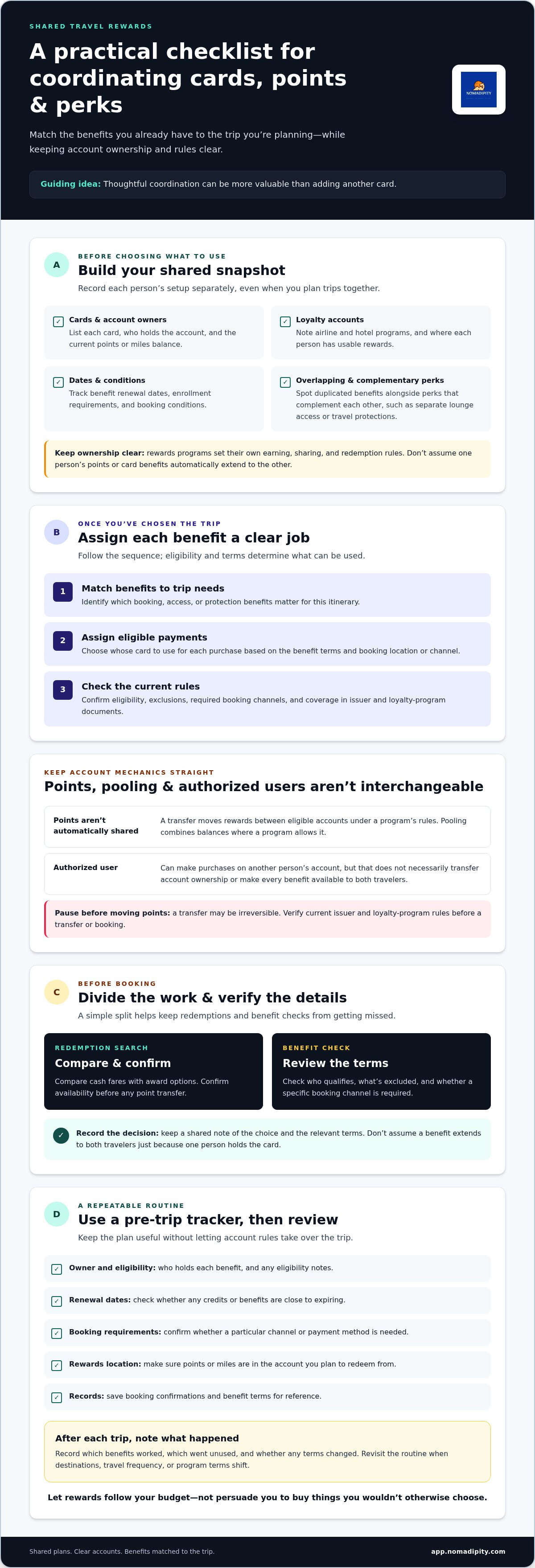
Make a shared snapshot of each person’s travel setup. Include:
- Cards held, account owner, and current points or miles balances
- Airline and hotel loyalty accounts, including where each person has usable rewards
- Benefit renewal dates and any enrollment or booking conditions
- Benefits that overlap, alongside those that complement each other, such as separate lounge access or travel protections
Keep the records separate by person, even if you plan trips together. Rewards programs have their own rules for earning, sharing, and redeeming, so don’t assume one person’s points or card benefits automatically extend to the other. For a useful foundation on how loyalty programs work, consider how each program tracks membership and rewards. Then explore this travel rewards programs guide to connect your rewards choices to the way you want to travel.
With that inventory in hand, maximizing credit card travel perks as a pair becomes a matter of matching what you already have to the journey ahead, not spending more just to collect extra rewards.
How to Coordinate Cards, Points, and Travel Benefits as a Pair
Once you’ve chosen the trip, use a simple sequence to decide whose account does what. The aim of maximizing credit card travel perks as a pair is to give each eligible benefit a clear purpose, not to assume every reward can be combined.
- Match benefits to trip needs. Identify the booking, access, or protection benefits that matter for this itinerary.
- Assign eligible payments. Decide which traveler’s card to use for each purchase, based on the benefit terms and where you’re booking.
- Check the rules before acting. Confirm eligibility, exclusions, booking channels, and coverage in current issuer and loyalty-program documents.
Points aren’t automatically shared. A transfer moves rewards between eligible accounts under a program’s rules; pooling combines balances where a program allows it. An authorized user can make purchases on another person’s account, but that arrangement doesn’t necessarily transfer account ownership or make every benefit available to both travelers. For broader ideas on pairing accounts and rewards, see Forbes’ Best Credit Cards For Couples.
How should partners divide booking and benefit responsibilities?
Give one person the redemption search and the other the benefit check. The first compares cash fares with award options and confirms availability before any point transfer. The second reviews the card terms for the planned purchase, including who qualifies, what’s excluded, and whether a specific booking channel is required. Don’t assume a benefit extends to both travelers just because one person holds the card.
Before points move or a booking is made, verify the current issuer and loyalty-program rules. A transfer may be irreversible, and benefits depend on their terms. Keep a shared note of the decision and the relevant terms. If you enjoy swapping ideas with other rewards-minded travelers, connect with frequent flyers who share your travel interests.
Build a Repeatable Travel-Perks Routine Before Your Next Trip
A compact routine can keep card benefits useful without letting account rules take over the trip. Before booking, keep a shared tracker with each benefit’s owner, eligibility notes, renewal date, and intended use. Then check the details that could affect your plans:
- Are any credits or benefits close to expiring?
- Does the booking need to use a particular channel or payment method?
- Are the points or miles in the account you plan to redeem from?
- Have you saved booking confirmations and benefit terms for reference?
Keep spending tied to your real plans. Rewards should follow your budget, not persuade you to buy things you wouldn’t otherwise choose. After each trip, take a few minutes to note which benefits worked, which went unused, and whether any terms have changed. That brief review helps your next plan reflect how you actually travel, rather than an outdated card strategy.
How can travel-minded pairs keep planning useful and enjoyable?
Make the tracker a guide, not another travel project. A short conversation before booking can settle who will handle each detail, where rewards might fit, and which benefits genuinely matter for this trip. Forbes’ Best Credit Cards for Couples offers another perspective on coordinating cards and rewards. For inspiration beyond your own accounts, explore this frequent flyer social network guide, then meet like-minded travelers who share your interests in the journey.
Review your routine whenever your destinations, travel frequency, or program terms shift. That’s the steady foundation for maximizing credit card travel perks as a pair: a plan that supports the trip, then leaves you free to enjoy it.
Make Your Next Shared Trip More Intentional
Great travel rewards planning starts with a shared picture of the trip, not a race to collect more cards. Keep account ownership clear, match eligible benefits to real travel needs, and check program terms before points move or bookings are made. That’s the practical heart of maximizing credit card travel perks as a pair: earn and redeem with purpose while keeping spending within your usual budget.
Then leave room for what rewards can’t plan: the people and conversations that make a journey richer. Nomadipity.com helps frequent flyers and travel enthusiasts connect around shared interests, share itineraries, and discover niche travel communities. Connect with fellow frequent flyers and travel enthusiasts as you shape the next trip. A clear plan can make the unexpected easier to welcome. Happy travels!
Frequently Asked Questions
Can couples combine credit card points or miles?
Sometimes, but combining rewards depends on each issuer’s and loyalty program’s rules. As of October 2026, Chase allows Ultimate Rewards transfers to one household member at the same address, while Capital One permits miles transfers between its miles-earning accounts. Wells Fargo Rewards ended account-to-account sharing after September 25, 2026. Check the rules before transferring, since some transfers can’t be reversed.
Should both partners have travel rewards credit cards?
Not necessarily. Choose based on your usual spending, travel plans, and the benefits each person can actually use, rather than opening matching cards by default. Separate accounts may provide individual rewards opportunities, while an authorized-user card may suit shared purchases. For maximizing credit card travel perks as a pair, compare annual costs and relevant benefits against your budget before applying.
How can a couple avoid overlapping credit card travel benefits?
Make a shared list of each card’s benefits, account owner, eligibility rules, and renewal dates. Mark which perks duplicate one another and which fill different needs, such as lounge access on separate itineraries or distinct travel protections. Before booking, assign each useful benefit to a specific trip expense, then review the issuer’s current terms so you don’t pay for redundancy.
Can an authorized user use the primary cardholder’s travel perks?
Sometimes, but authorized-user status doesn’t automatically grant every perk. Eligibility depends on the card’s terms and the specific benefit. Some may extend to authorized users, while credits or account-level benefits may be limited to the primary cardholder. Check who qualifies, whether the user must pay with the card, and any booking conditions before relying on a perk for shared travel.

Disclaimer
Nomadipity Blog Disclaimer
The content on Nomadipity is provided for general informational and inspirational purposes only. While we strive for accuracy and timeliness, Nomadipity does not guarantee that any information is complete, current, or suitable for your specific needs. Use your judgment and verify details before making travel plans, meeting with other users in person, or making any purchases influenced by the article.


