
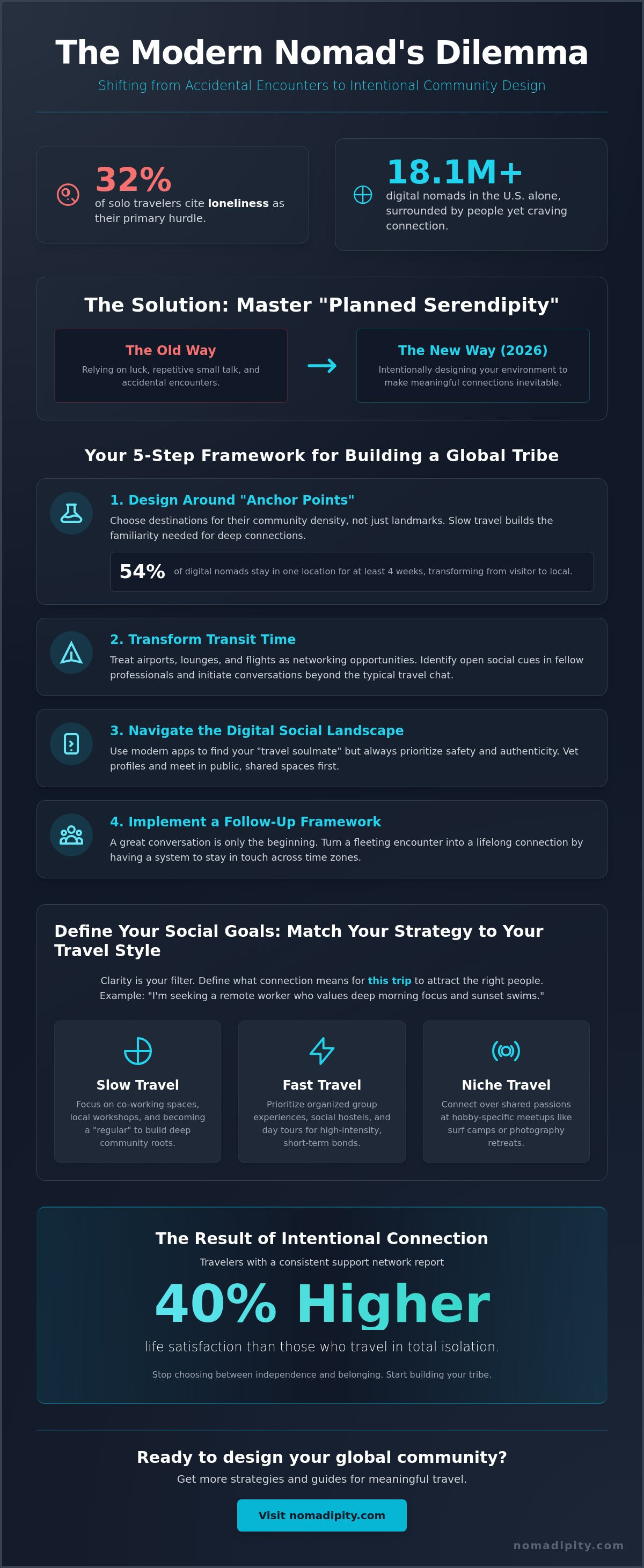
What if the most valuable asset in your carry-on isn't your noise-canceling headphones, but a deliberate system for human connection? We've all felt that specific brand of "hostel fatigue" after answering "Where are you from?" for the tenth time in a single afternoon. It's exhausting to realize that despite being surrounded by people, you're still craving a conversation that goes deeper than your next itinerary stop. According to 2024 data from MBO Partners, while there are now 18.1 million digital nomads in the U.S. alone, nearly 32 percent of solo travelers still cite loneliness as their primary hurdle. You shouldn't have to choose between your independence and a sense of belonging. The secret to making friends while traveling in 2026 isn't about luck; it's about shifting from accidental encounters to intentional community design.
You already know that travel is more than just ticking off landmarks; it's about the people who change your perspective. I'll show you exactly how to master the art of building a global tribe through strategic planning and professional networking. We'll explore the philosophy of planned serendipity to help you find curated communities of like-minded peers who share your budget and your ambition. By the end of this guide, you'll have the tools to turn fleeting connections into long-term friendships, ensuring you feel at home in any corner of the map.
Key Takeaways
- Master the art of "planned serendipity" to move beyond repetitive small talk and invite genuine, transformative encounters into your daily journey.
- Design your itinerary around strategic "Anchor Points" that serve as natural filters, ensuring you land exactly where your tribe naturally gathers.
- Transform transit time into a networking opportunity by identifying the subtle social cues of open, professional connectors in global travel settings.
- Navigate the evolution of digital matchmaking to find your "travel soulmate" while prioritizing safety and authenticity when making friends while traveling.
- Cultivate a lasting global tribe by implementing a follow-up framework that turns a fleeting encounter into a lifelong connection across time zones.
The Philosophy of Planned Serendipity: Why Social Travel is a Skill
Travel has evolved. By 2026, we've realized that collecting passport stamps is a hollow pursuit without shared laughter and meaningful conversation. The old way of making friends while traveling relied on the repetitive "where are you from" loop in hostel kitchens. It was transactional, shallow, and often exhausting. Today, we embrace Planned Serendipity. This isn't about leaving your social life to chance. It's the deliberate act of setting the stage for magical, unplanned encounters to occur. You don't just hope to meet someone special; you design your environment to make that meeting inevitable.
Frequent flyers and digital nomads face unique hurdles this year. A 2025 study on remote work found that 22 percent of long-term travelers report a sense of "social thinning," where digital interactions replace physical presence. The cure isn't meeting more people. It's meeting the right people. We've shifted from quantity to quality. In 2026, social travel is a skill you cultivate, moving away from the frantic need to be liked by everyone and toward the quiet confidence of finding your specific tribe.
Overcoming the Solo Traveler's Social Paradox
Solo travel presents a strange friction. You crave the total freedom of the road, yet you miss the comfort of being known. This tension stems from our core human need to connect, a psychological anchor that remains constant even as your zip code changes. We often hesitate at the first "hello" because we fear the awkwardness of rejection. To break this, reframe your perspective. Stop seeing people as strangers. See them as members of your global tribe you simply haven't been introduced to yet. Research from the Global Wellness Institute in 2024 shows that travelers with a consistent support network report 40 percent higher life satisfaction than those who travel in total isolation.
Defining Your Travel Persona and Social Goals
Your social strategy must align with your movement. If you're slow traveling in a creative hub like Mexico City for three months, you aren't looking for a pub crawl buddy. You're looking for community. Conversely, a fast-paced trek through the Balkans requires high-intensity, short-term bonds. Before you arrive, define what making friends while traveling looks like for this specific trip. Are you seeking a professional mentor, a weekend hiking partner, or a romantic spark? Clarity dictates where you spend your time.
- Slow Travel: Focus on co-working spaces, local workshops, and neighborhood "regulars."
- Fast Travel: Focus on organized group experiences, social hostels, and day tours.
- Niche Travel: Focus on hobby-specific meetups like surf camps or photography retreats.
To guide your search, write a single sentence defining your ideal travel companion. For example: "I am looking for a fellow remote worker who values deep morning focus and sunset swims in the Mediterranean." This clarity acts as a filter, allowing you to say no to the wrong crowds so you're available when the right person walks in.
Designing Your Itinerary for Connection: Where to Find Your Tribe
Serendipity isn't a stroke of luck. It's a result of where you choose to stand. The Anchor Point strategy involves selecting a destination based on its community density rather than just its landmarks. By spending 30 days in a hub like Lisbon or Mexico City, you transition from a fleeting visitor to a recognizable face. According to a 2024 MBO Partners report, 54% of digital nomads now stay in one location for at least four weeks. This slow travel approach builds the familiarity necessary for deep connection. When you return to the same coffee shop three days in a row, you're no longer a stranger; you're a local in training.
Strategic Accommodation: Beyond the Standard Hotel Room
Your choice of bed determines your social circle. While boutique hotels offer curated aesthetics, high-end coliving spaces provide a built-in network of professionals. These spaces act as a powerful social filter, ensuring you're surrounded by people with similar values and schedules. Many solo travel guides focus on safety and sightseeing, yet they often overlook the lobby's potential. A hotel lobby is a stage. Sitting there with a book instead of a laptop signals that you're open to a conversation. It's a subtle invitation that a closed hotel room door can never offer.
Activity-Based Socializing: The 'Shared Mission' Effect
Working toward a common goal creates instant bonds. This is the "Shared Mission" effect. Whether you're mastering a sourdough starter in a local workshop or joining a three-day surf camp, the shared struggle of learning makes making friends while traveling feel natural. You aren't just meeting; you're collaborating. To maximize this, join niche digital forums or Discord channels for your destination at least 14 days before you arrive. This allows you to vet the local vibe and secure your spot at the communal table before you even land.
Avoid the high-turnover tourist traps in the city center. Instead, prioritize professional coworking spaces where a significant portion of the members are long-term residents. These environments facilitate organic introductions through weekly lunch-and-learns or evening mixers. If you're looking to refine your own travel style, you might explore our resources on slow travel to find your next home base. By choosing locations that value depth over speed, you're making friends while traveling a core part of your lifestyle design rather than a happy accident.
- Choose coliving: Prioritize spaces with shared kitchens to spark organic dinner conversations.
- The Lobby Rule: Spend at least 60 minutes a day in common areas without headphones.
- Skill-Based Learning: Book a multi-day course to ensure you see the same faces repeatedly.
- Niche Hubs: Use sites like Workfrom to find cafes where the "laptop-to-latte" ratio favors long-term stayers.
Networking at 30,000 Feet: Social Opportunities for Frequent Flyers
The airport lounge has evolved into the modern-day agora for the global traveler. It's no longer just a place to escape the gate's chaos; it's a high-density hub for human potential. When you're making friends while traveling, these exclusive spaces provide a filtered environment where shared values like curiosity and ambition are already the baseline. Loyalty status serves as more than just a perk for better coffee. It's a key that unlocks a social circle of individuals who navigate the world with the same intentionality as you do.
Look for "open" networkers by observing subtle physical cues. Travelers seated at communal high-top tables or those without privacy screens on their devices are often the most approachable. A 2025 survey by the Global Business Travel Association found that 38% of executive travelers now prioritize lounges with dedicated "social zones" over those with quiet pods. This shift reflects a growing desire to turn transit time into meaningful connection time.
Respecting the unspoken etiquette of the lounge is vital for successful engagement. You don't want to be the person interrupting a focused work session. Use these markers to gauge readiness:
- The Laptop Rule: If the screen is open but the person is frequently looking around the room, they're likely open to a brief chat.
- The Communal Table: Seating yourself here is a silent signal that you're willing to engage with your neighbors.
- The Beverage Station: This remains the most natural spot for a low-pressure opener about the destination or the flight schedule.
The Power of the Airport Lounge Networking App
Digital tools have revolutionized how we spend our layovers. Using a dedicated airport lounge networking app allows you to browse profiles of fellow travelers currently in your vicinity. This is the epitome of planned serendipity. You can turn three hours of dead time into social capital by matching with professionals who share your niche interests. Whether it's sustainable tech or boutique hotel investment, these connections often lead to collaborative opportunities that extend far beyond the terminal.
Business Travel and the Art of the 'Bleisure' Connection
Networking for business travelers requires a shift from transactional exchanges to genuine human connection. The goal is to move from a digital ping to a real-world dinner invitation in your arrival city. In the bleisure era, we look for "Nomadipitians" who balance professional drive with a love for slow travel. Making friends while traveling in a professional context means finding the person who understands the struggle of a 14-hour flight but still possesses the energy to explore a local night market upon landing. These shared experiences form the foundation of a global support network.
Navigating the Digital Social Landscape: Matchmaking and Safety
By early 2026, the digital handshake has evolved from a casual swipe into a precise tool for intentional connection. We've entered the era of the travel soulmate, where technology filters for deep compatibility rather than just proximity. Making friends while traveling no longer depends on who happens to be in your hostel dorm on a Tuesday night. Instead, it's about identifying individuals whose rhythm of life matches your own. A 2025 survey by the Global Nomad Collective found that 78% of long-term travelers now use niche social platforms to vet companions at least two weeks before arriving in a new destination. This shift allows you to skip the small talk and dive straight into shared experiences.
How to Use Nomadipity for Curated Connections
Your profile is your digital lighthouse. To attract the right tribe, move beyond generic interests like "hiking" or "coffee." Instead, plant social hooks: mention your obsession with 1970s Japanese jazz or your quest to find the best street tacos in Oaxaca. Learning how to use Nomadipity effectively means leveraging the itinerary-sharing feature. By syncing your calendar, you create opportunities for planned serendipity, allowing the system to flag a potential friend who will be in Lisbon the same week you are. This ensures your social circles are built on actual logistical alignment and shared budgets.
Safety Protocols for the Modern Nomad
Digital connection requires a grounded approach to personal security. Always adhere to the Public Place rule: your first three meetups should occur in neutral, high-traffic environments like a busy cafe or a coworking space lounge. Before meeting, verify their digital footprint. In 2026, authentic profiles often link to verified professional networks or loyalty program memberships, such as a Delta SkyMiles or Marriott Bonvoy status, which serve as a secondary layer of identity confirmation. Data from travel safety reports indicates that verifying a profile through two or more third-party platforms reduces the risk of social friction by 40%.
Trust your intuition if a profile feels too polished or inconsistent. If the conversation feels forced during the initial messaging phase, it likely won't improve in person. Establishing boundaries early is vital. Start with a low-stakes "coffee test" rather than a full day trip. A twenty-minute espresso date is the perfect litmus test for chemistry. If the vibe isn't right, use a graceful exit strategy. A simple, "It was great meeting you, but I think our travel styles are a bit different for a full day out," is respectful and clear. This honesty preserves your time and energy for the connections that truly resonate.
Cultivating Your Global Tribe: From One-Off Meetup to Lifelong Friend
The magic of a sunset beer in Lisbon shouldn't evaporate the moment you board your flight to Berlin. True location independence isn't just about where you work; it's about who stays in your heart as the scenery changes. To turn a fleeting connection into a permanent fixture, you need a follow-up framework. Send a message within 48 hours of parting ways. Mention a specific joke you shared or a tip they gave you. This small act of intentionality signals that you value the person, not just the convenience of their company.
Managing a "Global Rolodex" requires a bit of logistical grace. When your inner circle spans 15 different time zones, catching a friend for a chat becomes a puzzle. Use digital calendars to track your friends in Tokyo, Medellin, and Cape Town. If you want to deepen these bonds, stop waiting for invitations and start hosting. Become the social hub by organizing a simple Sunday brunch or a dedicated co-working afternoon for fellow nomads. You'll find that social networks for frequent flyers are the backbone of this lifestyle. They provide the necessary infrastructure to see who is landing in your city before they even clear customs.
The Transition from Travel Buddy to Life Friend
Shared adversity is a powerful catalyst. A six-hour flight delay or a lost suitcase in a foreign city can forge a bond faster than a year of casual office chats. These high-stress moments reveal character and build trust. To maintain the momentum, schedule "digital coffee" dates once every 8 weeks. Treat these as non-negotiable appointments. The ultimate test of your connection comes when you plan a second trip together. Choosing a new destination together tests your compatibility and cements your status as true life partners in adventure.
Final Thoughts: Embracing the Nomadipity Mindset
Making friends while traveling is a skill you can refine with every boarding pass you scan. The person who will change your life is likely sitting three seats away in a lounge or sharing your outlet at a local café right now. Take the first step. A simple, authentic introduction is the only barrier between you and a lifelong connection. You have the agency to design an existence where serendipity is a frequent guest. Approach the world with curiosity. Your tribe is already out there, waiting for you to say hello.
Design Your Social Horizon
The world in 2026 doesn't demand that you leave your social life to chance. You've learned that the secret to making friends while traveling isn't found in a crowded hostel bar, but in the intentional systems you build before you ever pack a bag. By treating your itinerary as a canvas for planned serendipity and leveraging digital matchmaking that aligns with your specific budget and pace, you transform a solo journey into a shared odyssey. Whether you're networking at 30,000 feet or meeting a fellow slow traveler in a hidden cafe, these connections are the true currency of a location-independent life.
It's time to move beyond the temporary hello. You can now access an exclusive network of frequent flyers and rewards members who value depth over distance. With a global community spanning 150+ countries, the tools to navigate this landscape are already at your fingertips.
Join Nomadipity and start designing your global tribe today. Our advanced matchmaking system pairs you with peers based on your unique travel style, ensuring every introduction feels like a reunion. The road is waiting, and you don't have to walk it alone.
Frequently Asked Questions
Is it easy to make friends while traveling solo in 2026?
Yes, solo travel in 2026 is more socially accessible than ever due to a 25 percent increase in social-first accommodations worldwide. You aren't just booking a bed; you're joining a community. From co-living spaces in Lisbon to boutique hostels in Tokyo, the infrastructure for human connection is built into the architecture. By choosing slow travel hubs, you naturally encounter others who value depth over a checklist.
How do I meet people while traveling if I'm an introvert?
Introverts can thrive by focusing on activity-based gatherings rather than high-pressure social mixers. Data from 2025 travel surveys indicates that 40 percent of solo travelers identify as introverted. Join a small-group cooking class or a local walking tour. These structured environments provide a natural script for conversation. You can cultivate meaningful bonds without the exhaustion of small talk by focusing on a shared task or curiosity.
What are the best apps for making friends while traveling?
The top platforms for making friends while traveling in 2026 include Bumble For Friends, Meetup, and specialized niche apps like Nomad List. While Bumble For Friends saw a 30 percent rise in international users last year, local Facebook groups remain vital for neighborhood-specific meetups. These tools allow you to design your social circle before you even land. Always check for verified profiles to ensure the community remains authentic and safe.
How can I stay safe when meeting strangers from travel apps?
Safety begins with meeting in public, well-lit spaces like a popular cafe or a central plaza. Always share your live location with a trusted contact using tools like WhatsApp or Apple’s Find My. According to 2025 safety reports, 90 percent of solo travelers feel more secure when they verify a person’s social media presence beforehand. Trust your intuition; if a situation feels off, leave immediately without worrying about being polite.
Is it possible to find professional networking opportunities while on vacation?
Yes, the rise of workations means that 65 percent of digital nomads now frequent co-working hubs specifically for networking. Sites like Selina or Outsite offer professional environments where a morning coffee can lead to a business partnership. You aren't just on vacation; you're navigating a global marketplace. Attend local Tech and Tacos nights or LinkedIn Local events to bridge the gap between exploration and career growth.
What should I do if a travel companion and I don't get along?
Address the friction immediately by suggesting a solo day to reset your individual perspectives. Industry experts suggest that 1 in 3 travel partnerships face conflict within the first 7 days. Honesty is your best tool here. Explain that you need space to recharge. This allows both of you to explore at your own pace. Sometimes, the best way to save a friendship is to spend a few hours apart.
How do I find travelers with a similar budget and travel style?
Use filter-based platforms like G Adventures or Flash Pack, which group travelers based on specific age ranges and budget tiers. A 2025 report found that 55 percent of travelers prefer flashpacking over traditional backpacking. By joining groups that align with your lifestyle, you ensure your daily rhythms match. Look for forums dedicated to slow travel or luxury nomadism to find peers who share your financial and experiential values.
Can making friends while traveling lead to long-term relationships?
Absolutely, as evidenced by a 2024 study showing that 15 percent of long-term travelers met their current partner or best friend abroad. Shared experiences in unfamiliar environments create an accelerated bond that's hard to replicate at home. Making friends while traveling often transitions from temporary serendipity to lifelong support systems. By staying in touch through digital platforms, you can turn a brief encounter in a Bali cafe into a decade-long friendship.
Disclaimer
Nomadipity Blog Disclaimer
The content on Nomadipity is provided for general informational and inspirational purposes only. While we strive for accuracy and timeliness, Nomadipity does not guarantee that any information is complete, current, or suitable for your specific needs. Use your judgment and verify details before making travel plans, meeting with other users in person, or making any purchases influenced by the article.


