

What if the greatest challenge of your next global trek isn't the steep ascent of Mount Fuji or the thin air of the Andes, but finding someone who won't leave you behind at the first sign of an uphill climb? It's a valid concern that many adventurers share. You want to explore the world's most iconic trails, yet the fear of a physical pace mismatch or the stress of navigating complex international logistics can make the dream feel out of reach. It's difficult to find a hiking buddy for an international trip who truly understands your need for a deliberate pace and a shared sense of safety in remote regions.
You deserve a partner who values the journey as much as the summit. In this guide, you'll discover how to connect with compatible trekking companions who share your travel style and logistical rhythm. We'll walk through the latest 2026 trail regulations, from Nepal's mandatory guide requirements to Peru's new permit structures. You'll learn how to vet potential partners for safety and fitness, ensuring your next adventure is defined by shared challenge and lasting friendship rather than logistical friction.
Key Takeaways
- Learn why international treks require you to look beyond physical pace and focus on deeper travel compatibility, such as budget alignment and flight preferences.
- Discover how to use specialized social networks and trail-specific boards to find a hiking buddy for an international trip who shares your unique rhythm.
- Explore the benefits of vetting potential partners through "Digital Coffee Dates" and local micro-adventures to ensure safety and social harmony before you fly.
- Understand how matching with travelers who share your loyalty program access can transform your post-trek recovery into a more comfortable, shared experience.
Why Finding an International Hiking Buddy Requires a Different Strategy
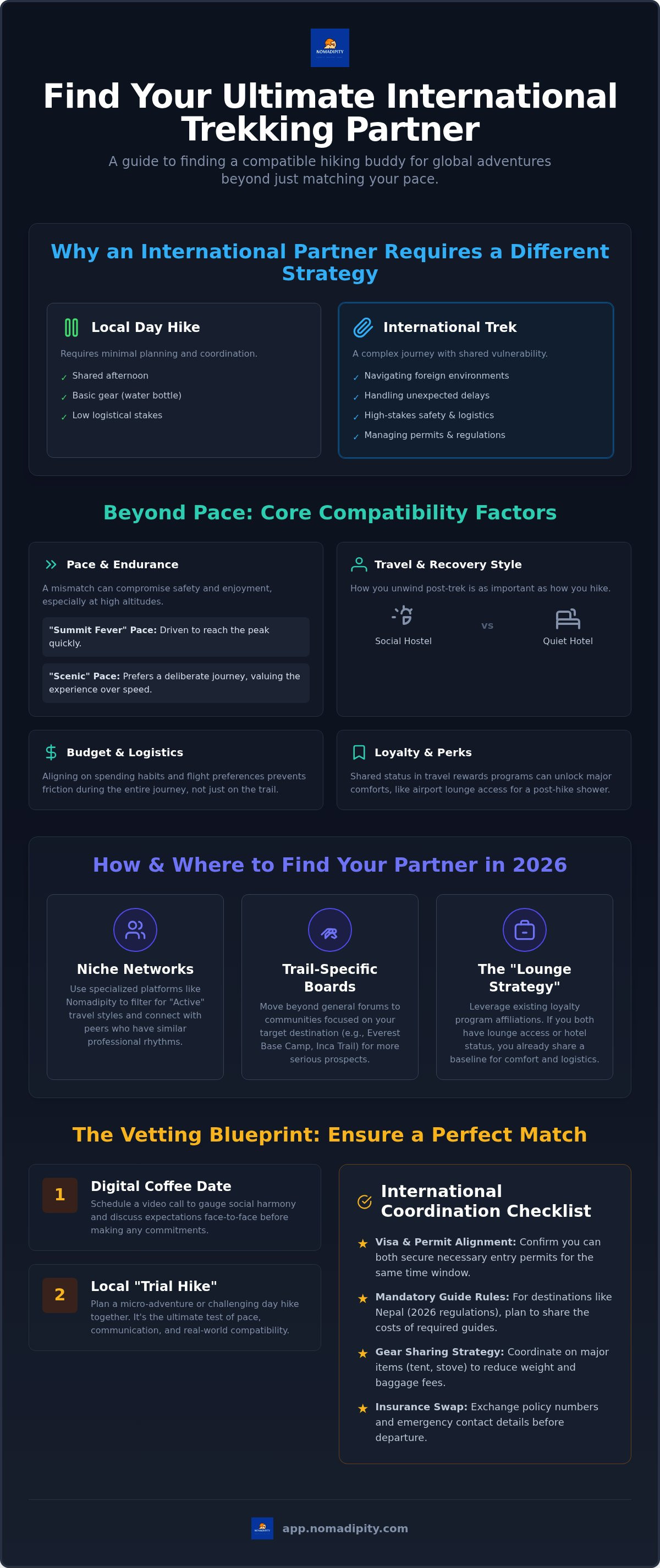
A local day trip requires little more than a shared afternoon and a water bottle. But a 10-day trek through the Himalayas or the Andes is a different beast entirely. When you set out to find a hiking buddy for an international trip, you're looking for more than a walking partner; you're choosing a co-pilot for a complex logistical journey. Beyond essential hiking knowledge, you need someone who can handle the shared vulnerability of being in a foreign environment where things rarely go exactly as planned. This transition requires a shift in mindset. You aren't just matching on miles per hour; you're matching on how you handle a delayed bus in Kathmandu or a lost permit in Cusco. You're moving from "someone to walk with" to "someone to navigate the world with."
The Risk of the Mismatched Pace
Physical endurance takes on a new meaning at high altitudes or on technical terrain. If your partner is driven by "summit fever" while you prefer a "scenic pace," the friction can be more exhausting than the elevation gain itself. Discussing these expectations before you book your flights is vital for your sanity. A mismatch in technical ability or stamina in remote terrain doesn't just slow you down. It can compromise your safety and your enjoyment of the landscape. You need a partner whose stride feels like a natural extension of your own, especially when the air gets thin and every step requires a bit more grit.
Aligning Travel Lifestyles Beyond the Trail
Your "recovery style" is just as important as your trail pace. After a week of sleeping in tents, do you crave a social hostel or the quiet luxury of a hotel? If you've been cultivating travel rewards programs, you might want a partner who shares your status and can join you in an airport lounge for that first post-hike shower. When you find a hiking buddy for an international trip who values these same comforts, your time off the trail becomes as restorative as your time on it. Aligning on budgets and food preferences in foreign markets ensures that the entire experience feels like a cohesive, intentional journey rather than a series of compromises.
Top Platforms and Methods to Find Your Trekking Partner in 2026
Finding the right connection starts with moving away from general forums and toward specialized communities. While broad social platforms offer reach, they often lack the depth needed to choose the right hiking partner for a high-stakes journey. Instead, look toward niche social networks that prioritize finding a travel buddy with similar professional rhythms and lifestyle expectations. Your existing loyalty program affiliations are a hidden goldmine. If you both have lounge access or specific hotel status, you already share a baseline for comfort and logistical preferences. This "Lounge Strategy" allows you to network with fellow adventurers in a controlled, comfortable environment before you ever hit the trailhead.
How to Use Nomadipity for Hiking Matchmaking
Nomadipity bridges the gap between a random internet stranger and a vetted peer. By filtering for "Active" travel styles, you can find a hiking buddy for an international trip who is specifically eyeing the same peaks in 2026. This isn't just about walking; it's about connecting with someone who understands the nuances of remote work or the value of a hot shower after a week in the wild. You can browse potential trail partners today to see who is planning a similar route and shares your airline or hotel status for easier post-hike recovery.
A Checklist for International Coordination
International coordination involves hurdles that a local hike simply doesn't face. With Nepal now requiring mandatory guides for most regions in 2026, finding a partner to share these costs is a practical necessity. Use this checklist to ensure your partnership is logistically sound:
- Visa Alignment: Verify that both of you can secure necessary entry permits for the same window of time.
- Gear Sharing: Coordinate who brings the stove or the four-season tent to minimize baggage fees and weight.
- Insurance Swap: Exchange policy numbers and emergency contact details before you leave home.
By addressing these details early, you transform a potential logistical nightmare into a well-oiled adventure. You aren't just sharing a trail; you're sharing the responsibility of a global journey.
Vetting and The Art of the "Trial Hike"
Before you commit to a multi-day trek on another continent, you need to move beyond text messages. The goal to find a hiking buddy for an international trip requires a foundation of trust that only direct interaction can build. Start with a "Digital Coffee Date." A video call allows you to read body language and gauge enthusiasm in a way that typing never will. If your potential partner is within regional reach, design a "micro-adventure" or a local trial hike. This isn't just a fitness test; it's a personality test. You're looking for how they handle a missed trail marker or a sudden downpour. These small frictions reveal the character they'll bring to the Andes or the Alps.
The 5 Critical Questions for Every Potential Buddy
Structured spontaneity relies on knowing your partner's default settings. You don't want to discover a fundamental clash while huddling in a mountain hut. Ask these questions before any deposits are paid:
- Reaction to Adversity: What is your "worst-case scenario" response? If gear gets lost or a 2026 Nepal permit is delayed, do you pivot with grace or lose your cool?
- Financial Logistics: How do you handle shared expenses abroad? Decide now if you'll use splitting apps or take turns with local currency.
- Technical Literacy: What is your experience with offline navigation tools or local languages? Knowing who takes the lead on translation or GPS saves hours of trailside frustration.
Safety and Verification in the Digital Age
Verification is about more than just a profile picture. Using a social network for frequent flyers allows you to see a partner's travel history and loyalty affiliations. This provides a layer of peer-vetted credibility that random forums lack. It confirms they are who they say they are and share your level of travel sophistication. Always share your final itinerary with a third party back home before heading into the backcountry. Finally, establish a "graceful exit" plan. Agree that if the partnership doesn't feel right once you land, you can both pivot to solo treks without hard feelings. This psychological safety net allows you to find a hiking buddy for an international trip with total confidence, knowing your adventure isn't tethered to a forced connection.
Step Toward the Summit with the Right Partner
The global trails of 2026 demand more than just a sturdy pair of boots; they require a partnership built on shared values and logistical harmony. You've seen how the secret to a successful trek lies in looking beyond physical pace to find a match in travel styles, budget rhythms, and recovery preferences. By vetting your companions through digital interaction and leveraging your existing affiliations, you move from the uncertainty of a stranger to the reliability of a vetted peer.
It's time to stop letting the fear of a mismatched partner keep you from the world's most evocative landscapes. When you seek to find a hiking buddy for an international trip, you deserve a connection that starts with trust and ends with a shared sense of accomplishment. The right framework makes the unpredictable manageable and the difficult beautiful.
Join Nomadipity to find your perfect trekking partner today. Our platform allows you to match based on travel style and loyalty affiliations, connecting you with verified frequent flyers. You can even organize meetups in airport lounges worldwide to build rapport before you land. The world is vast, but it's much more welcoming when you aren't walking it alone. Your next great adventure is waiting for the right pair of feet.
Common Questions About International Trekking Partnerships
Is it safe to find a hiking buddy online for an international trip?
Safety is a product of vetting and transparency. While the internet is vast, focusing on niche communities with verified profiles, like those linked to professional backgrounds or loyalty programs, adds a layer of accountability. Always conduct a video call and share your joint itinerary with someone back home. Establishing this digital trail ensures that your connection is grounded in reality before you ever leave the airport.
How do I know if our hiking paces are compatible before we meet?
Compatibility is found in the data of your past adventures. Instead of asking if someone is "fit," ask for their average daily elevation gain on their last three treks. Compare your typical miles per hour on similar terrain. This objective approach helps you find a hiking buddy for an international trip who mirrors your physical rhythm, preventing the frustration of one person constantly waiting for the other.
What happens if we do not get along once the trip starts?
Honesty is your best tool for preserving the experience. Before you fly, agree on a "solo-contingency" plan that outlines how you'll handle shared costs like guides or transport if you decide to part ways. It's perfectly acceptable to pivot to a solo journey if the social dynamic isn't right. Having this agreement in place removes the guilt and allows you both to prioritize the landscape over a forced partnership.
Should we share gear like tents and stoves to save weight?
Sharing gear is a tactical choice that requires a high level of trust. While splitting the weight of a four-season tent or a stove is efficient, it also limits your geographic autonomy. For your first trip together, consider carrying individual lightweight setups. This ensures that if you need to separate for safety or personal reasons, you both remain fully equipped to handle the remote environment on your own terms. It's the best way to find a hiking buddy for an international trip while maintaining your personal safety net.
Disclaimer
Nomadipity Blog Disclaimer
The content on Nomadipity is provided for general informational and inspirational purposes only. While we strive for accuracy and timeliness, Nomadipity does not guarantee that any information is complete, current, or suitable for your specific needs. Use your judgment and verify details before making travel plans, meeting with other users in person, or making any purchases influenced by the article.


