
The "singles tax" is the most frustrating barrier in the travel industry, but it isn't an absolute rule. You've likely stared at a beautiful Mediterranean itinerary only to watch the price tag double the moment you select "one guest." It feels like a penalty for independence. You deserve to walk the cobblestone streets of Dubrovnik or watch a sunset over the Santorini caldera without being taxed for your autonomy. This guide reveals exactly how to avoid single supplement on cruises by mastering the shift in the 2026 travel landscape. We will explore tactical booking windows, the rise of dedicated solo inventory, and the social strategies that turn a shared cabin into a potential friendship. From finding a compatible cabin mate to leveraging new ship designs, you are about to reclaim your travel budget and your geographic freedom.
Key Takeaways
- Uncover the financial logic behind the "singles tax" and identify which cruise lines are expanding their dedicated solo studio inventory for the 2026 season.
- Master the timing of your booking by targeting seasonal "Wave Season" windows and repositioning voyages where lines are most motivated to waive extra fees.
- Learn exactly how to avoid single supplement on cruises by leveraging tactical matchmaking to find a compatible companion who shares your budget and travel style.
- Prioritize safety and comfort by vetting potential cabin mates based on shared values and social energy to ensure your voyage remains both peaceful and cost-effective.
The 'Singles Tax' Decoded: Why It Exists and Which Lines Waive It in 2026
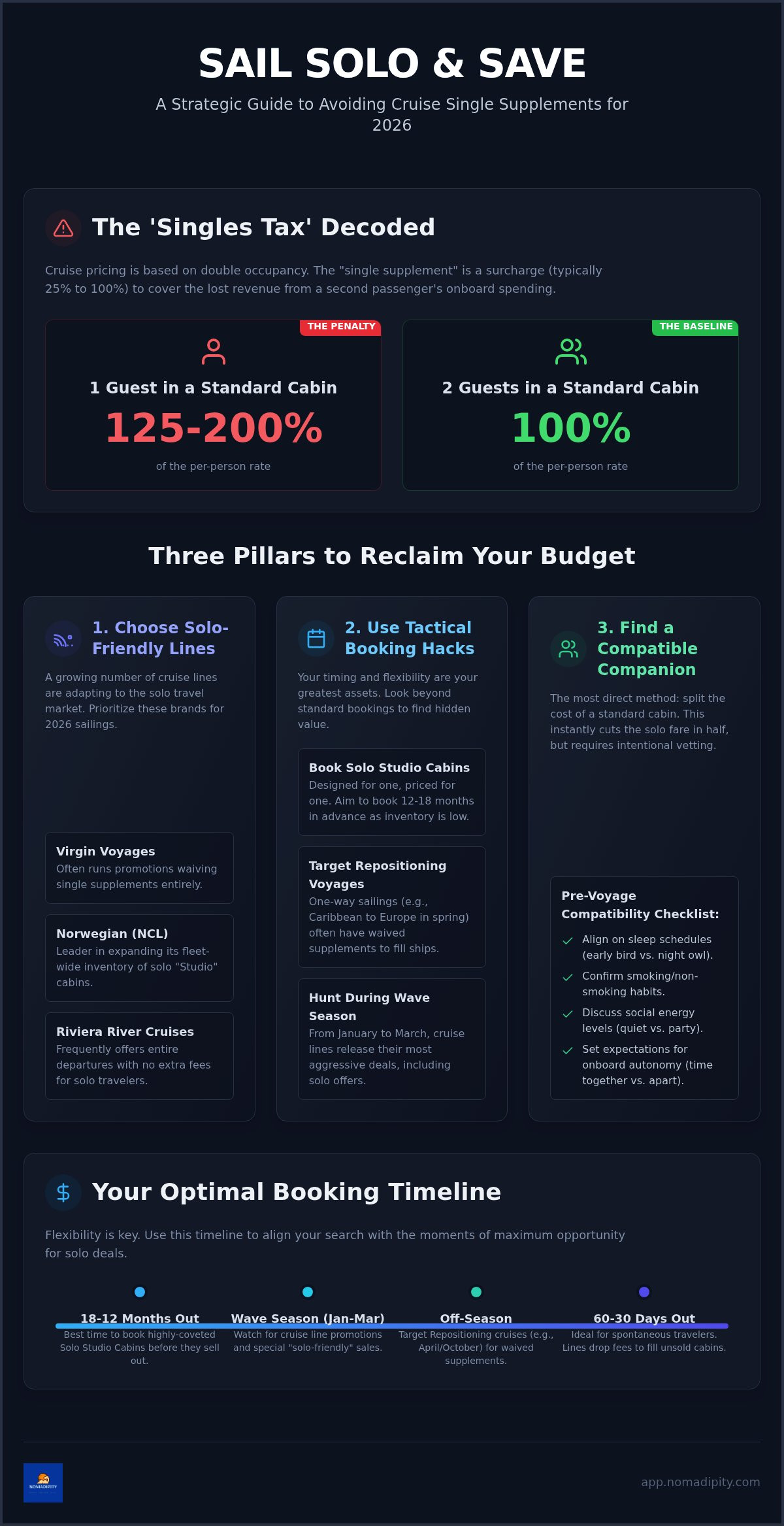
The single supplement is a surcharge, usually ranging from 25% to 100%, that cruise lines apply to solo travelers. It's essentially a vacancy fee to cover the revenue gap left by a missing second passenger. Since cruise lines rely heavily on onboard spending like drinks, excursions, and specialty dining, a lone traveler represents a loss in potential profit. Understanding this financial logic is the first step in learning how to avoid single supplement on cruises. You aren't just paying for the bed; you're compensating the ship for the cocktails you won't drink and the tours you won't book as a pair.
By 2026, the industry is shifting toward inclusivity. Lines like Virgin Voyages, Norwegian Cruise Line (NCL), and Riviera are leading the charge. Virgin often runs specific promotions that waive the supplement entirely. NCL continues to expand its dedicated solo inventory across its fleet. Riviera remains a standout for river cruising, frequently offering entire departures with no extra fees for those traveling alone. These lines recognize that the solo market is growing and they are adapting their pricing models to capture your loyalty.
The Rise of the Solo Studio Cabin
Dedicated studio cabins represent a major win for the solitary wanderer. These rooms are smaller than standard staterooms, but they are designed with intentionality for one. The trade-off is clear; you sacrifice a bit of square footage to gain a price point that matches the per-person rate of couples. Many of these cabins also grant access to exclusive solo lounges. These private spaces allow you to mingle with like-minded travelers in a low-pressure environment, bridging the gap between solitude and community. Because inventory for these cabins is typically low, you should aim to book 12-18 months in advance. Securing these spots early is a tactical move in your strategy for how to avoid single supplement on cruises.
Tactical Booking Hacks: How to Find Solo Deals Without a Partner
While solo cabins are a fantastic development, they often sell out fast. To truly master how to avoid single supplement on cruises, you must look toward repositioning voyages. These one-way seasonal sailings occur when ships migrate between regions, such as moving from the Caribbean to the Mediterranean in April or returning in October. Because these itineraries feature more days at sea and unconventional ports, cruise lines frequently slash or waive the supplement to ensure the ship is full. It’s a dream for those who value deliberate pacing and the quiet rhythm of the ocean.
Timing your search is equally vital. The period from January through March, known as Wave Season, is when most lines release their most aggressive promotions. You will often find "solo-friendly" filters appearing on booking engines during these months. If you have the luxury of flexibility, keep an eye on flash sales. When a ship isn't at capacity 30 to 60 days before departure, lines often drop the supplement to attract last-minute wanderers. This is the ultimate test of structured spontaneity.
Using Loyalty Programs to Offset Costs
Your loyalty status can be a powerful tool for geographic autonomy. High-tier members often receive early access to supplement-free promotions or targeted upgrades that make solo travel more affordable. Some lines even offer double loyalty points for solo cruisers, allowing you to reach elite status twice as fast. You can connect with fellow points hackers on Nomadipity to share tips on which credit card rewards stack best with these seasonal waivers. Combining your status with a strategic booking window turns a logistical hurdle into a rewarding lifestyle design choice.
The Companion Solution: Splitting the Cost with a Vetted Travel Buddy
The most direct answer to how to avoid single supplement on cruises is also the most social: finding a companion. By sharing a standard stateroom, you instantly transform a 200% solo fare into a standard 100% per-person rate. This isn't just about the math; it's about reclaiming your budget for the experiences that matter, like a private vineyard tour in Tuscany or a helicopter excursion over Alaskan glaciers. However, success in a shared cabin requires more than just a shared itinerary. It requires intentional compatibility.
Vetting is essential. You need to look beyond the "stranger danger" and focus on the logistical realities of cohabitation. Do your sleep schedules align? Are you an early riser who wants coffee on the balcony at dawn, or a night owl who prefers the ship’s late-night jazz lounge? Agreeing on smoking habits and social energy levels beforehand prevents friction. True onboard autonomy is the secret to a happy voyage. You don’t have to be joined at the hip; in fact, the best cruise buddies are those who enjoy their independence and reunite for dinner to swap stories of their separate adventures.
Finding Your 'Nomadipitian' Match
Finding a compatible partner shouldn't feel like a gamble on a random forum. Nomadipity’s matchmaking platform allows you to find companions based on mutual interests, specific budgets, and travel styles. You can even create moments of planned serendipity by meeting your match for a drink in an airport lounge before the ship even leaves the dock. To make this work, integrate your plans into your social feed to attract like-minded adventurers. You can find a travel buddy who shares your taste for high-seas exploration and finally master how to avoid single supplement on cruises once and for all.
Reclaiming Your Geographic Freedom on the High Seas
The 2026 cruise landscape offers more autonomy than ever before. Whether you choose the tactical path of booking a dedicated solo studio or the unhurried movement of a repositioning voyage, the power to travel on your own terms is in your hands. Mastering how to avoid single supplement on cruises ultimately comes down to intentionality and community. By connecting with fellow travelers who share your values and loyalty tiers, you can turn a potential surcharge into a shared adventure. Join Nomadipity to find your perfect cruise companion and skip the singles tax. You'll gain access to interest-based matchmaking and an ad-free premium experience designed for serious explorers. Connect with fellow loyalty program members and start planning your next departure today. The world is vast and welcoming; don't let a logistical hurdle keep you from the horizon.
Frequently Asked Questions
What is the average single supplement on a cruise in 2026?
Typically, you can expect a surcharge ranging from 25% to 100% of the per-person rate. This fee covers the cruise line’s projected loss in onboard revenue when a cabin isn't at double occupancy. While some luxury lines might lower this during off-peak seasons, the industry standard remains high. Learning how to avoid single supplement on cruises often requires looking beyond these standard rates toward specific solo-occupancy promotions.
Can I avoid the single supplement by booking a 'guaranteed' cabin?
Booking a "guaranteed" stateroom usually won't bypass the supplement on its own. This booking type simply means you pay a lower rate in exchange for the cruise line choosing your specific room location later. To truly waive the fee, you must look for "Solo Guarantee" categories specifically designed for one person. Standard guaranteed cabins still assume two passengers are paying, so always check the final total before confirming your deposit.
Is it safe to find a travel companion online to share a cruise cabin?
Safety depends entirely on the platform and the vetting process you use. Using a dedicated community like Nomadipity allows you to review detailed traveler profiles and mutual interests before committing to a trip. It's much safer than posting on anonymous forums because you can verify travel styles and even meet in airport lounges beforehand. Finding a compatible match is a powerful way to master how to avoid single supplement on cruises while building a new friendship.
Which cruise lines have the most solo cabins?
Norwegian Cruise Line remains the industry leader, especially with their recent expansion of solo categories across their entire fleet. Virgin Voyages also offers a significant number of "Social Insider" and "Solo Sea View" cabins designed for individuals. Other lines like Royal Caribbean and P&O Cruises have integrated solo studios into their newer ships. These dedicated rooms are the most reliable way to secure a fair price without needing a cabin mate.

Disclaimer
Nomadipity Blog Disclaimer
The content on Nomadipity is provided for general informational and inspirational purposes only. While we strive for accuracy and timeliness, Nomadipity does not guarantee that any information is complete, current, or suitable for your specific needs. Use your judgment and verify details before making travel plans, meeting with other users in person, or making any purchases influenced by the article.


