

What if your partner’s preference for a quiet weekend at home doesn't have to be the end of your dreams of seeing the world? It is a quiet tension many couples face, where one soul craves the sensory overload of a Tokyo market while the other finds peace in the familiar routine of the backyard. You might feel stuck between your loyalty to your spouse and your own deep seated wanderlust. Finding a travel buddy when your partner doesn't travel is not a sign of a fracturing relationship; it is a deliberate choice to honor your individual growth and maintain your personal identity.
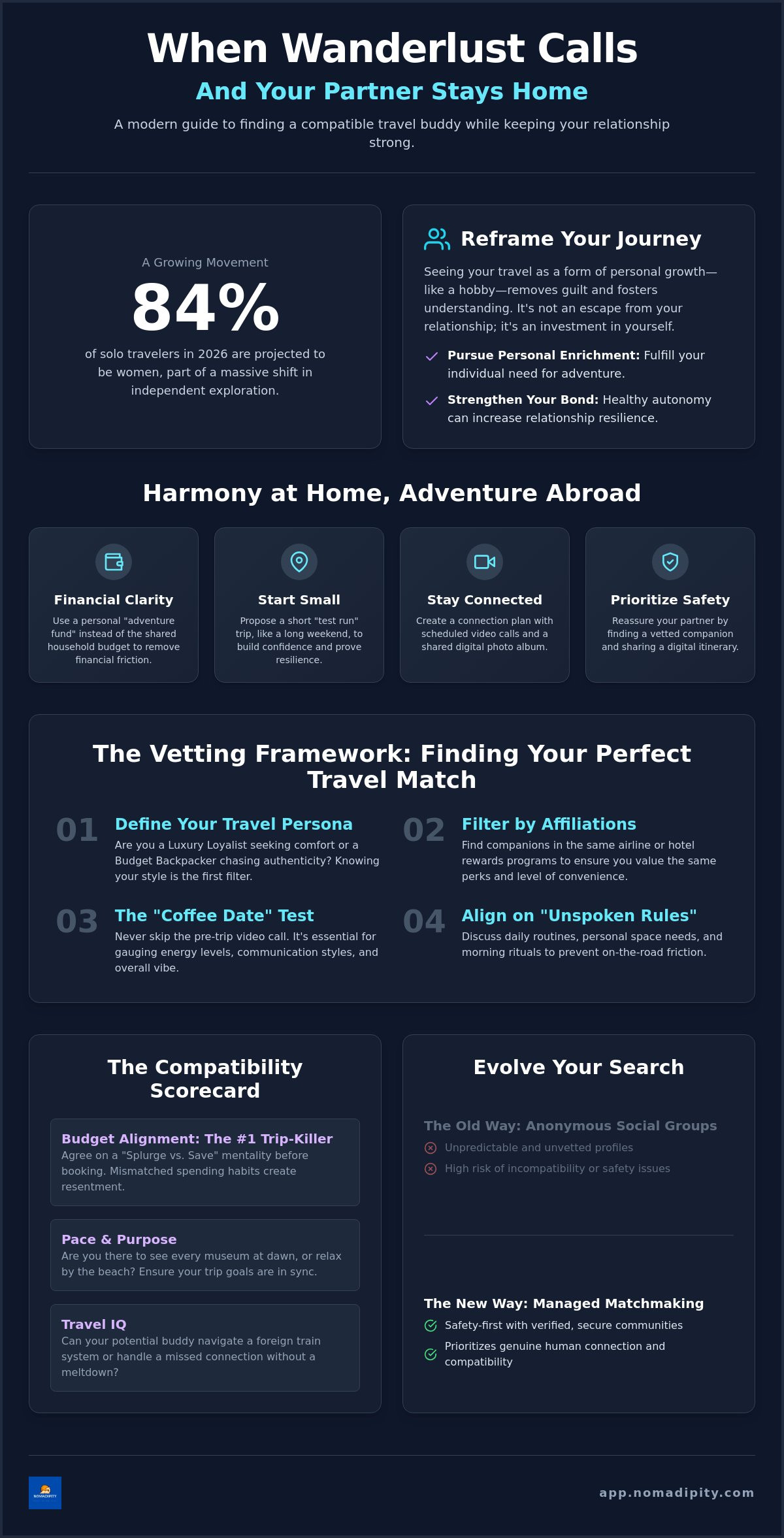
We understand the guilt that comes with packing a suitcase while your significant other stays behind, along with the very real anxiety of trying to find a compatible stranger who won't ruin the trip. With 84% of solo travelers in 2026 being women and Gen X booking more trips than ever, you are part of a massive movement of people choosing to explore on their own terms. This guide explores how to balance relationship harmony with your desire for adventure. You will learn how to communicate with a non traveling spouse, find a vetted companion who shares your specific travel style, and use a structured framework to ensure safety and compatibility before you ever book a flight.
Key Takeaways
- Reframe travel as an individual pursuit of growth to remove guilt and help your spouse see your solo-ish journeys as a healthy part of your personal identity.
- Master the art of finding a travel buddy when your partner doesn't travel by using a framework that prioritizes shared budgets and specific travel styles.
- Build spousal trust through transparency by sharing your vetting process and digital itinerary within a secure, verified community.
- Leverage mutual affiliations like hotel rewards and airline loyalty programs to find companions who value the same level of comfort and convenience as you.
- Transition from the unpredictable nature of anonymous social media groups to managed matchmaking platforms that prioritize safety and genuine human connection.
Navigating the Relationship: Convincing Your Spouse to Let You Travel with a Friend
The conversation often begins with a heavy silence. You want to see the sunrise over the Dolomites; they want to see what is new on Netflix. To move past this impasse, you must reframe the journey. Travel is not an escape from your partnership. It is a hobby, a pursuit of personal enrichment much like distance running or photography. When you approach finding a travel buddy when your partner doesn't travel as a way to fulfill a specific personal need, it stops feeling like a rejection of your life together.
Trust is built through concrete boundaries and financial clarity. Ensure your travel expenses are pulled from a personal "adventure fund" rather than the shared household budget. This removes the logistical sting of your absence. If your spouse is hesitant, start small. Propose a long weekend in a nearby city with a companion before booking a month long international trek. These smaller "test runs" prove that the world doesn't end when you cross a border without them. They see you return refreshed, and the relationship gains a new layer of resilience.
Addressing the "Why Not Me?" Conversation
When your partner asks why they aren't enough, explain that your need for movement is about personal growth, not their inadequacy. A deeper understanding interpersonal relationships reveals that autonomy often strengthens a bond. To maintain intimacy while you are away, create a structured connection plan. This might mean a scheduled video call every two days or sharing a digital photo album in real time. It allows them to feel like a participant in your joy without the physical exhaustion of the trip itself.
The Role of Safety in Spousal Approval
For many non traveling spouses, the primary fear isn't your absence; it is your safety. A vetted companion is often more reassuring than the idea of you wandering a foreign city completely solo. By finding a travel buddy when your partner doesn't travel through a managed network like Nomadipity, you provide your spouse with a digital paper trail. Showing them a verified profile and a shared itinerary transforms a "stranger" into a known entity with a background and mutual interests. This transparency replaces their anxiety with the confidence that you are in good hands.
Finding a Travel Buddy When Your Partner Doesn't Travel: A Vetting Framework
Success in finding a travel buddy when your partner doesn't travel depends on a structured approach rather than luck. Start by defining your "Travel Persona." Are you a Luxury Loyalist who needs a high thread count and airport lounge access, or a Budget Backpacker who finds joy in street food and local buses? Once you know yourself, filter potential matches by affiliations. Finding someone in the same airline or hotel rewards program ensures you both value the same perks, like late checkouts or priority boarding, which prevents friction during the journey.
Never book a flight before the "Coffee Date" test. A video call is essential to gauge energy levels and communication styles. Use this time to align on the "Unspoken Rules" that can make or break a trip. Discuss your morning routines. Do you need two hours of silence and coffee, or are you ready to hit the pavement at dawn? Establishing clear expectations for "me-time" and daily pacing ensures you don't feel smothered or rushed while exploring a new destination.
The Compatibility Scorecard
Travel compatibility is the quiet intersection of budget, pace, and purpose. It's about more than just liking the same destination; it's about how you move through it. You must also vet for "Travel IQ." Does your companion understand how to navigate a foreign train system or manage a missed connection without a meltdown? Assessing these skills early saves you from becoming an unpaid tour guide for a stranger.
Budget Alignment: The Hidden Trip-Killer
Money is the most common source of travel friction. You need to agree on a "Splurge vs. Save" mentality before the first deposit is paid. If you want a five star dinner but your buddy wants a grocery store sandwich, resentment will build fast. Using specific tools to find a travel buddy with similar income tiers and spending habits is crucial for a harmonious journey. When choosing your travel partner, be brutally honest about your daily spending limit. If you're ready to skip the guesswork, you can browse verified traveler profiles who share your specific interests and loyalty affiliations.
Leveraging Managed Networks for Safe, Shared Adventures
In 2026, anonymous social media groups have become the "wild west" of travel matchmaking. They are often cluttered with noise, scams, and a complete lack of verification. When you are focused on finding a travel buddy when your partner doesn't travel, you need a system that prioritizes depth and security over sheer volume. Managed networks like Nomadipity offer a sophisticated alternative. By matching you with travelers based on mutual interests and verified profiles, the platform removes the high stakes guesswork that plagues public forums.
One of the most powerful tools in a managed network is the ability to share an itinerary. This creates "structured spontaneity." You can plan to meet for specific legs of a trip while maintaining your independence for others. This transparency does more than just organize your schedule; it provides a clear plan that can reassure a spouse back home. When your partner sees a vetted itinerary and a verified companion, their anxiety often transforms into support. It turns your departure into a shared decision rather than a source of conflict.
The Security of Verified Affiliations
Connecting through shared hotel or airline loyalty programs adds a vital layer of social proof. It suggests a shared understanding of travel logistics and comfort levels. When you build your profile, focus on your specific travel persona and affiliations to attract high-value companions who mirror your habits. This alignment is the foundation of a low stress journey. It is much easier to trust a stranger when you know they have the same commitment to a specific brand or travel standard as you do.
Planning Your First "Buddy" Trip
The first 48 hours of your journey are essential for establishing boundaries. Use this window to test your compatibility in real time. By utilizing the strategies in our solo travel guide, you can maintain your personal autonomy even while sharing a journey. This ensures that finding a travel buddy when your partner doesn't travel leads to a trip that feels like a personal victory. You return home with stories to share, having honored both your relationship and your own need for exploration.
Embrace Your Personal Path to Adventure
Choosing to explore the world when your partner prefers the comfort of home is a profound act of self-care. It's about honoring your innate curiosity while maintaining the strength and intimacy of your bond. By reframing these journeys as essential for personal growth and using a rigorous vetting framework, you replace guilt with a sense of purpose. You now have the tools to establish financial boundaries, align on travel styles, and build a connection plan that keeps your relationship vibrant even across different time zones.
Finding a travel buddy when your partner doesn't travel becomes a seamless experience when you move away from the noise of anonymous forums. Instead, lean into the security of verified networks that prioritize human connection and shared values. Join Nomadipity and find your vetted travel companion today. Our platform offers matchmaking based on verified loyalty program affiliations and a safe, ad-free environment for frequent flyers. With detailed traveler profiles and itinerary sharing, you can enjoy the "structured spontaneity" that makes modern travel so rewarding. The world is vast and welcoming; approach your next horizon with the confidence that you've prepared for every step of the way.
Frequently Asked Questions
Is it normal to want to travel without my spouse?
Yes, it is entirely healthy to pursue separate interests within a partnership. Many couples find that time apart fosters personal growth and actually strengthens their bond by bringing fresh energy back into the home. Whether it is a difference in physical ability or simply a divergence in curiosity, traveling solo-ish allows you to honor your own needs without placing an unfair burden on a partner who finds joy in staying put.
How do I ensure a travel buddy I found online is safe?
Safety starts with moving away from anonymous public groups and toward managed networks that require verification. When finding a travel buddy when your partner doesn't travel, look for platforms that link profiles to hotel or airline loyalty programs. These affiliations provide a layer of social proof that anonymous forums lack. Always insist on multiple video calls and share their verified profile and your joint itinerary with your spouse before you depart.
What happens if my travel partner and I don’t get along during the trip?
The best way to handle friction is to build independence into your itinerary from the start. If you find your personalities clashing, simply pivot to the "structured spontaneity" model where you spend the day exploring solo and only meet for dinner. Booking separate rooms and having your own local transport apps ready ensures that you are never truly stuck with a companion if the chemistry isn't right.
How much should I share with my spouse about my travel companion?
Radical transparency is the most effective tool for maintaining relationship harmony. Share their full profile, social media links, and the specific reasons why you matched, such as shared budget tiers or interests. When finding a travel buddy when your partner doesn't travel, keeping your spouse in the loop about who you are with and where you are going transforms their potential anxiety into a sense of involvement in your journey.

Disclaimer
Nomadipity Blog Disclaimer
The content on Nomadipity is provided for general informational and inspirational purposes only. While we strive for accuracy and timeliness, Nomadipity does not guarantee that any information is complete, current, or suitable for your specific needs. Use your judgment and verify details before making travel plans, meeting with other users in person, or making any purchases influenced by the article.


