
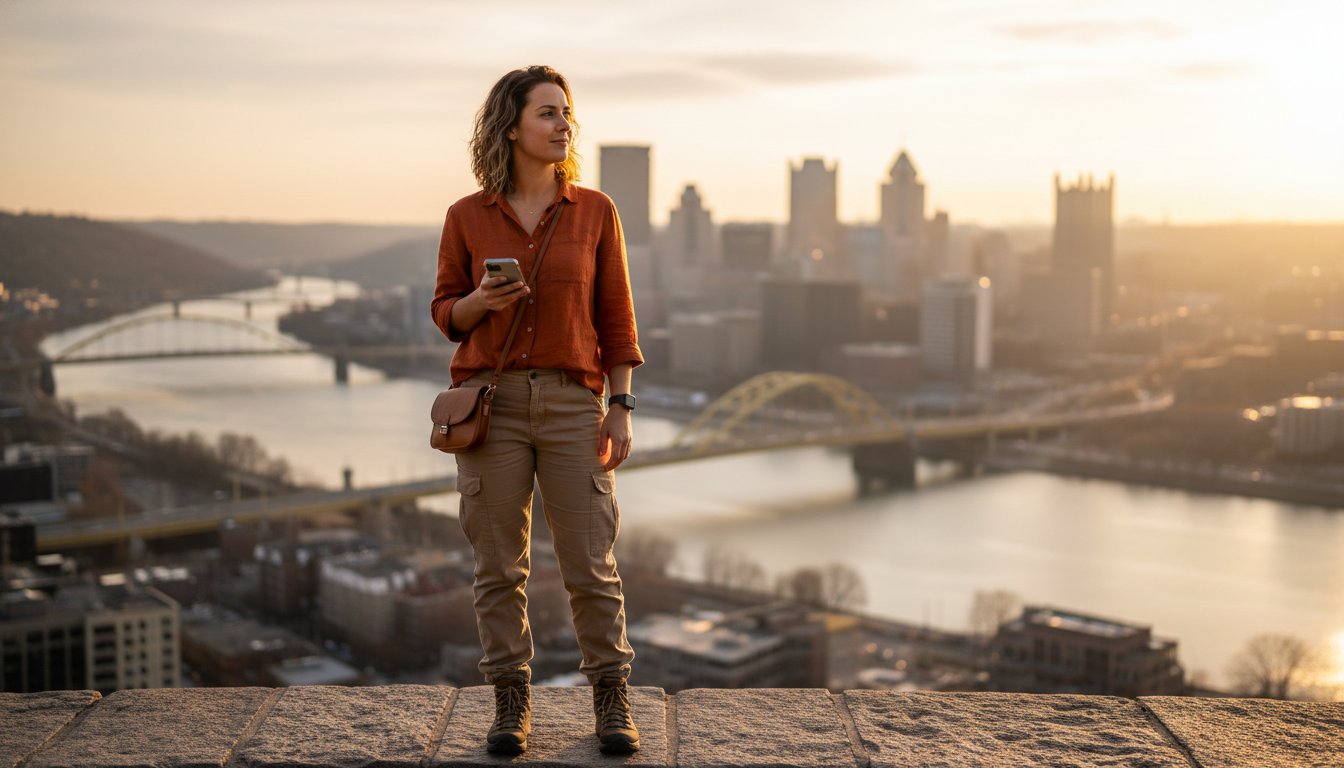
Did you know that female solo travel has surged by more than 60% over the last three years? Today, women account for 71% of all solo trips worldwide according to Riskline data from March 2026. You likely feel that magnetic pull toward the unknown, yet it is completely normal to feel a shadow of anxiety about exploring a new city alone or becoming a target for harassment. While 59% of women report feeling safe traveling solo as of February 2026, the overwhelming amount of conflicting advice on safety gear can make even a weekend getaway feel like a high stakes mission.
You shouldn't have to choose between your security and your sense of wonder. This guide will show you how to master safety for female solo travelers through planned serendipity, a strategy that pairs sharp situational awareness with the latest tech and vetted human connection. We will move past the fear to build your practical confidence, ensuring you can design a journey that feels both expansive and secure.
You will discover a curated list of 2026 safety gear, learn how to leverage apps like Life360 or bSafe effectively, and find out how to link up with like-minded companions who share your budget and travel style. By the end of this article, you will have a clear roadmap to explore the world with your eyes wide open and your spirit at ease.
Key Takeaways
- Redefine your approach to security by balancing grounded preparation with the sharp power of your own intuition.
- Discover how to integrate smart-security hardware and eSim technology into your kit to maintain constant connectivity.
- Learn why creating digital twins of your vital documents is the ultimate backup plan for 2026.
- Master the art of safety for female solo travelers by utilizing vetted communities to find allies who mirror your travel style.
- Build a system of planned serendipity that allows you to start small and scale your adventures with quiet confidence.
Redefining Safety for Female Solo Travelers in 2026
Safety for female solo travelers in 2026 has evolved far beyond the basic advice of "don't walk alone at night." It's now a sophisticated blend of digital preparedness, sharpened intuition, and the strength of a vetted community. We live in an era where location independence is the norm rather than the exception. As we observe current trends in solo travel, it's clear that women are no longer just seeking to avoid danger; they're seeking to cultivate "planned serendipity." This framework allows you to set up robust safety systems so you can fully surrender to the magic of an unplanned sunset or a spontaneous coffee with a local artisan.
The emotional landscape of travel is often a tug-of-war between vibrant excitement and a low hum of caution. This is healthy. In 2026, we recognize that fear isn't a stop sign; it's a signal to check your systems. Whether you're navigating the frictionless transit of Tokyo or the cobblestone alleys of Reykjavik, your goal is to achieve agency over your environment. You're not just a visitor; you're an active participant in your own security.
The Psychology of Situational Awareness
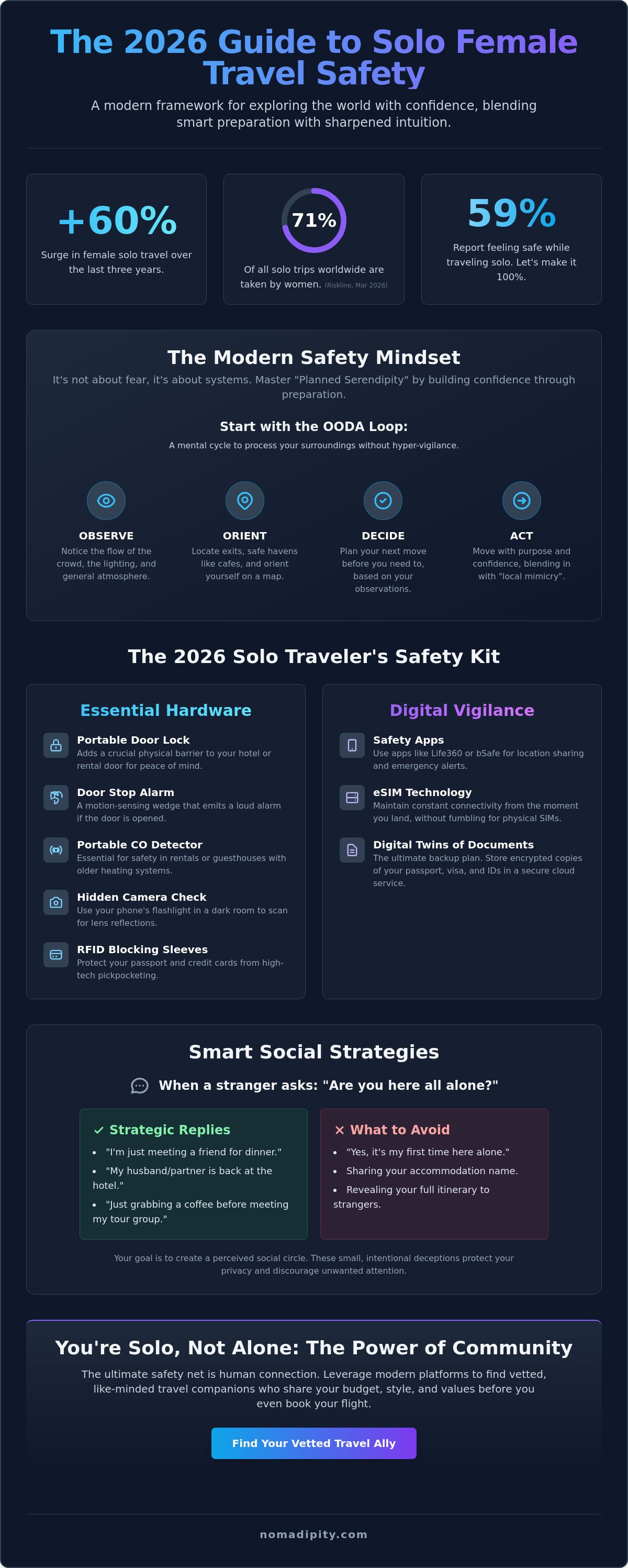
True safety begins with the OODA loop: Observe, Orient, Decide, and Act. This mental cycle helps you process your surroundings without falling into a state of hyper-vigilance that drains your joy. Observe the flow of the crowd. Orient yourself to the nearest exit or a safe haven like a brightly lit cafe. Decide on your next move before you actually need to make it. Trusting your gut is a data-driven process where your brain notices patterns your conscious mind hasn't yet named. You can project confidence through "local mimicry" by matching the walking pace and general posture of the women around you. When you look like you belong, you're less likely to be targeted.
Answering "The Question" with Grace and Strategy
Every solo traveler eventually faces "The Question" from a curious or intrusive stranger: "Are you here all alone?" Your response should be a pre-rehearsed script that maintains your privacy without escalating tension. Redirection is your best tool. Mentioning that you're "meeting a friend for dinner" or that your "husband is back at the hotel" creates a perceived social circle that discourages those looking for easy targets. Social engineering is the strategic use of communication to manage information flow and protect your personal boundaries while interacting with strangers. By using these small, intentional deceptions, you maintain control of the narrative and your physical space.
- Always have a "friend" or "colleague" you are about to meet.
- Keep your accommodation name private until you've vetted the person.
- Use local landmarks as your "meeting point" rather than your actual destination.
The Solo Traveler’s Safety Kit: Essential Gear and Hardware
Packing for a solo trip shouldn't feel like preparing for battle. The goal is to maximize your freedom while minimizing risk. In 2026, the best gear for safety for female solo travelers is multi-functional and lightweight. You don't need a heavy bag of gadgets that scream "I am afraid." Instead, choose smart-security devices that blend into your routine. Before you unpack your bags, always perform a quick safety check of your new space. It only takes five minutes but sets the tone for your entire stay. By distinguishing between essential tools and fear-based clutter, you maintain the lightness required for planned serendipity.
Securing Your Sanctuary: Lodging Safety
Your accommodation is your sanctuary. The 2026 standard for secure lodging includes a portable door lock and a motion-sensing door stop alarm. These provide a physical barrier and an audible warning if someone tries to enter. A portable Carbon Monoxide (CO) detector is equally vital, especially in older rentals or boutique guesthouses where maintenance might be overlooked. To check for hidden cameras, turn off the lights and use your phone's flashlight to look for lens reflections in smoke detectors, mirrors, or digital clocks. If you'd rather share the mental load of security with a trusted partner, you can find a vetted travel companion through our community matchmaking before you even book your stay.
On-the-Go Protection: Personal Security
When you're out exploring, your digital data is as valuable as your physical wallet. RFID blocking sleeves prevent high-tech pickpocketing that can happen in crowded transit hubs or busy street markets. For physical protection, personal safety alarms that emit a 130dB siren are often more effective than pepper spray. This is because pepper spray is illegal in many countries, and carrying it can lead to complications at customs or with local authorities. Referencing U.S. Department of State travel tips can help you understand the specific laws of your destination regarding self-defense tools. Finally, consider the decoy wallet strategy. Fill an old, cheap wallet with a few expired cards and a small amount of local currency. If you're ever confronted, you can hand over the decoy and walk away with your actual essentials intact. This simple piece of social engineering protects your primary resources while allowing you to exit a situation quickly.
- Choose a personal alarm with a built-in LED flashlight for dual utility.
- Test your door alarms in every new hotel or Airbnb immediately upon arrival.
- Keep your primary passport and backup cash in a hidden body pouch rather than a backpack.
Digital Vigilance: Leveraging Tech for Seamless Security
In 2026, staying connected is no longer a luxury; it is a fundamental pillar of safety for female solo travelers. The days of hunting for local SIM cards in airport kiosks are over. The evolution of the eSim allows you to activate a data plan before your plane even touches the tarmac. This ensures you have 24/7 access to ride-sharing apps, translation tools, and emergency services. Constant connectivity acts as a digital safety net, allowing you to navigate unfamiliar streets with the quiet confidence of a local. When you're always "online," you're never truly stranded.
Beyond connectivity, your digital data requires its own set of armor. If you're working from a seaside cafe in Bali or a library in Lisbon, a VPN is essential to protect your financial information from unsecured public Wi-Fi. You should also maintain "digital twins" of your life. Upload encrypted scans of your passport, visa, and insurance policy to a secure cloud-based vault. If your physical bag is lost, having these documents accessible from any device allows you to navigate the recovery process without panic.
Location Sharing and Emergency Protocols
Modern apps have transformed how we stay in touch with our inner circle. You can use platforms like Google Maps or Find My for real-time location sharing with a trusted friend. This doesn't mean sacrificing your freedom; it means having a silent partner who knows you're safe. Many travelers now use the Life360 app, which offers tiered plans as of May 2026, ranging from a free basic version to a $24.99 Platinum plan with comprehensive safety features. Setting up the "Emergency SOS" feature on your smartphone or smartwatch is another quick win. A few taps can alert local authorities and your emergency contacts simultaneously, providing your exact GPS coordinates when seconds matter most.
Vetting Your Route: Digital Maps and Local Insights
Preparation is the secret ingredient of planned serendipity. Always download offline maps for your destination to ensure you can find your way even if 5G coverage becomes spotty. Before you arrive, use digital heatmaps and local forums to identify neighborhoods that might feel uncomfortable after dark. Your digital footprint can also serve as a protective trail. By checking in at landmarks or posting a quick story, you create a chronological record that can be used to backtrack or verify your location if you ever lose your way.
- Set an automated "check-in" text that sends to a family member every 24 hours.
- Use a password manager to keep your digital vault accessible yet secure.
- Ensure your phone's battery is supported by a high-capacity portable power bank.
The Power of Community: Vetting Connections and Finding Allies
Choosing to travel solo doesn't mean you must spend 100% of your time in isolation. In fact, the most resilient layer of safety for female solo travelers often comes from the very people you meet along the way. Think of a vetted community as a force multiplier. It allows you to maintain your independence while having a trusted network to lean on when navigating a complex transit hub or exploring a remote trail. If you're still refining your mindset for these interactions, our solo travel guide offers deeper insights into balancing openness with caution.
Transitioning from a digital connection to an in-person meetup requires a structured approach. You aren't just looking for anyone to grab a coffee with; you're looking for an ally whose values and risk tolerance align with your own. This is where "planned serendipity" truly shines. By setting up the right social systems before you depart, you open the door to meaningful connections that actually enhance your security rather than compromising it. This proactive vetting ensures you aren't leaving your safety to chance.
Vetting Potential Travel Companions
Vetting is a three-step process that moves from data to intuition. First, prioritize platforms that integrate verified profiles and loyalty program data to ensure the person is who they claim to be. Second, cross-reference your specific interests, budgets, and travel styles. A mismatch in budget can lead to stressful situations where one person wants to take a private car while the other insists on an unlit public bus. Finally, always conduct a video call. This allows you to gauge their energy and confirm compatibility before you ever commit to a shared itinerary or a day trip. Trusting your gut is easier when you have a face to go with the name.
Leveraging Social Networks for Frequent Flyers
For those who move frequently, airport lounges are the ultimate "safe space" for an initial meetup. They provide a controlled environment with staff and security nearby. You can often connect with other travelers who share your hotel rewards or airline status, creating an immediate sense of shared experience. If you want to bypass the guesswork of finding the right partner, you can subscribe to our travel matchmaking service to find companions who fit your exact travel profile. You can also learn more about how to find a travel buddy who understands the unique nuances of nomadic life.
The "Safety in Numbers" Strategy for Specific Excursions
Some experiences are simply better shared. High-risk activities like navigating sprawling night markets or hiking remote trails are perfect opportunities for "micro-meetups." Joining group forums for niche communities, such as female divers or solo hikers, helps you find specialized allies for these specific moments. Having a "local ally" within your digital network can also provide real-time updates on neighborhood safety that a standard guidebook might miss. This collective intelligence ensures that your solo journey is supported by a global sisterhood. You aren't just a traveler; you're part of a movement that prioritizes both adventure and agency.
From Awareness to Agency: Designing Your Secure Adventure
Safety is not a static destination you reach once you land in a new country. It's a living skill that you cultivate with every boarding pass and every conversation with a local vendor. By integrating the gear, tech, and social strategies we have discussed, you move from a state of passive caution to active agency. This is the heart of planned serendipity. You prepare the systems so that when the unexpected happens, you have the mental and physical space to enjoy the magic of the moment. If you're feeling a bit of trepidation, remember that you don't have to start with a month-long trek through remote mountains. Start small. A solo weekend in a nearby city can be the perfect training ground to test your systems and build your confidence in safety for female solo travelers.
As you gain experience, you will find that your intuition becomes sharper and your boundaries more natural. You'll learn that saying "no" is a complete sentence and that your comfort is more important than being polite to a stranger. Every trip is an opportunity to refine your personal security protocol. The world is vast, but it becomes much more manageable when you approach it with a mentor's mindset and a well-vetted community at your back.
The Pre-Trip Safety Audit
Before you depart, dedicate ten minutes to a final safety audit. As of February 1, 2026, ensure your REAL ID is compliant for domestic flights to avoid the $45 noncompliance fee. For international journeys, check the latest advisories; for instance, Japan and Iceland currently maintain Level 1 status, the lowest risk level as of early 2026. Your audit should also include a confirmed insurance policy. SafetyWing Nomad Insurance is a reliable choice, costing approximately $62.73 for 28 days of coverage for travelers under 40. Finally, ensure your "digital twins" are synced and your emergency contacts know your first night's "safe house" location. Researching local dress codes and cultural norms ensures you blend in effectively, which is one of the simplest ways to maintain a low profile.
Embracing the Unexpected Safely
Slow travel is a powerful ally in your safety toolkit. By staying in one place longer, you reduce the stress of constant transition and increase your awareness of the local environment. You begin to recognize the rhythms of the neighborhood, making it easier to spot when something feels off. This depth of experience allows you to remain open to new connections while maintaining firm boundaries. Solo exploration is transformative because it forces you to rely on your own agency. It proves that you're capable of navigating the world on your own terms. If you're ready to find your next safe connection and share these adventures with a peer who matches your travel style, subscribe to the Nomadipity community today. Together, we can turn the dream of secure, independent travel into your daily reality.
- Review the U.S. Department of State advisories for every country on your itinerary.
- Keep a physical backup of your emergency contact list in your day bag.
- Practice your "social engineering" scripts until they feel natural and effortless.
Your Map to Confident Exploration
The world is waiting for you. You now have the practical tools to turn travel anxiety into agency. By securing your lodging with smart hardware and leveraging digital vigilance through eSims and document vaults, you've built a foundation of security. True safety for female solo travelers isn't about building walls; it's about building bridges to the right people and places. You've mastered the art of planned serendipity, ensuring your systems are strong so your spirit can remain open to the unexpected joy of a new culture.
You don't have to navigate this journey in a vacuum. Join Nomadipity today to connect with a vetted community of solo travelers. Our platform provides member-only forums for niche travel communities, seamless integration with your existing airline and hotel loyalty programs, and advanced search filters to find companions who match your exact budget and travel style. Stop letting "what if" hold you back from the transformative power of location independence. Go ahead and book that ticket. You have the skills and the support to design a life of adventure on your own terms. The horizon is yours to cultivate.
Frequently Asked Questions
Is it safe to travel alone as a woman in 2026?
Yes, solo travel is safe when you prioritize situational awareness and modern security systems. A Talker Research study from February 2026 found that 59% of women feel safe traveling solo. While safety concerns exist, the rise of frictionless travel and real-time tech allows you to navigate the world with confidence. It is about designing your journey with intention rather than leaving your security to chance.
What are the most essential safety items for a solo female traveler?
The most essential items are a 130dB personal safety alarm, a portable door lock, and a high-capacity power bank. Connectivity is your lifeline; a dead phone is a major safety risk. You should also carry a physical "digital twin" backup of your ID in a separate location. These tools provide the physical and digital layers needed for safety for female solo travelers without adding unnecessary weight to your carry-on.
How do I answer people who ask if I am traveling alone?
Always state that you are meeting someone soon. You can say your "friend is waiting at the cafe" or your "partner is back at the hotel." This simple social engineering tactic removes you from the "target" category by suggesting you have an immediate social circle. It is a graceful way to set boundaries with strangers while keeping your actual plans private and secure.
How can I find a safe travel companion online?
Use a dedicated matchmaking platform that requires profile verification and links to existing social or loyalty accounts. Look for communities that allow you to filter by budget and travel style to ensure compatibility. Conducting a video call before the trip is a non-negotiable step. This vetting process transforms a digital connection into a reliable ally for your upcoming adventures.
What should I do if I feel unsafe while traveling solo?
Immediately move to a well-lit, public space like a hotel lobby or a busy restaurant. Trust your intuition without hesitation. Use your phone's Emergency SOS feature to alert local authorities or your pre-set emergency contacts. If you are in a crowd, make eye contact with another woman or a staff member and clearly state that you need assistance to de-escalate the situation.
Are there specific countries that are safer for solo female travelers in 2026?
Denmark, Portugal, and New Zealand consistently rank as the safest destinations in 2026 based on metrics like the Global Peace Index. These countries offer high levels of infrastructural security and a culture of respect for independent women. While no location is risk-free, choosing destinations with strong legal protections and reliable public transit significantly reduces the cognitive load of staying safe while exploring.
How do I handle hotel safety when checking in alone?
Request a room on a middle floor near the elevator, away from emergency stairs where someone could linger. Never say your room number aloud at the front desk; if the clerk says it, ask for a different room. Once inside, perform a five-minute sweep for hidden cameras and test your portable door lock to ensure your sanctuary is truly private before you unpack.
Can I use travel dating apps safely while abroad?
You can use dating apps safely by meeting only in crowded, public venues and sharing your real-time location with a friend. Never let your date pick you up from your accommodation. Digital vigilance is key; use a VPN to protect your data and verify the person's digital footprint before the date. This approach ensures safety for female solo travelers while still allowing for new social experiences.
Disclaimer
Nomadipity Blog Disclaimer
The content on Nomadipity is provided for general informational and inspirational purposes only. While we strive for accuracy and timeliness, Nomadipity does not guarantee that any information is complete, current, or suitable for your specific needs. Use your judgment and verify details before making travel plans, meeting with other users in person, or making any purchases influenced by the article.


